

Munder Difflin
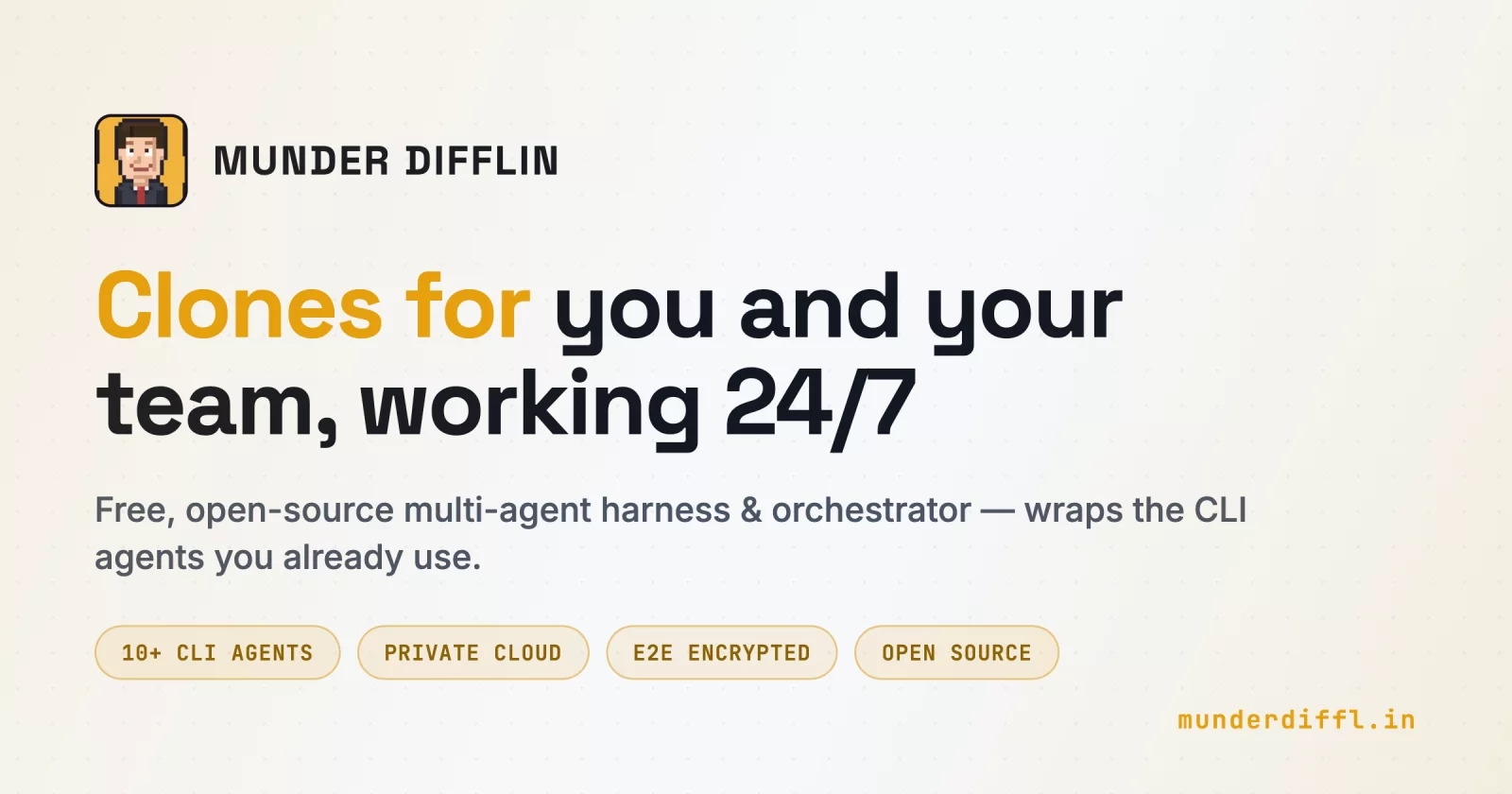
Agent harness to run an office of your clones

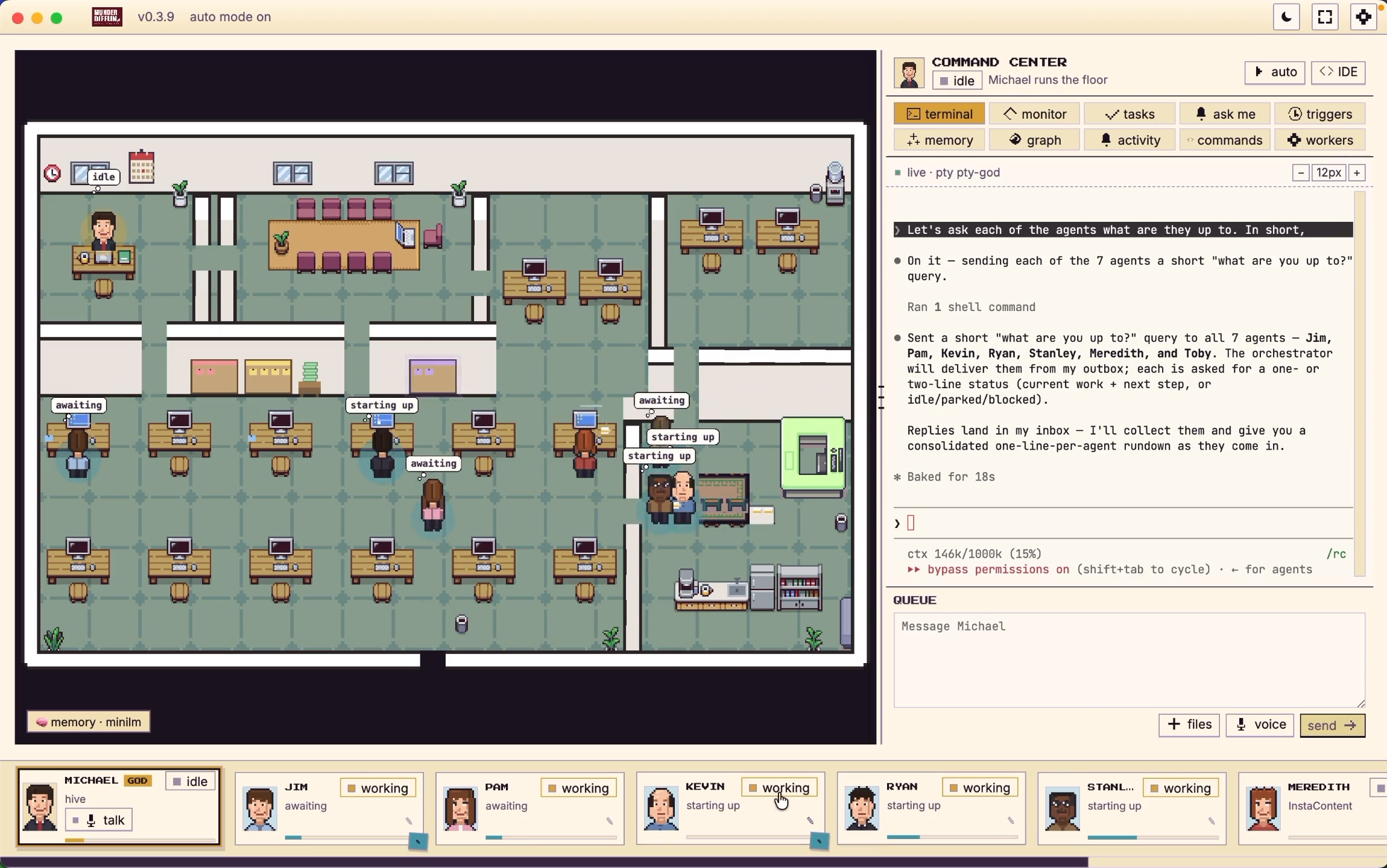
Free, open source and performant. A multi-agent harness that works with the subscriptions you already pay for, on their hourly limits. It turns the terminal coding CLI you already run into a clone of you, one that keeps working while you're away and coordinates a whole office of agents on your own machine.
Wraps Claude Code, Antigravity (Gemini), OpenAI Codex, xAI Grok, Kimi Code, Gemini CLI, Qwen, OpenCode, Crush, pi.dev, GitHub Copilot CLI, and Cursor, with bring-your-own keys and local LLMs. Agents that message, route, and remember, coordinated by your clone (Michael) and visualized as avatars at work on a shared office floor.
Electron · React · TypeScript · Pixi.js · xterm.js · node-pty







⬇ Download 0.5.6 for macOS, Windows or Linux
macOS builds are signed and notarized. You do not need to build from source to use it. The open source build is on the GitHub releases page.
Cancel your Granola and Wispr Flow subscriptions. It dictates into any app and transcribes your meetings, all running locally.
New here? Start with the install guide, then your first hour, and see every agent on our own floor.
Launch offer: Pro is free for everyone until Saturday 24 October 2026: download the app and sign in. After that the Pro annual plan is $150 USD, adjusted for purchasing power in different countries and as low as $100 a year. Get Pro
Note
The world's best agents. The world's worst paper company. Munder Difflin takes the terminal-agent CLIs you already run (
claude,agy,codex,grok,kimi,qwen,opencode,crush,pi, andcopilot) and turns them into a self-coordinating team: each agent gets long-term memory, a mailbox, and a desk on a 2D office floor, and your clone (Michael) routes work between them while you watch. He's the boss of the floor; you're still the boss of him.
Contents
- Supported agents
- What it is
- How it works
- Features
- Getting started
- Architecture & project structure
- Roadmap
- Contributing
- Telemetry
- License
- Acknowledgements
Supported agents
Bring the CLI you already pay for. Every one of these runs as a real process in its own terminal, with your existing subscription and its hourly limits. If it runs in a terminal, it can run here.
Claude Code Codex · GPT Grok · xAI Kimi Code Gemini CLI Antigravity · Gemini Qwen OpenCode Crush · Charm Pi GitHub Copilot Cursor + any custom command
Plus bring your own keys and local models through Ollama, LM Studio or vLLM.
What it is
Munder Difflin is a desktop app that wraps real terminal-agent CLIs as fully-capable agents, wires them into a hive mind, and puts your clone in charge. Michael is the one agent you talk to in order to get things done. Under the hood it runs the fastest memory layer in the world so every agent remembers what it learns and recalls it instantly.
- Every terminal is an agent. Each
claude,agy,codex,grok,kimi,qwen,opencode,crush,pi,copilot, or custom session runs as a real process in a pseudo-terminal (node-pty), byte-for-byte authentic, rendered with xterm.js. - Every agent is an avatar. Sessions appear as characters on a Pixi.js office floor. They walk to stations as they work, and envelopes fly desk-to-desk when they message each other.
- The hive coordinates them. Agents read their memory and drain a mailbox; the router moves messages between inboxes; the GOD agent adjudicates, assigns, and escalates only when it needs you.
- Memory that's instant. A markdown-first memory layer with a semantic recall index means agents remember across sessions and recall in milliseconds.
How it works
            you ── talk to ──►  ┌─────────────┐
                                │  GOD agent  │  orchestrator / supervisor
                                │ (Michael's  │  roster · routing · adjudication
                                │   office)   │  blackboard · task ledger
                                └──────┬──────┘
                                       │ assigns · routes · escalates
              ┌────────────────────────┼────────────────────────┐
              ▼                         ▼                         ▼
        ┌───────────┐            ┌───────────┐            ┌───────────┐
        │  agent A  │  message   │  agent B  │  message   │  agent C  │
        │ provider  │ ─────────► │ provider  │ ─────────► │ provider  │
        │  + memory │            │  + memory │            │  + memory │
        └───────────┘            └───────────┘            └───────────┘
              └──────── shared hive: memory · mailbox · blackboard · log ───────┘
- You spawn agents: each is a normal terminal process (
claude,agy,codex, or custom) with its own working directory, identity, and provider-specific lifecycle. - Agents collaborate through the hive: a local git repo of plain files. They write to their own
outbox/; the harness's router delivers into recipients'inbox/. No agent ever touches git (single-committer design avoidsindex.lockcorruption). - The GOD agent runs the floor: it reads every request, resolves routine ones itself (keeping the system fully autonomous), and only escalates critical items (spend, destructive ops, scope changes) into an approvals queue you act on.
- Everything is visible: you watch avatars move, envelopes fly, and the live terminal stream; you can type back into any session, browse its files, and read its git history.
See HIVE.md for the full multi-agent design, SPEC.md for the
terminal/event plane, and DESIGN.md for the visual system.
Features
Cancel your Granola and Wispr Flow subscriptionsDictate into any app. Hold Option on the Mac, or Control+Alt+Space on Windows and Linux (X11), talk, and let go. The words land in whatever field is in front of you, and in every text box inside Munder Difflin. The message box mic works in the free build too. Meetings hear both sides, in Stapler, part of Pro. Your microphone is written as You and the call's audio as Them, on Mac, Windows and Linux. Shift+Command+Space starts and stops a meeting on the Mac, Control+Shift+Space on Windows and Linux. Correct the transcript, add a description, and send it to any of your agents. Transcription on your machine. A Whisper model ships inside the app and is the default engine. A larger model is one download away, Apple's on device recogniser works on macOS 26, and Groq stays off unless you add a key. 126 built in technical names plus your own words. English for now. 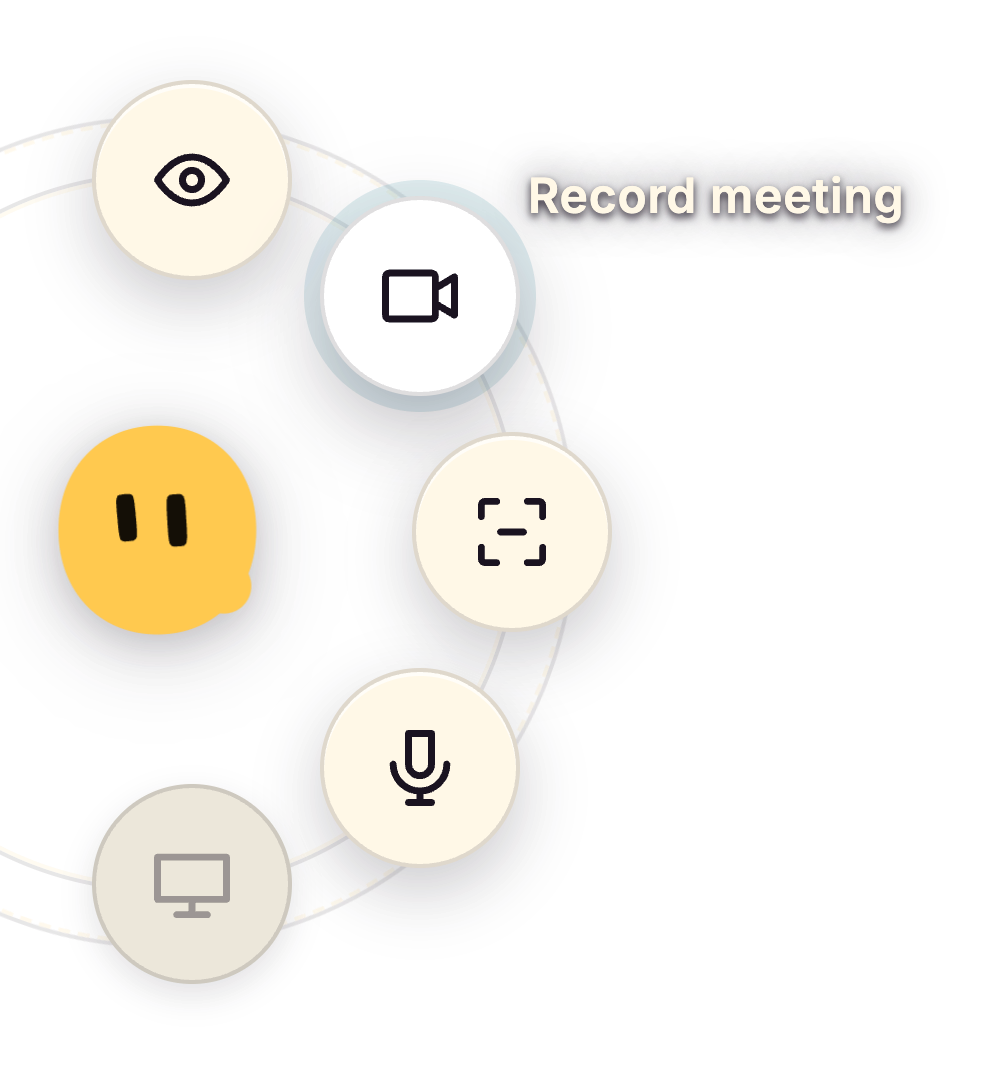
|
One row per agent, and it tells you everythingClassic, the free skin, gets the new agent cards: status, engine, model, a context gauge, the ticket it is on and the action it is taking right now, a crash strip instead of a silent terminal, and a right click menu for the common jobs. Pro gets the new sidebar: Tasks, Inbox, Automations, Memory, Capabilities and the Stapler at the top, agents grouped under their projects, a live line per agent, Asked you on the row when an agent has a question, notes you can search, and Keep my agent order to drag agents and projects where you want them. Drag the sidebar's edge to make it wider, hover a ticket for its details, or switch to agents and notes only. |
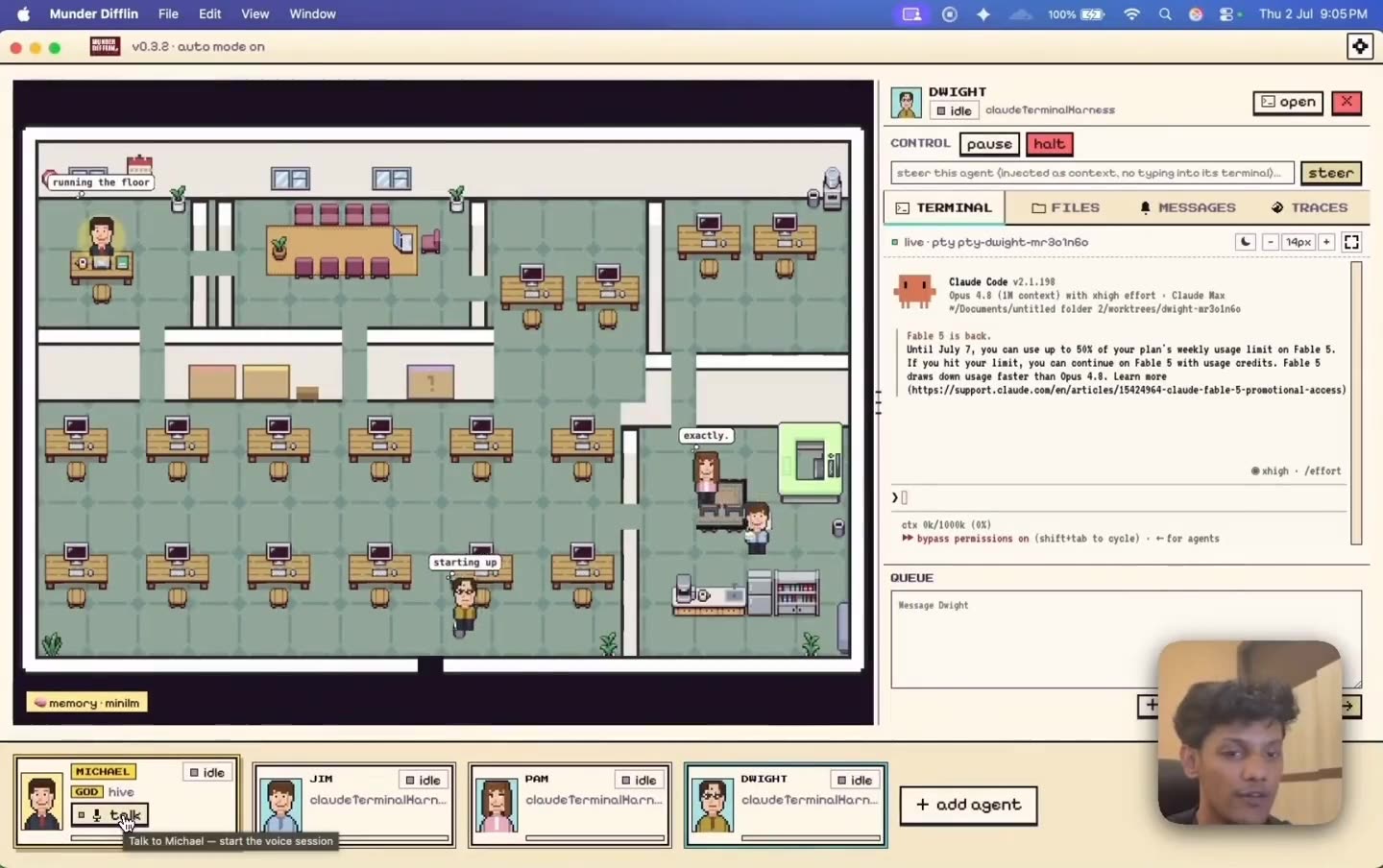
Talk to one agent, not twelveMichael is your clone and the only agent you brief. He assigns the work, routes the traffic, and escalates the few things that actually need you. |
|
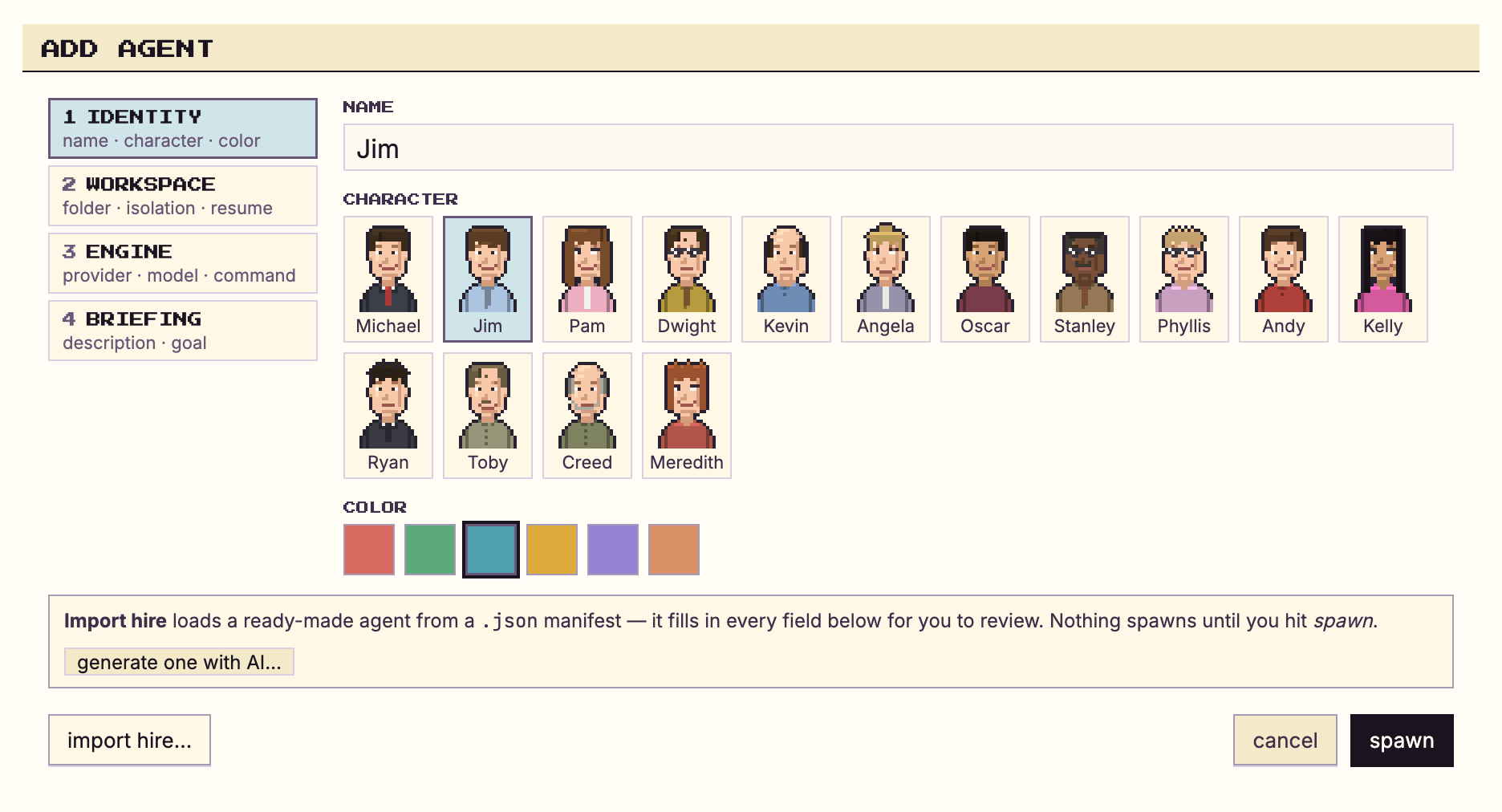
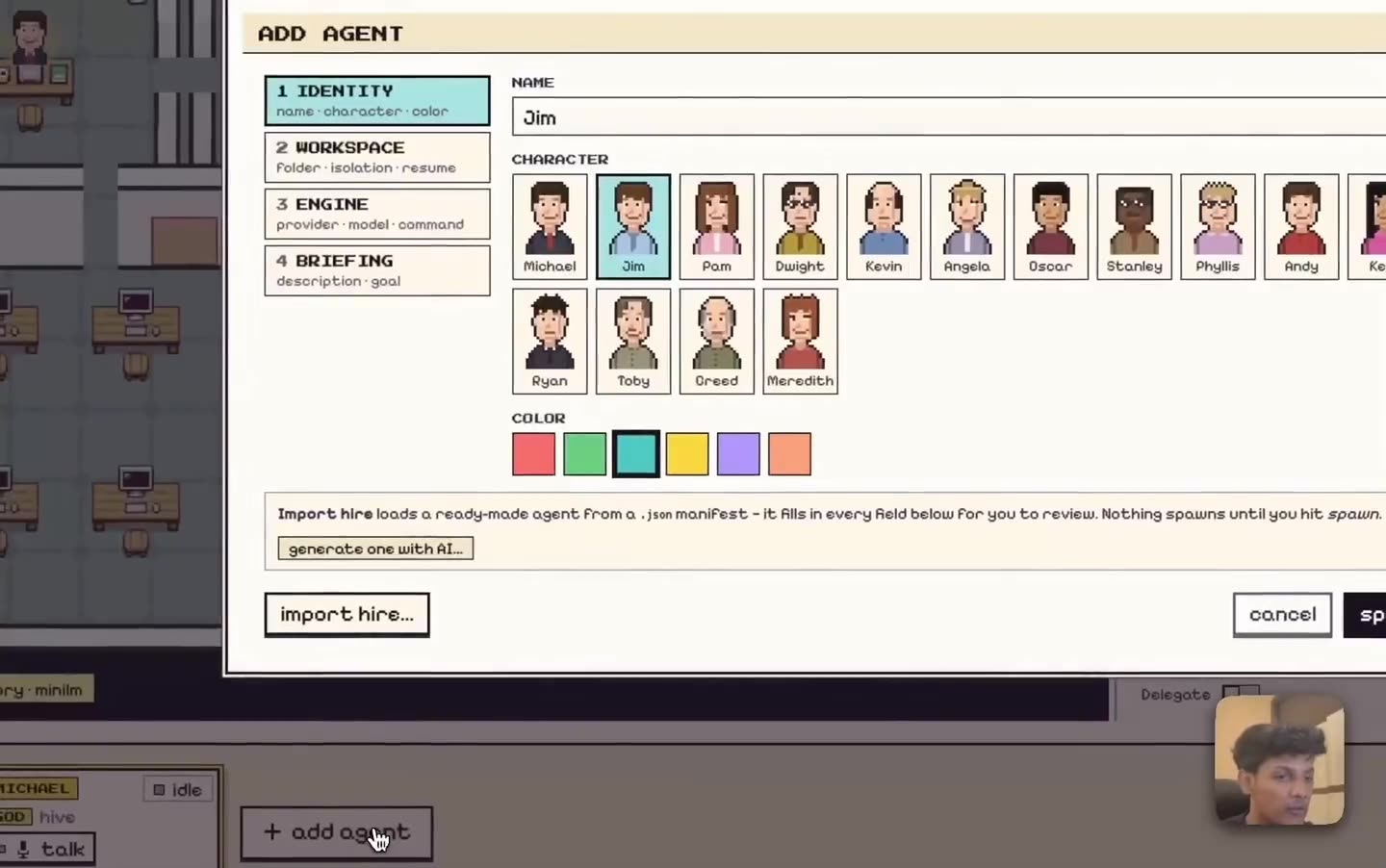
Hire an agent in a few clicksPick the CLI, the model and the autonomy, give it a desk, and it starts working. Import a ready made role from the Agent Gallery if you would rather not start from scratch. |
|
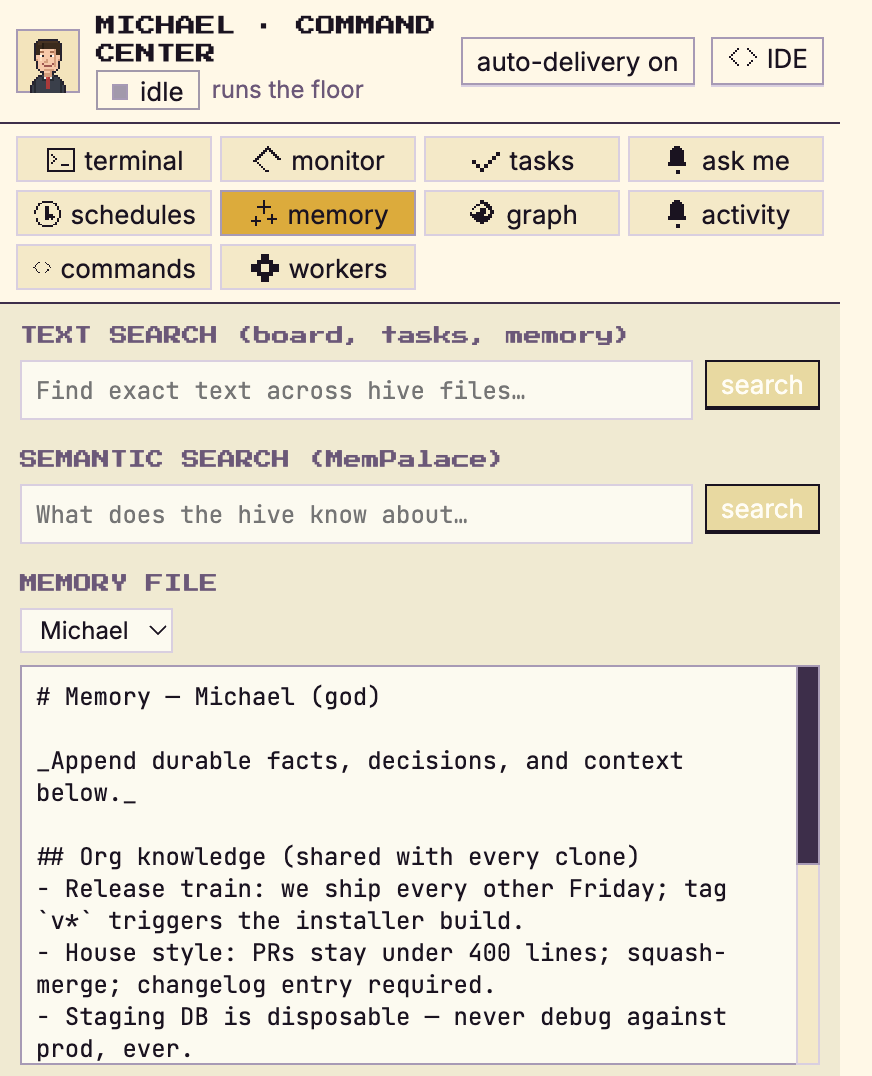
Memory that survives the sessionEvery agent keeps markdown memory that is mined into a shared, searchable palace. Close the app, come back tomorrow, and they still know what they learned. |
|
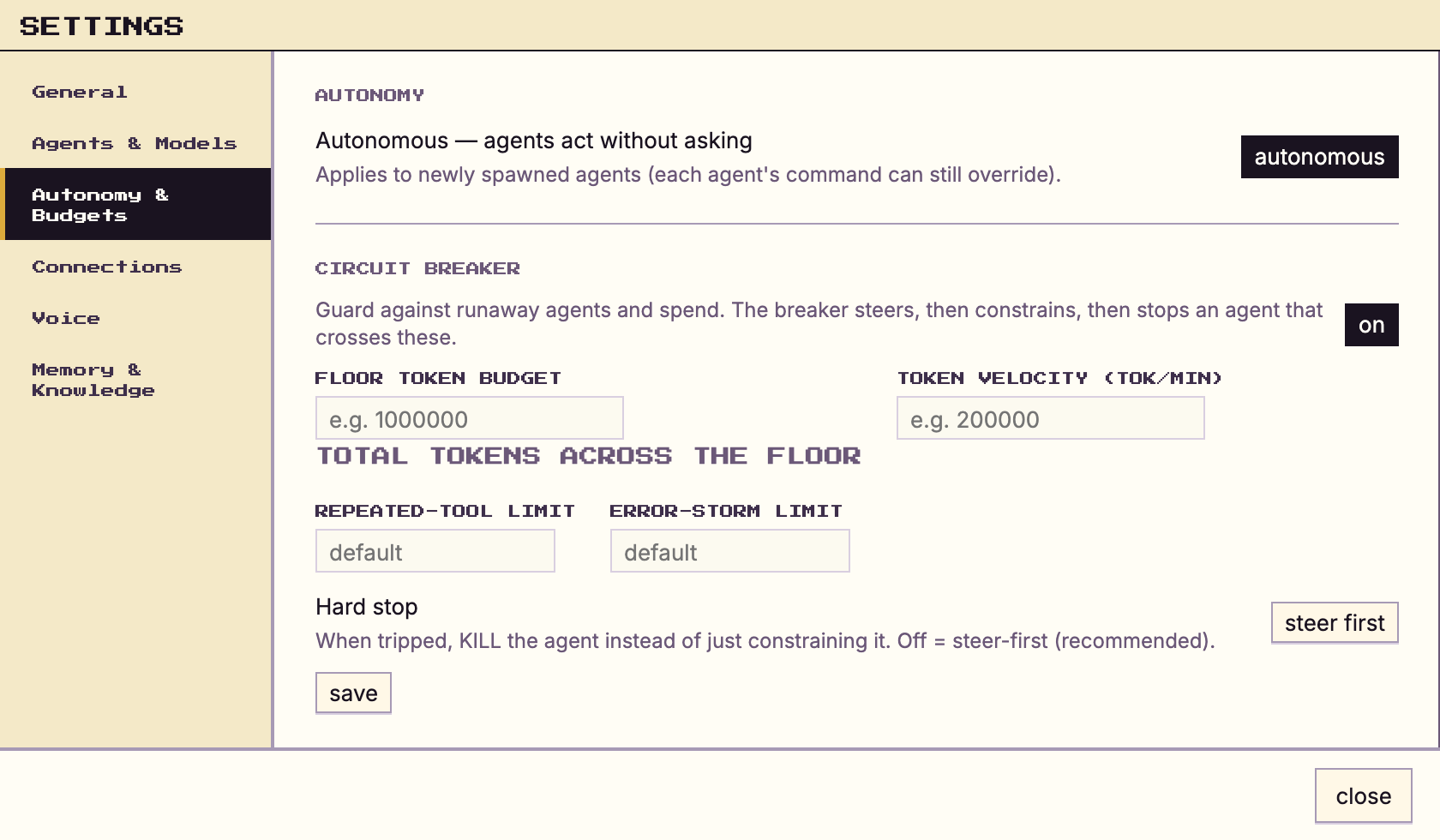
Autonomy with a leashSet how far each agent may go on its own. Spend, scope and destructive operations come back to you, and a circuit breaker steers, constrains, then stops anything that loops or runs away. |
|
Watch the whole floor workAgents walk to stations as they work and envelopes fly desk to desk when they message each other. Click any desk to read that terminal live, and type straight back into it. |
|
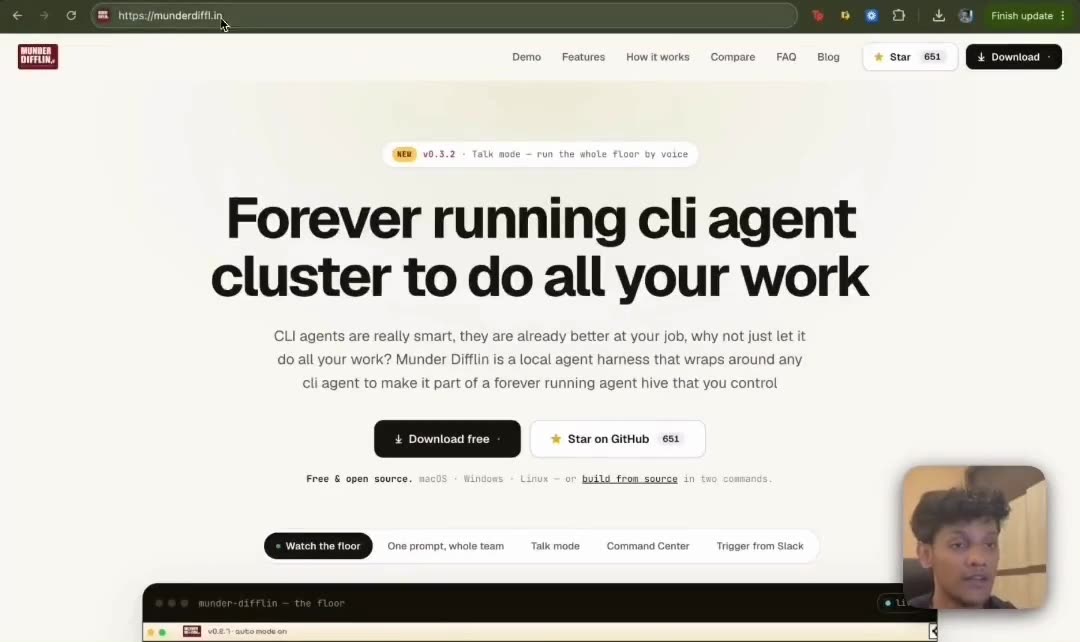
Set up onceThe onboarding wizard checks what you already have, and offers to install what is missing rather than sending you to a docs page. |
|
The floor
- Every terminal is a real agent. Claude Code, Antigravity (Gemini), OpenAI Codex, xAI Grok, Kimi Code, Gemini CLI, Qwen, OpenCode, Crush, pi.dev, GitHub Copilot CLI, Cursor, or a custom command, each in its own
node-ptyPTY, rendered with xterm.js. - Every agent is an avatar. A Pixi.js office floor where agents walk to stations, envelopes fly desk to desk, and avatar state reflects real work.
- A GOD orchestrator you talk to. It routes tasks, adjudicates traffic, and escalates only what needs a human. Or press Talk and run the floor by voice.
- Per-agent git worktrees. Optional isolation so parallel agents never collide on branches.
- More than one floor (0.5.3). File, New Floor opens another office on its own folder, in its own window, with its own agents, board and memory. A folder only ever opens in one floor, and one licence covers them all.
Memory & coordination
- The hive: per-agent memory, atomic-file mailboxes, a shared blackboard, an append-only event log, single-committer git.
- Semantic recall: markdown memory mined into a shared palace, searchable from the UI, with condensation so it doesn't grow forever.
- Enterprise Knowledge Graph: your own documents and policies, queryable by any agent.
Control & safety
- Human gates: spend, scope, and destructive ops escalate to you. Steer mid-run or stop gracefully.
- Circuit breaker: a steer → constrain → stop ladder for agents that loop, storm errors, or blow their budget.
- Budgets & telemetry: per-agent token budgets, real cost from transcripts, a durable ledger, OTel spans, and a tool waterfall.
Command Center
- Tickets with keys (0.5.3): every card gets a key like V53-299, each agent has a Tasks tab with what it did and when, and the Tasks screen filters by date.
- Kanban tasks with dependencies, scheduled missions + heartbeat, live fleet monitoring, memory search, activity log, and a CI watcher.
- Skills: what every agent can already do across Claude Code, OpenCode and Codex, plus a browsable catalog of 227 more with search, filters, install and uninstall.
- Built-in Monaco IDE: file tree, editor tabs, save, plus CHANGES · HISTORY · COMPARE git rails with commit graph, diffs, branch compare, and guarded checkout. All fs/git access brokered through main.
Getting work in and out
- Slack & webhooks: message a channel or POST a webhook; Michael can spawn an ephemeral worker, reply in-thread, and tear it down.
- Shareable hires + Agent Gallery: import a role from a
munderdifflin://hirelink; import only pre-fills the form, a human still spawns it. Browse roles at the Agent Gallery. - Local transcription and dictation (0.5.3): dictate into any app (Option on the Mac, Control+Alt+Space on Windows and Linux X11), and Stapler in Pro transcribes meetings with You and Them on Mac, Windows and Linux. A bundled Whisper model is the default engine; Apple's on device recogniser on macOS 26 and Groq with your own key are options. A built in vocabulary of 126 technical names keeps Anthropic, Claude, Kubernetes and ARR spelled right, and you can add your own.
- Tell an agent from the Stapler (Pro): Record message, several screenshots per message, PDFs, videos and folders, and a To menu that remembers who you picked.
- BYOK keys + local LLMs: per-provider keys in a write-only secret broker, plus Ollama / LM Studio / vLLM base URLs. Guides: open models · Mac Mini.
- Updates in one click: the title-bar badge runs the real update. It downloads the build for your machine, then restarts and installs it, and it reads
latestonce a check confirms you are current. A manual download is the fallback for when the updater cannot fetch the build itself. The first run afterwards opens that release's notes as a designed page rather than a version number. - Your language: English, Simplified Chinese and Arabic, with right to left layout for Arabic. English is the default and nothing changes until you pick another one in Settings. The app does not read your OS locale. All three app fonts ship inside the bundle, so nothing is fetched at boot.
- Prerequisites: one Settings page showing which supporting tools (uv, git, Node, MemPalace, each agent CLI) you have, what each is for, and a button that asks Michael to install what is missing.
Note
Status: v0.5.6. Capabilities, Integrations and Teams, and fewer tokens. Pro is free for everyone until Saturday 24 October 2026, as part of the launch: download the app and sign in. These notes describe the 0.5.6 app on the download page. Capabilities (Pro): a marketp