
A flock of birds in your terminal.

cbirds --render kitty --3d --color prism
Craig Reynolds' boids, drawn in braille in any terminal, and as sprites over the Kitty graphics protocol in Kitty and Ghostty. One C99 program, no dependencies. Every clip on this page but the first was recorded by cbirds itself.
 |
 |
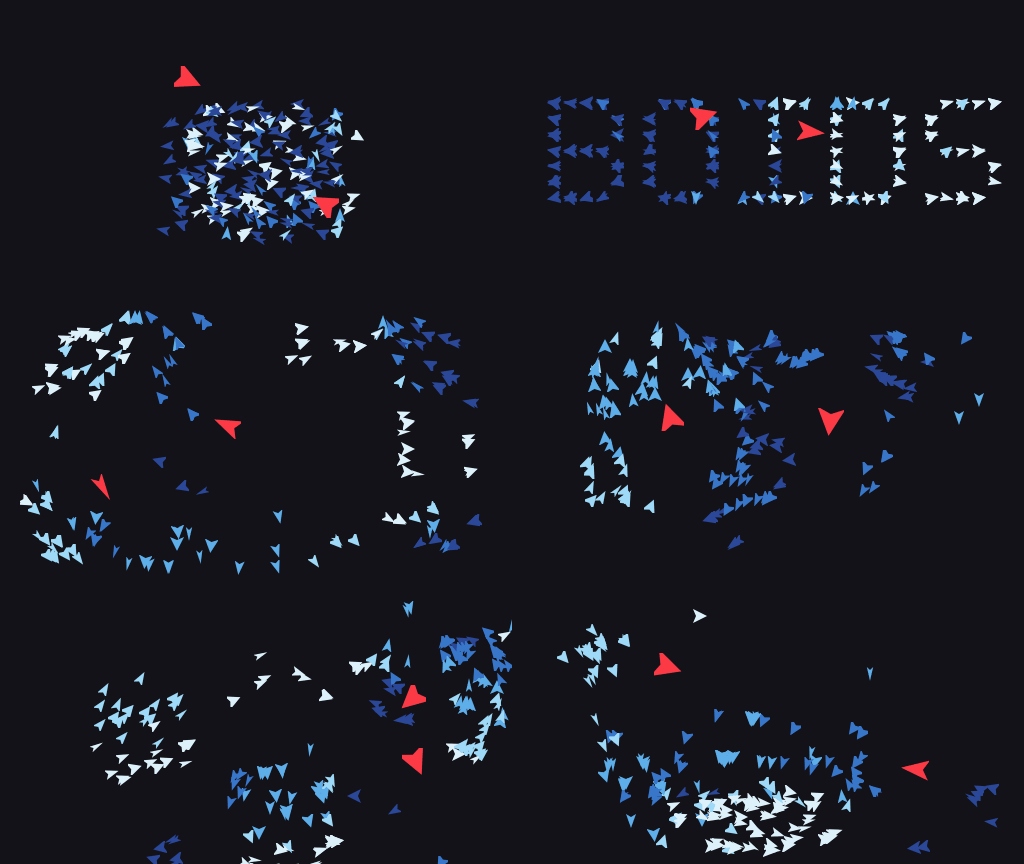
cbirds --render kitty --hawks 2 --color ice --speed 0 |
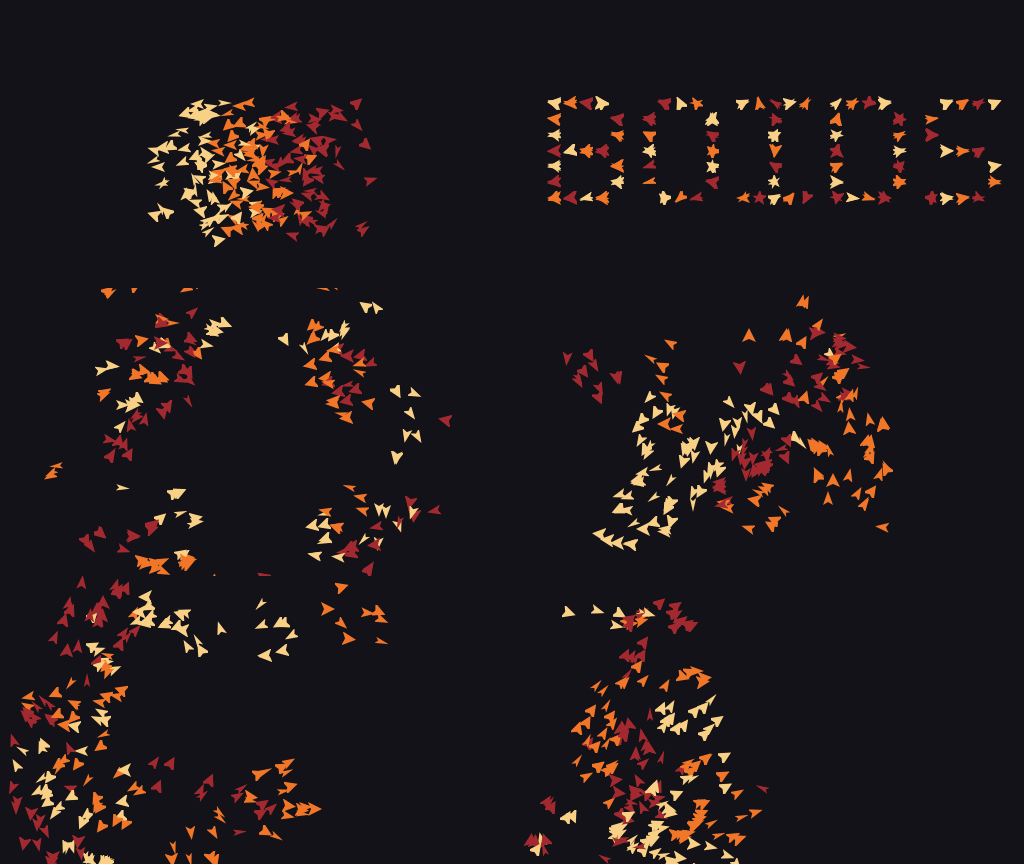
cbirds --render kitty --flocks 3 --color ember |
 |
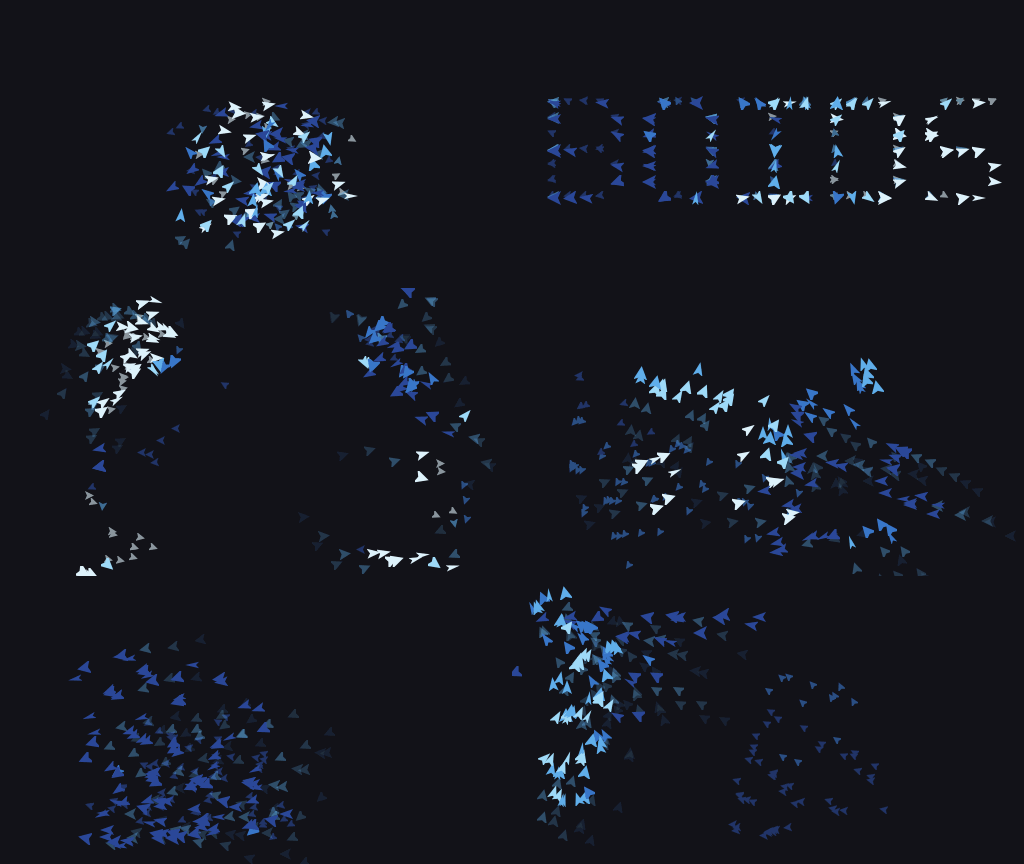 |
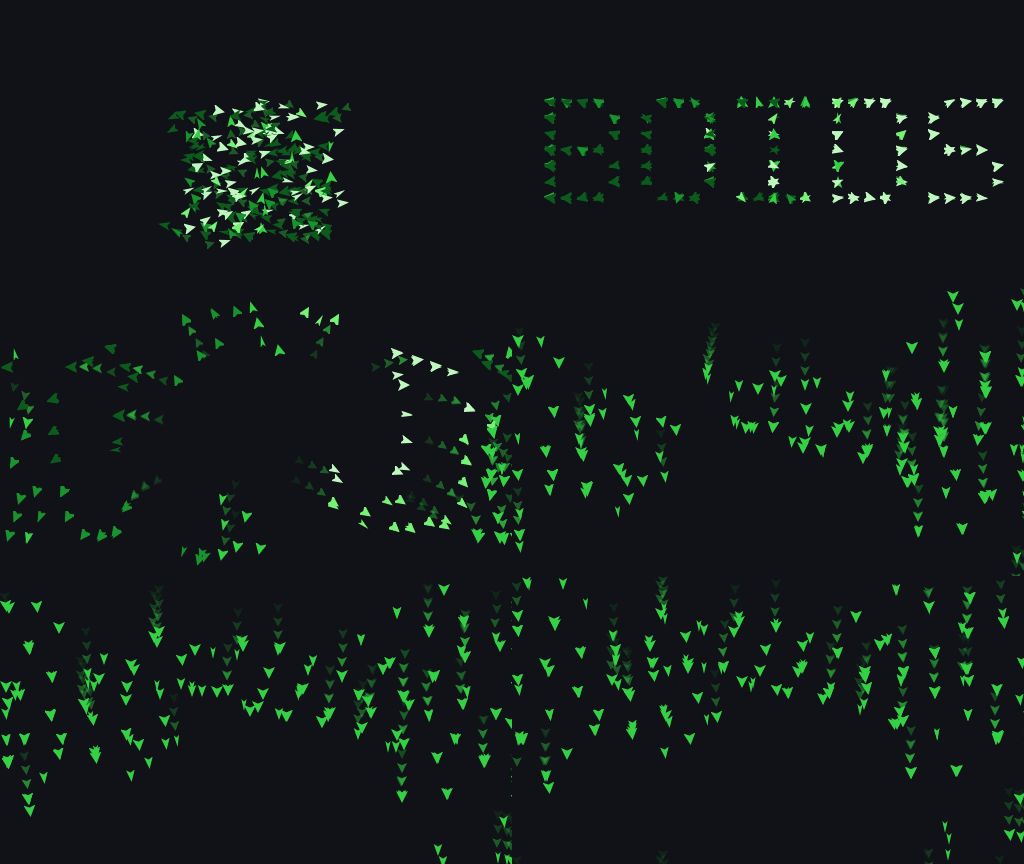
cbirds --render kitty --matrix --speed 0 |
cbirds --render kitty --depth --trails --color ice |
 |
 |
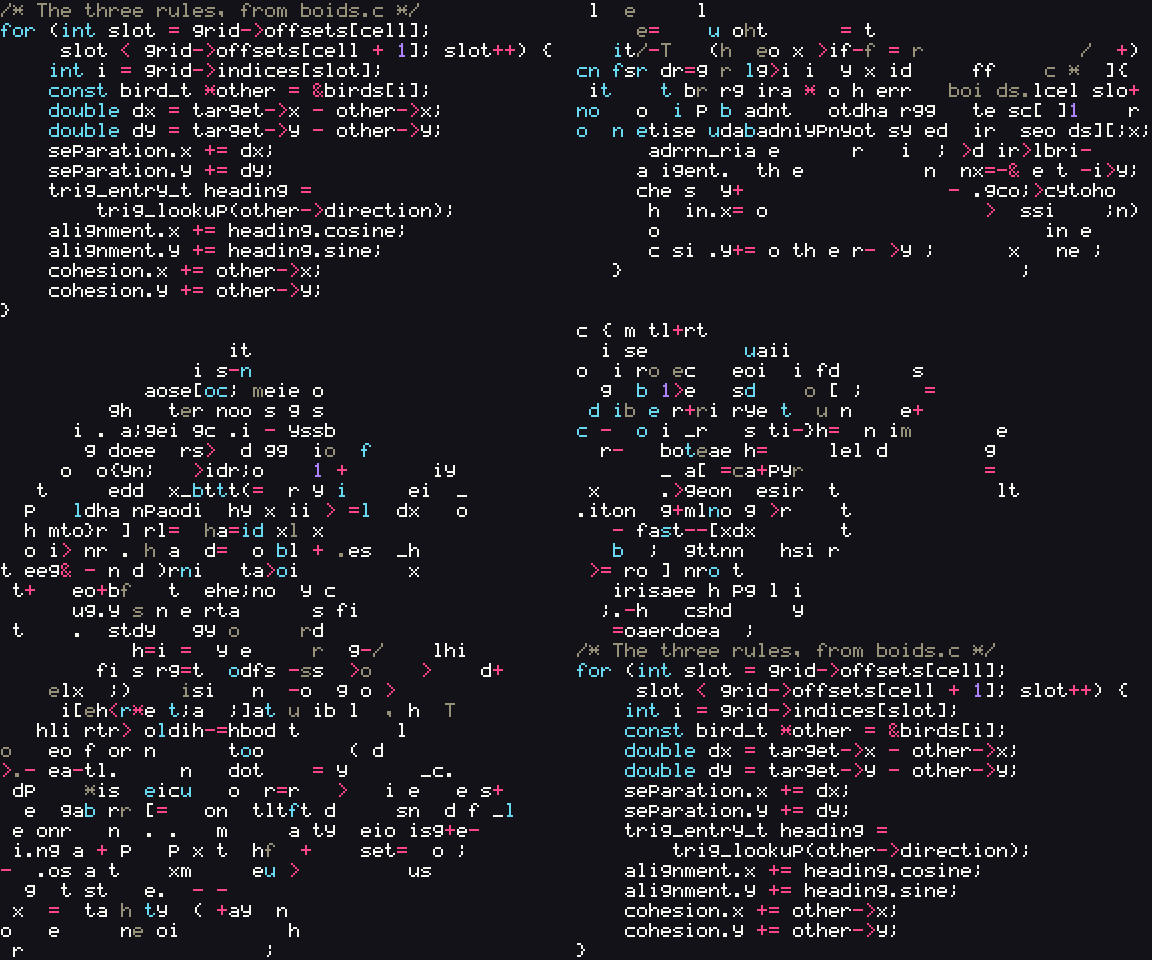
pygmentize -f 16m -O style=monokai docs/rules.c | cbirds |
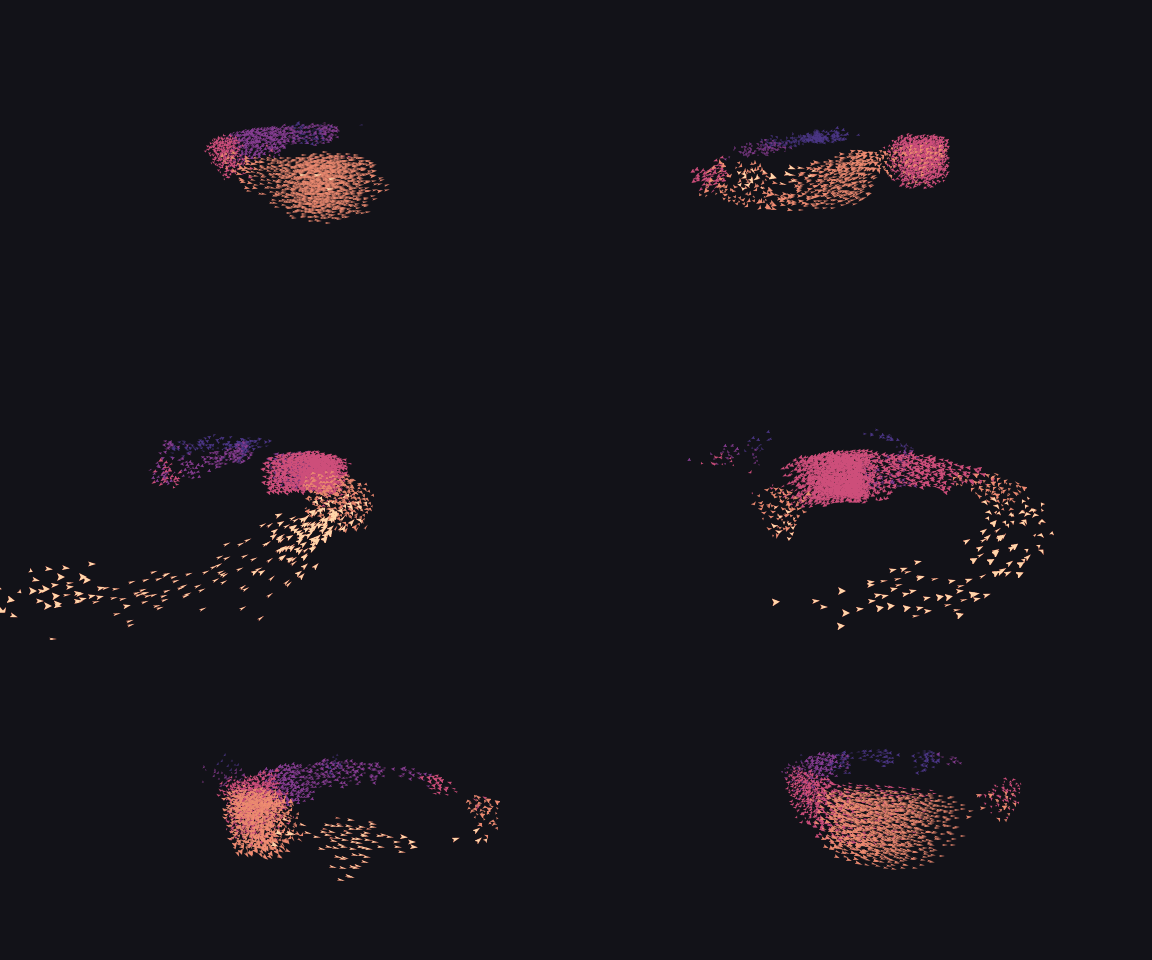
cbirds --render kitty --3d --color dusk |
 |
 |
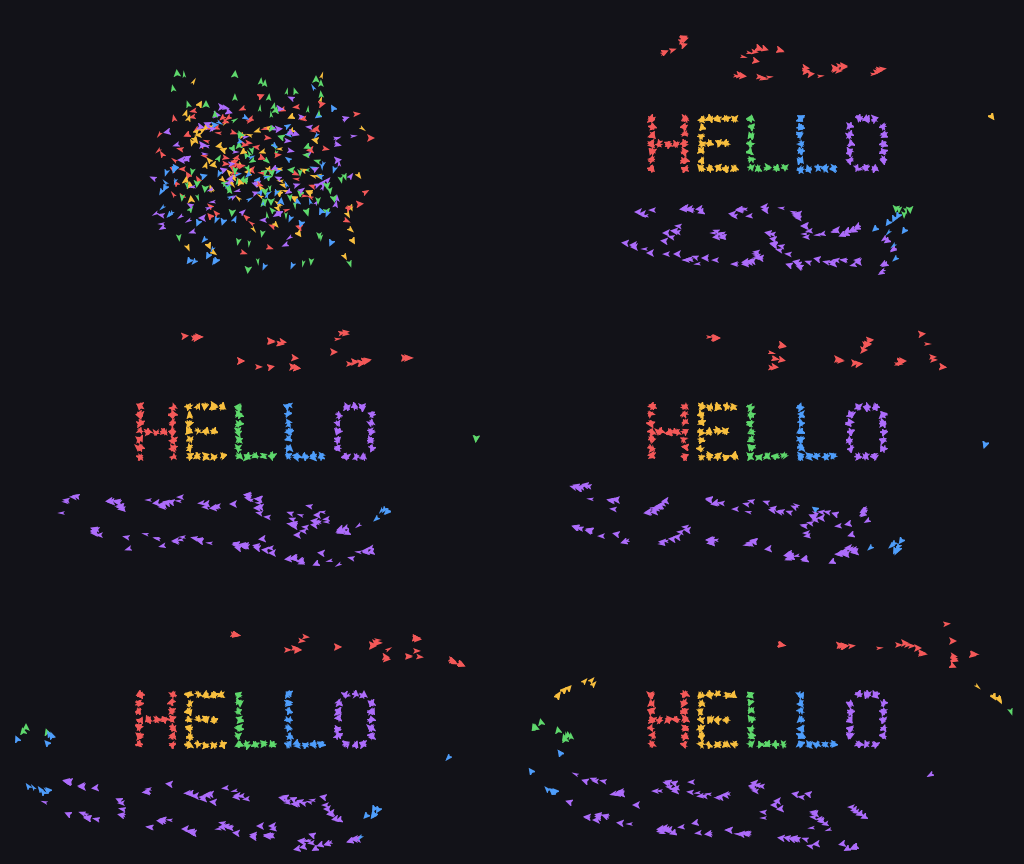
cbirds --render kitty --say "hello" --color prism |
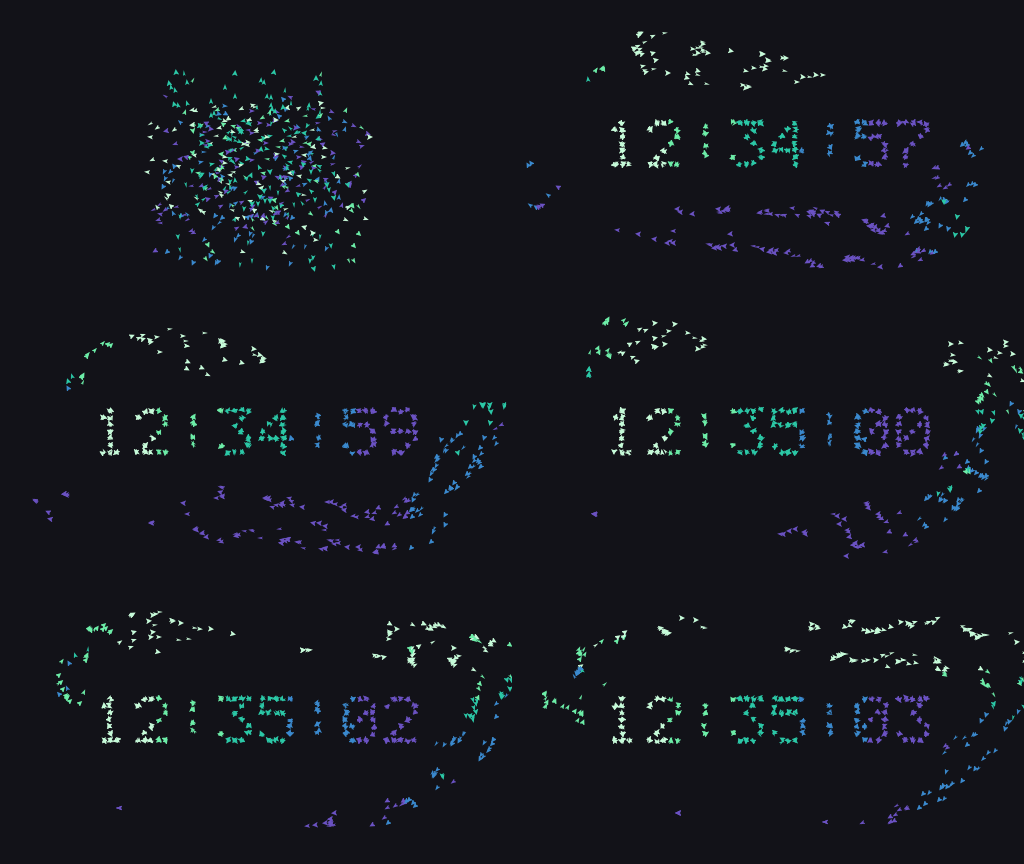
cbirds --render kitty --clock-at 12:34:56 --seconds --color aurora |
 |
 |
cbirds --render braille --hawks 2 --color ice |
cbirds --render sextants --color acid --speed 2 |
Install
Homebrew
macOS and Linux. Completions for bash, zsh and fish come with it, and
brew upgrade keeps it up to date.
brew install clainstone/tap/cbirds
MacPorts
macOS, from the port. Completions
for bash, zsh and fish come with it, and
sudo port selfupdate && sudo port upgrade outdated keeps it up to date.
sudo port install cbirds
apt
Debian 12, Ubuntu 22.04 and later, and their derivatives, on amd64 or arm64,
from its apt repository. Completions come with
it, and sudo apt upgrade keeps it up to date.
sudo apt install curl
curl -fsSL https://clainstone.com/apt/cbirds.gpg | sudo tee /etc/apt/keyrings/cbirds.gpg >/dev/null
echo "deb [signed-by=/etc/apt/keyrings/cbirds.gpg] https://clainstone.com/apt stable main" | sudo tee /etc/apt/sources.list.d/cbirds.list
sudo apt update
sudo apt install cbirds
Or just the package, without the repository and so without updates: the
.deb files are on the release page,
for sudo apt install ./cbirds_*.deb.
Nix flake
Linux on x86_64 and aarch64, macOS on Apple silicon. With Nix and the
nix-command and flakes experimental features enabled, run directly from
this repository:
nix run github:clainstone/cbirds
Pass cbirds options after --, for example for sprites in Kitty or Ghostty:
nix run github:clainstone/cbirds -- --render kitty --hawks 2 --color ice
From a local checkout of this repository, use nix run ..
From source
git clone https://github.com/clainstone/cbirds
cd cbirds
make
sudo make install
cbirds
That puts one file, /usr/local/bin/cbirds. Without sudo, in your home
instead (~/.local/bin has to be on your PATH):
make install PREFIX="$HOME/.local"
Linux and macOS. You need a C compiler and make, nothing else.
make test runs the tests. The build uses the system's cc and honours CC,
CFLAGS, LDFLAGS, PREFIX and DESTDIR, so make CC=clang and packaging
work as usual.
Uninstall
Homebrew
The second line removes the tap as well; leave it out to keep it.
brew uninstall cbirds
brew untap clainstone/tap
MacPorts
sudo port uninstall cbirds
apt
The last two lines remove the repository as well; leave them out to keep it.
sudo apt remove cbirds
sudo rm /etc/apt/sources.list.d/cbirds.list /etc/apt/keyrings/cbirds.gpg
sudo apt update
A .deb installed on its own goes with the first line alone.
From source
In the same directory, and with the same PREFIX it was installed with:
sudo make uninstall                     # installed with sudo make install
make uninstall PREFIX="$HOME/.local"    # installed in your home
Without the clone it is the one file: sudo rm /usr/local/bin/cbirds, or
rm ~/.local/bin/cbirds.
Use
cbirds                              a flock in braille, in your terminal's own colours
cbirds --render kitty               sprites, in Kitty or Ghostty
cbirds --preset murmuration         the starling look
cbirds --hawks 2 --color ice        something to watch
cbirds --flocks 3 --color ember     three flocks that keep to their own
cbirds --color prism                a turn runs a rainbow through the flock
cbirds --depth --trails             a second sky behind the first
cbirds --3d                         a murmuration in three dimensions
cbirds --link                       one sky across several terminals
cbirds --matrix                     it is raining birds
cbirds --say "back in five"         the flock writes it, and holds it as a sign
cbirds --clock                      the flock tells the time
cbirds --clock --seconds            and the seconds, HH:MM:SS
cbirds --say "ciao" --font-size 8   letters eight rows tall, from 4 to 10
cbirds --picture logo.png           the flock draws a PNG; --shape dot and -n 2000 suit it
cbirds --screensaver --clock        a lock screen that tells the time; any key quits
fastfetch | cbirds                  the letters of anything take flight
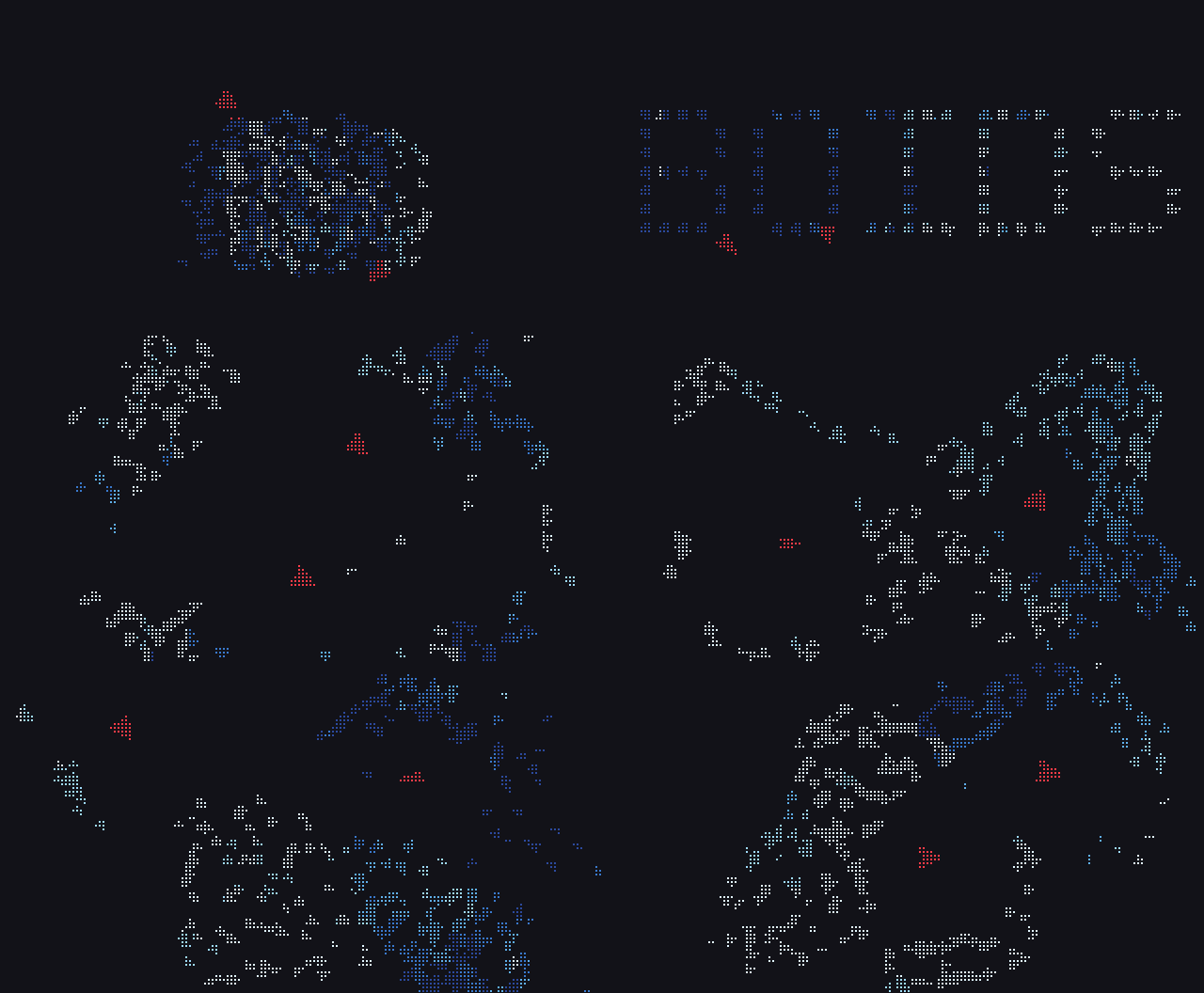
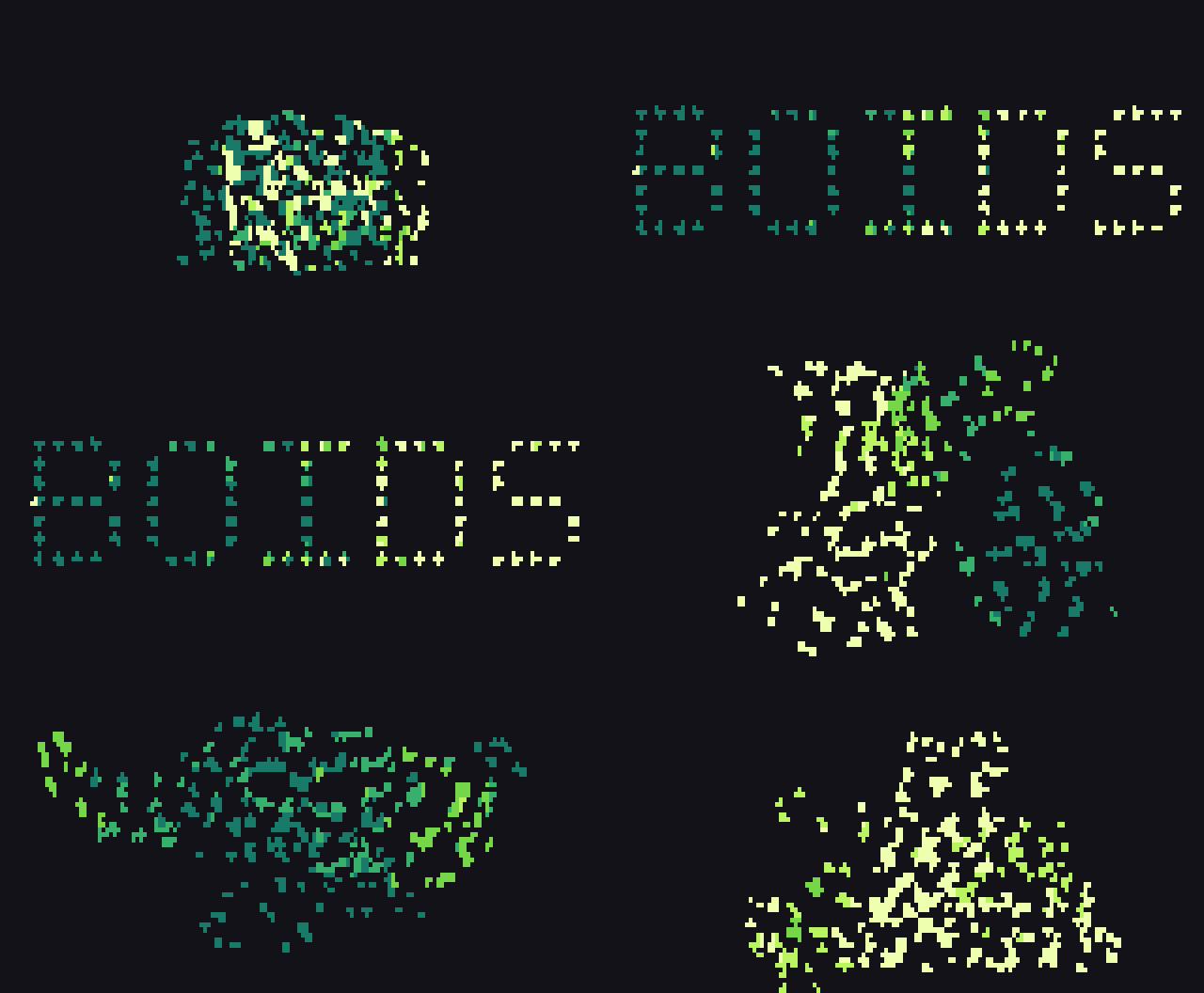
It opens by writing BOIDS, lets go, and flocks. Move the pointer into the
flock and it scatters. Press q and it flies off the top. Left alone for a
minute, it starts moving the sliders itself; any key takes them back.
h opens the panel of sliders in the corner, and --panel opens it from the
start: boundary on b/B, separation on s/S, alignment on a/A,
turning on t/T, perception on p/P, speed on v/V, and with two
flocks or more avoidance on g/G. Lowercase lowers, uppercase raises, one
press is one notch.
| key | key | ||
|---|---|---|---|
Space |
pause | . |
one frame |
+ - |
more birds, fewer | k K |
a hawk more, one fewer |
e |
tails | Tab |
next preset |
0 |
back to the defaults | Enter |
letters off, or home |
Anything can fly
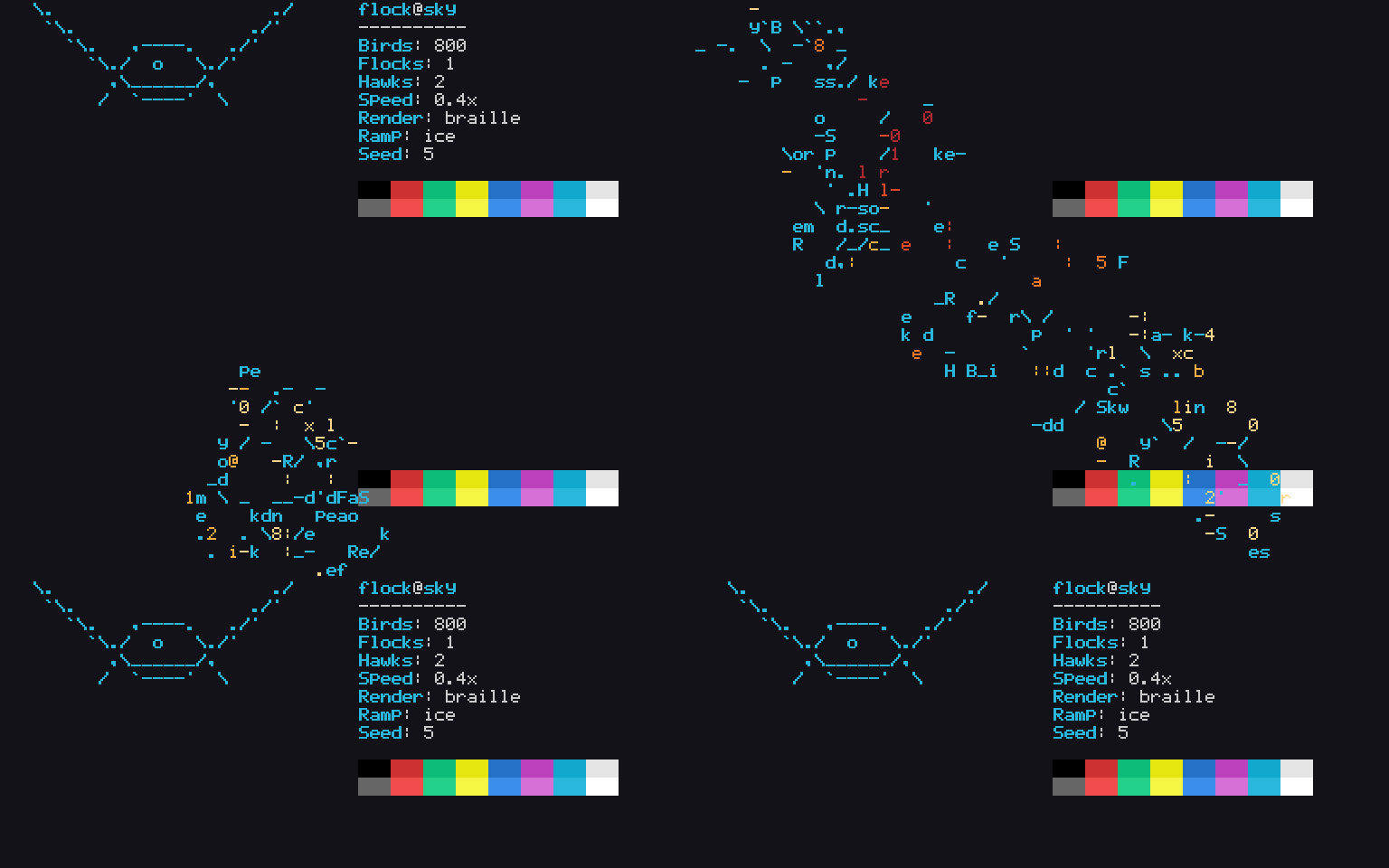
Pipe text into cbirds and the text is the flock.
fastfetch | cbirds
figlet -f big hello | cbirds
ls --color=always -la | cbirds
git log --oneline --graph --color=always | cbirds
cbirds --text poem.txt
cat docs/neofetch.txt | cbirds
It opens with the text exactly as the command printed it, in its own colours, laid out as a terminal would have laid it out: cbirds reads the escape sequences, so a logo with its information beside it comes out as a logo with its information beside it. A few seconds later one letter leaves and the ones near it follow, a wave that crosses the screen in about a second, and the letters fly as a flock. After twenty seconds or so they are called home, and every letter lands on its own cell: the screen is what the command printed again, to the cell. After a pause it happens again.
Enter sends the letters off, or calls them home at once. Move the pointer
through the text at rest and the letters it touches fly up, and they come back
when it has gone. q sends them off the top, as it does the birds.
A letter is drawn as itself, in its own colours, with its bold and underline,
wherever it is; one with no colour of its own takes the flock's while it flies.
A background colour stays where it was printed. Wide characters take two cells.
Hawks work, and are arrows over text. --birds, --flocks, --depth,
--matrix, --shape, --sprite, --size and tails do not apply: the text
decides how many letters there are, and a letter has no sprite. --render kitty draws text too. The panel is laid over the text, and the letters under it
still land there.
When standard input is not a terminal, the keys are read from the terminal
itself, its controlling one, /dev/tty, on Linux and on macOS alike; with no
terminal at all, as from a service or an editor's run button, cbirds says that it
needs one and stops. A pipe is read to its end, or until it has been quiet for a second and a
half, or has gone on for eight seconds, or has sent a megabyte, and what is kept
is the last screenful, as a terminal would keep it; tail -f log | cbirds shows
what the log had when it went quiet. A pipe that sends nothing for three seconds,
and text with nothing to see in it, give the ordinary flock. If the window
changes size, the text is laid out again on the new one. A sign is what the flock
writes, and text is the flock, so --say, --clock, --seconds and --picture
stop with a usage error beside --text or beside text on a pipe, and so does
--3d, whose sky has no screen to lay a text out on.
Recordings take text too, and then run a whole cycle, 34 seconds, unless
--record-seconds says otherwise. A recording never starts a wave it has no time
to finish, so a whole cycle ends on the text as it was printed, and a GIF of it
loops without a jump:
fastfetch | cbirds --record fetch.cast
cbirds --text poem.txt --record poem.gif --record-fps 20
A GIF of text is drawn with a 5 by 7 font in cells of 12 by 20 pixels, so it
shows the letters rather than dots. --snapshot takes text, and --bench takes
--text and never a pipe it happens to be in.
Signs
--say TEXT has the flock write TEXT where it would write BOIDS, and keep it
up. A sign is for reading, so it is held for thirty to forty-five seconds, and
then the flock lets go for eight to twelve, flies as a murmuration, and writes
it again. The birds that write do not stand still: each hovers round its place
in a small loop of its own, so the strokes shimmer and stay sharp. The colour
runs along the text, from one end of the ramp to the other.
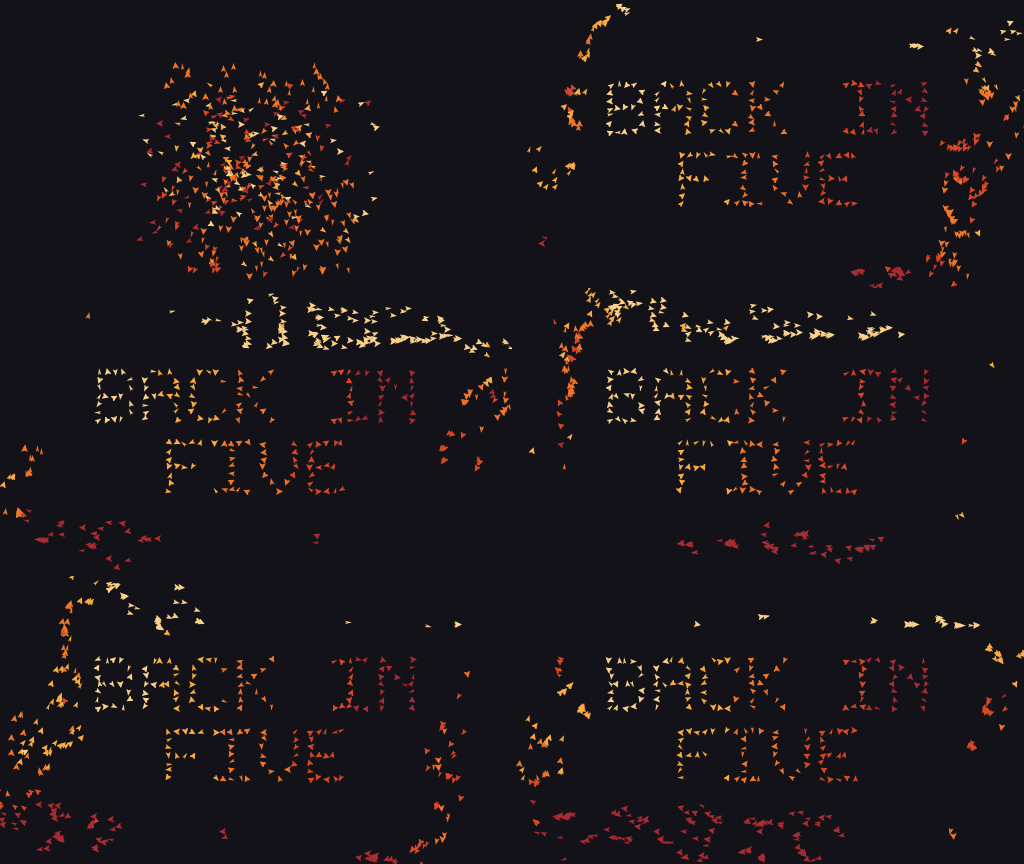
cbirds --render kitty --say "back in five" --color ember
The rest of the flock wheels round the sign, not through it: all of it the same way, on an ellipse round the text, as one river that bunches and thins, and the other way round the next time the sign is written. Each bird of it wears the colour of its heading, so the sky round the text turns like a wheel.
The letters are a seventh of the window's rows tall: four rows at 80 by 24,
five at 120 by 34, seven at 200 by 50. --font-size ROWS sets them from 4 to
10 rows, on any window. Under four the text is lost in the river, and over ten
the birds, which are as wide as the cells of the letters, are as heavy as a
flock with nothing to write and the river is two bands above and below the
text. A sign never takes more than half the width of the screen and not quite
half its height, or half and half on a small terminal, so that the river has
room; a size that does not fit there is made as large as fits, on up to three
lines, and a long text that would be too small to read takes up to two thirds
by three fifths. On a small terminal more of the flock writes, so that the
birds that are left have sky to fly in.
Lower case is written in capitals, and an accented letter as its plain one, so that città is CITTA and Straße is STRASSE; a symbol, or a letter of another alphabet, has no plain letter and is left out. A text the flock has too few birds to write is said so on stderr and left unwritten, and one that turns out too big for the screen once the run has started is said so there when the run ends, after the terminal is given back. A key does not end a sign. Move the pointer through it and the birds it reaches scatter, and come back when it has gone. A hawk does the same to the places it flies over, for less time: a fifth of a second to two fifths, and only the places within a hawk's own width of its path. A hawk is turned from the text as the flock is, if less firmly than it is drawn to its prey, so it hunts round the sign with the river and crosses it when a chase takes it there. With one hawk up, 800 birds and a screen of 96 by 26 cells, about 3% of the writers are scattered at any moment, and about 7% with two; a clock stays readable.
--clock writes the time, HH:MM, in local time, and follows the locale for the
hour: twelve hours, with no AM or PM, if LC_TIME has a time format that shows
the hour on a twelve hour clock, and twenty four otherwise. The colon rises and
settles once a second. At each new minute the digits that change let go and
other birds write the new ones, while the rest of the time stays where it is,
so the clock can be read at any moment. On the hour the whole of it lets go for
a few seconds, and the flock writes the next time.
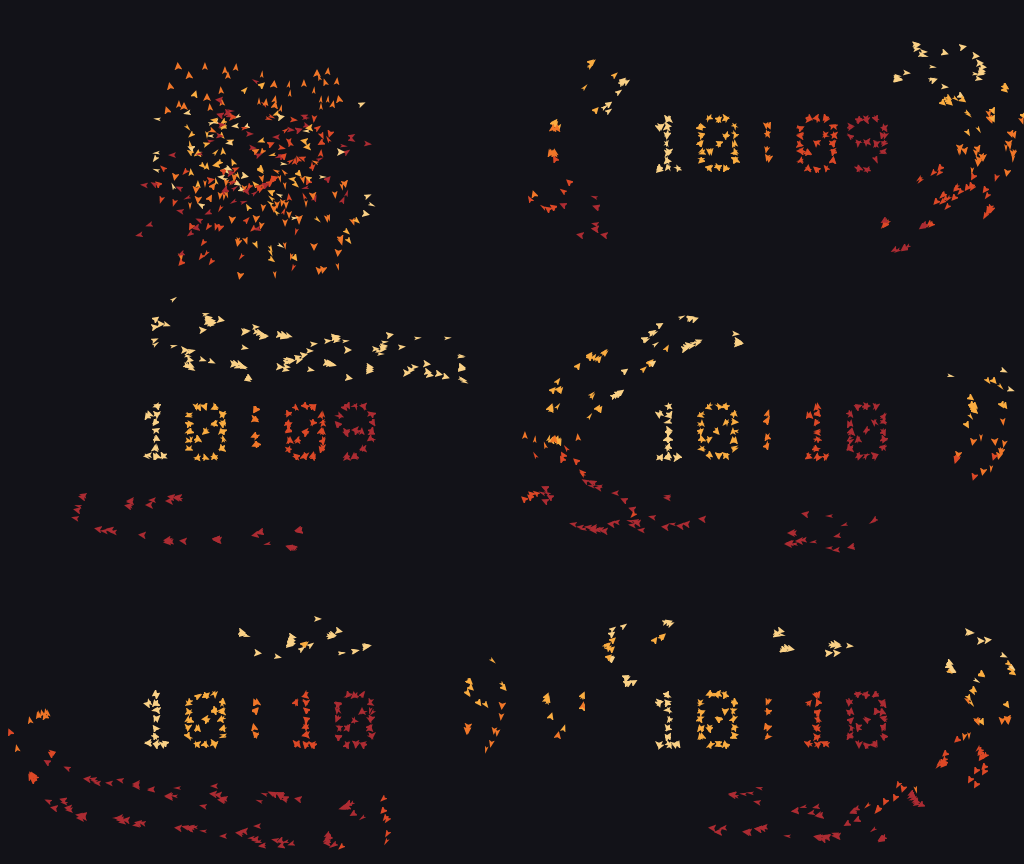
cbirds --render kitty --clock-at 10:09:52 --color ember
--seconds shows the seconds too, HH:MM:SS, and is a clock on its own, as
--clock-at is. A digit of the seconds is not let go: its own birds hop over to
the next one, which takes them a fraction of a second, so the seconds can be
read as they tick. The minutes and the hour change as they do without it.
--picture FILE has the flock draw a PNG instead. Every bird takes a place in
the opaque part of the picture, where a pixel with an alpha above half is ink,
the places spread evenly over it, and wears the picture's colour there. The
picture is cut down to at most eight colours, which are the palette of the
run; with --color given they are not, and the light and dark of the picture
pick shades of that ramp. A bird keeps its colour while it flies, and the
picture is held, let go of and drawn again as a sign is. --shape dot and more
birds, -n 2000, draw it best. The file is read as --sprite reads one: a PNG
of up to 4 MB, in any of the colour types PNG has.
A sign picks a bird as wide as the distance between the cells of its letters
unless you give --size, so larger letters are written by larger birds, up to
the usual thirty pixels, and the whole flock flies at that size. --shape dot
is the crispest, and more birds make thicker strokes.
A recording runs on its own clock, not the wall's, so the time a recorded
--clock tells is the local time at which the recording started, moved on by
its frames. --clock-at 10:09:50 starts it from a time you choose instead,
which is how to record a change of minute. On its own it starts a clock.
Screensaver
--screensaver quits at once on any key, mouse click or pointer movement, with
no flight out. Input in the first half second is ignored, because it is
whatever started the lock. It goes with everything else, so
cbirds --screensaver --clock is a lock screen that tells the time. For tmux,
which locks a client after lock-after-time idle seconds and runs lock-command
on it:
set -g lock-after-time 300
set -g lock-command "cbirds --screensaver --clock"
And in zsh, which sends itself an alarm after TMOUT idle seconds at the
prompt and runs TRAPALRM:
TMOUT=300
TRAPALRM() { cbirds --screensaver --clock }
Three dimensions
--3d takes the flock off the plane and into a sky: a murmuration over its
roost, seen from a camera that goes once round it every two minutes. The depth
shows even in a still picture: a nearer bird is bigger and brighter than a far
one, and a bird flying at the camera is short where one flying across it is
long.
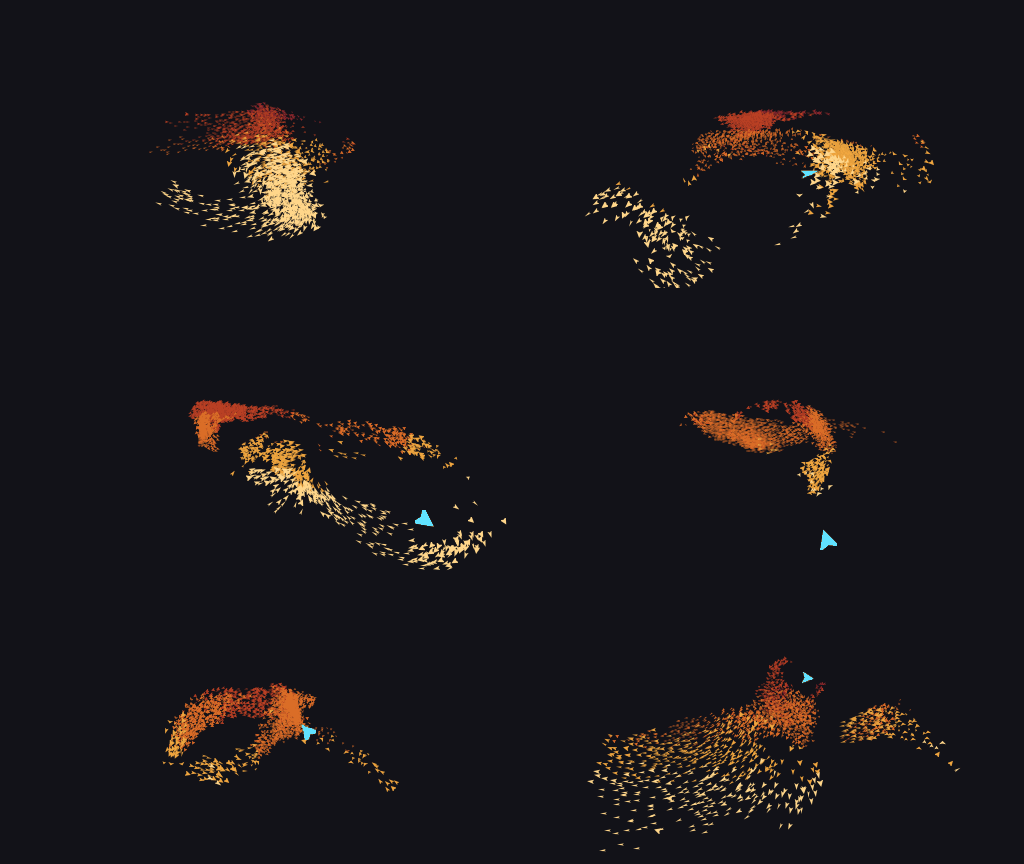
cbirds --render kitty --3d --color ember --hawks 1
The three rules are the same, but a bird heeds its seven nearest neighbours, as starlings do, and not everything within a radius. It turns at a limited rate a second, so it banks. A roost calls it home when it strays, and the air above the roost moves slowly, which folds the flock into sheets and ribbons.
Without -n, -s or -c there are 2000 birds, of 8 pixels, or 5 in text, in
ink: the ramp from your terminal's text colour to its background, asked for
at startup, so the flock is grey on a dark terminal and near black on a light
one. A terminal that does not answer, or whose text i