

Heat all day or only when needed? Stop guessing and calculate it for your own home.
Every winter the same argument returns. Some say: "keep the heating on, because a cooled-down house costs more to warm up again." Others say: "turn it down when nobody is home, because every hour saves money." Press articles and studies disagree too. The reason is simple: the answer depends on insulation, thermal mass, heat source, weather and tariff.
ThermoStrategy is a free app that calculates it for your building, not for an "average" one.
Who is it for?
• homeowners and tenants who want lower bills without replacing equipment, • people with a heat pump or electric heating (heaters, IR panels, mats, underfloor cables), • households with solar PV, a battery, or a time-of-use or dynamic tariff, • anyone building or renovating who wants to compare insulation and heating options.
How does it work?
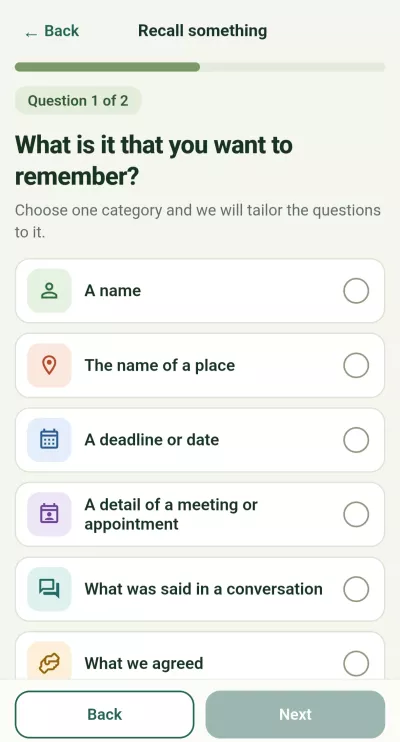
- You enter your location, floor area, type of home and equipment (the wizard takes a minute).
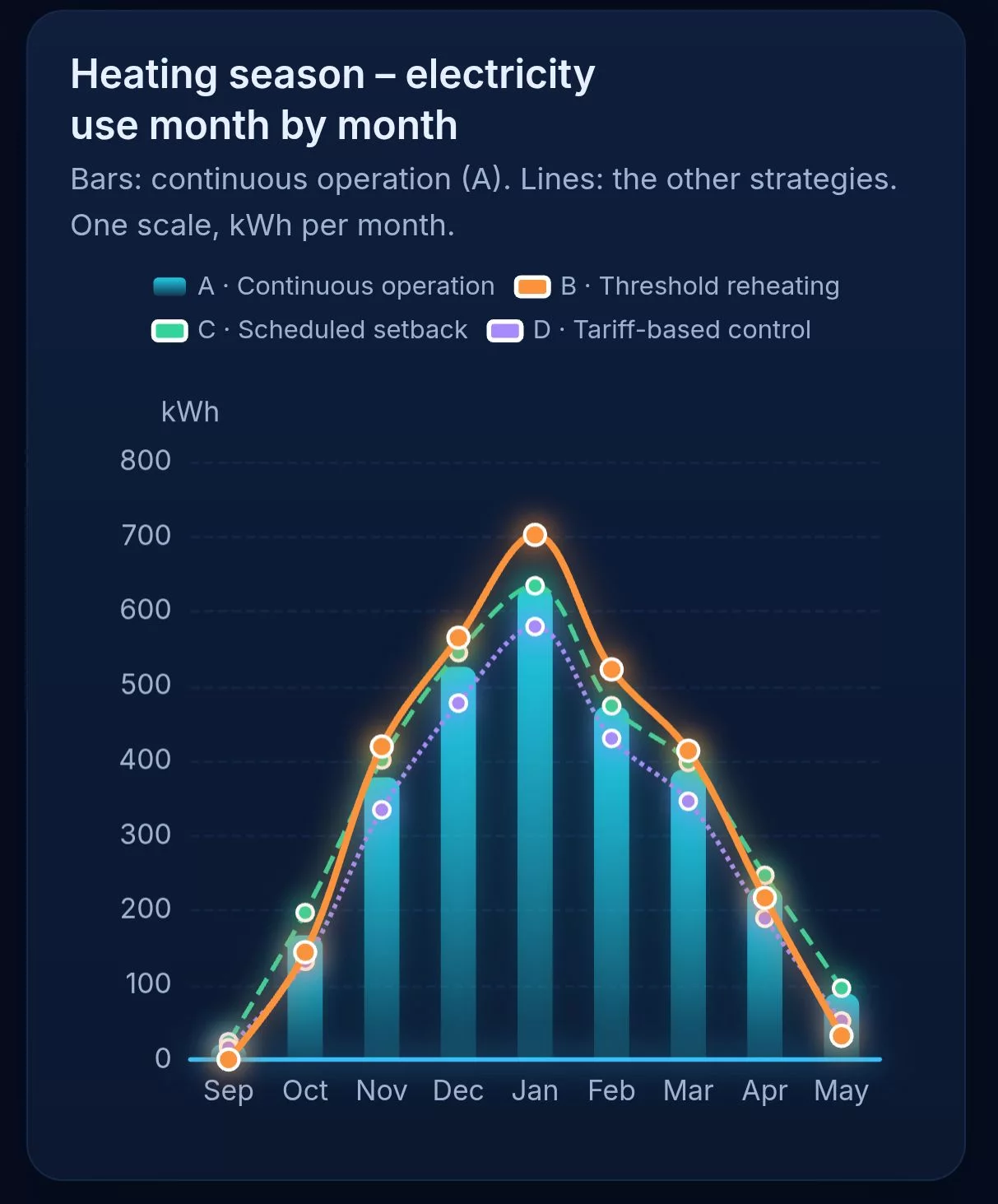
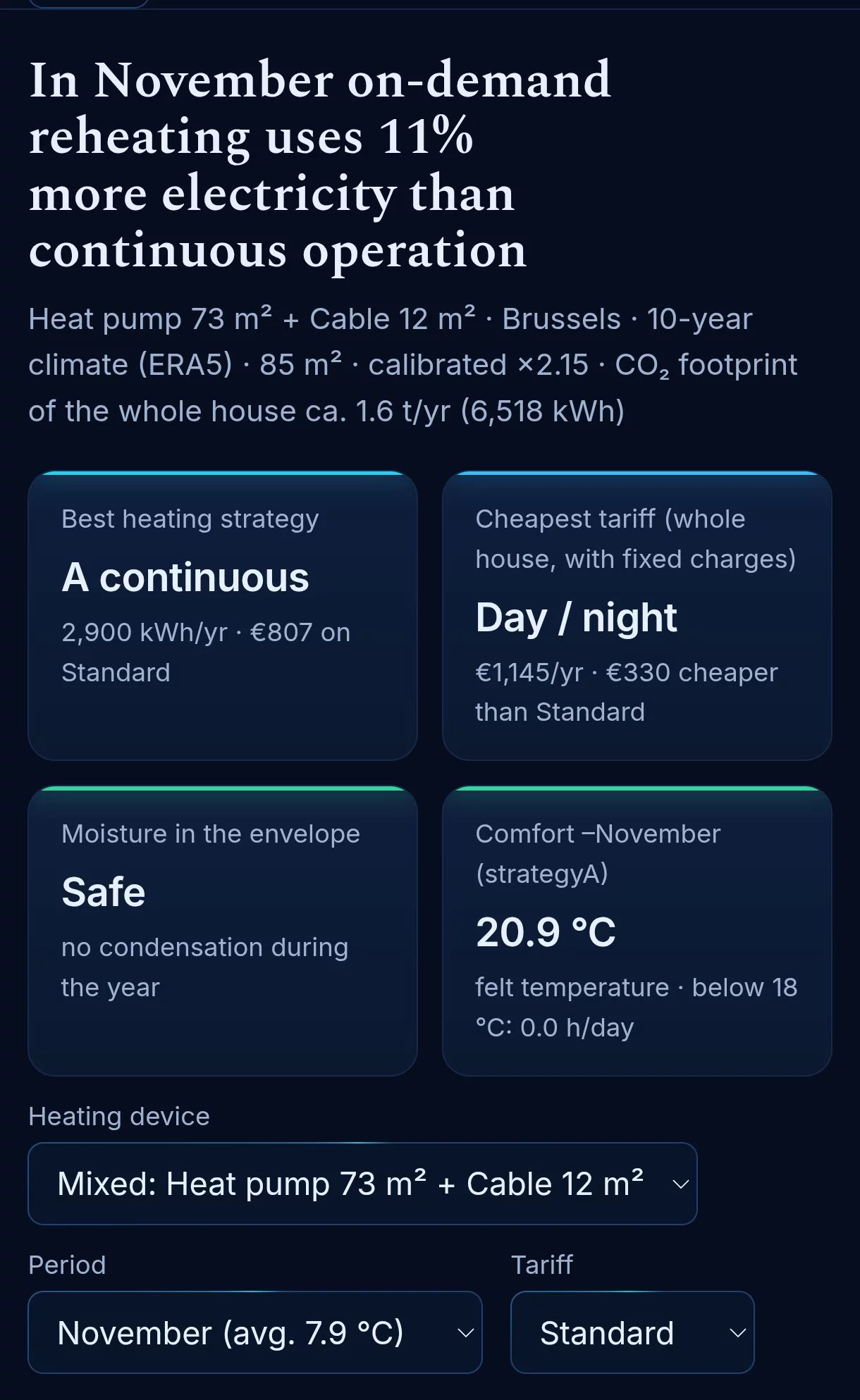
- The app takes local climate from multi-year weather data and simulates the building hour by hour: walls, thermal mass, ventilation, windows.
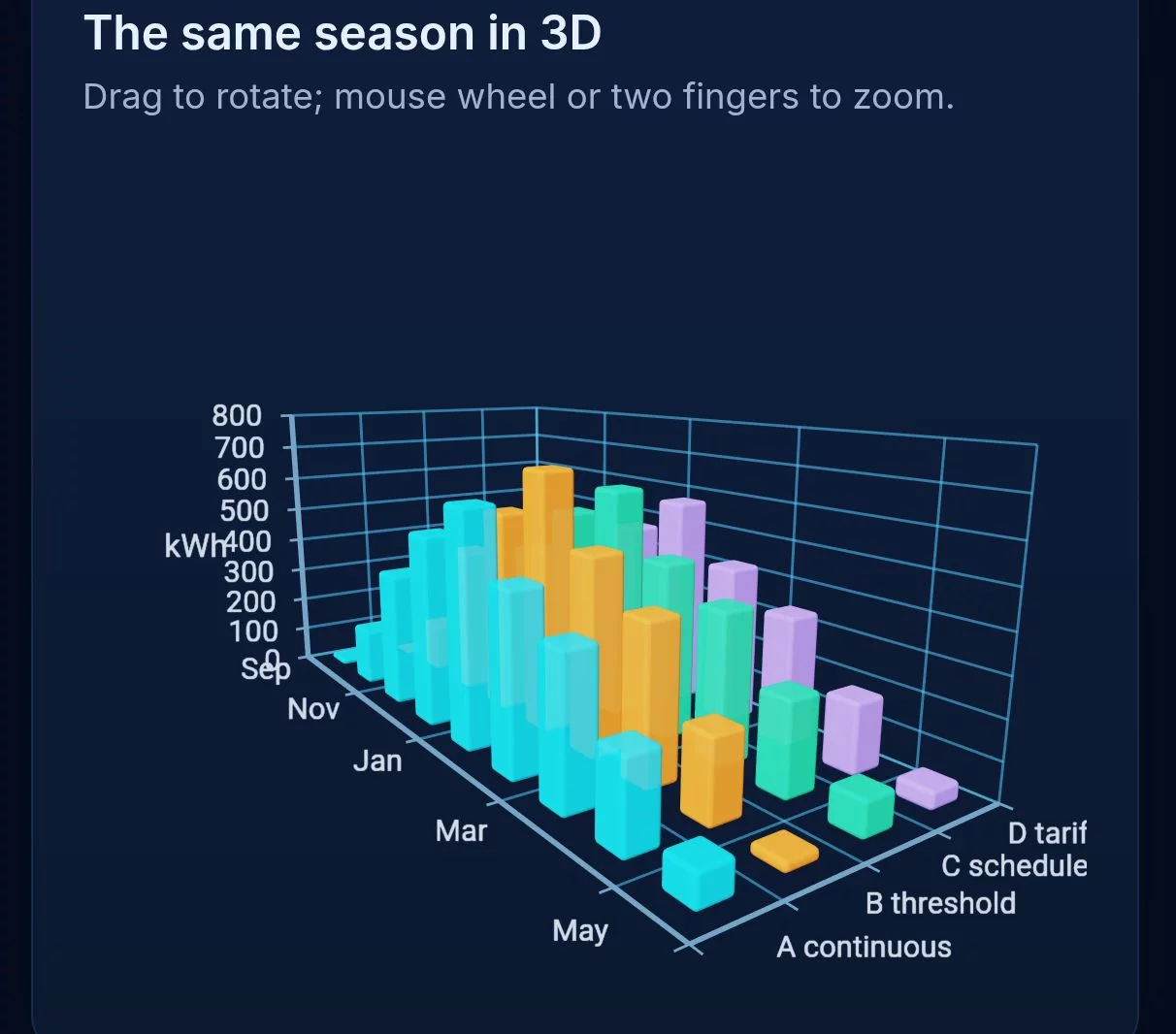
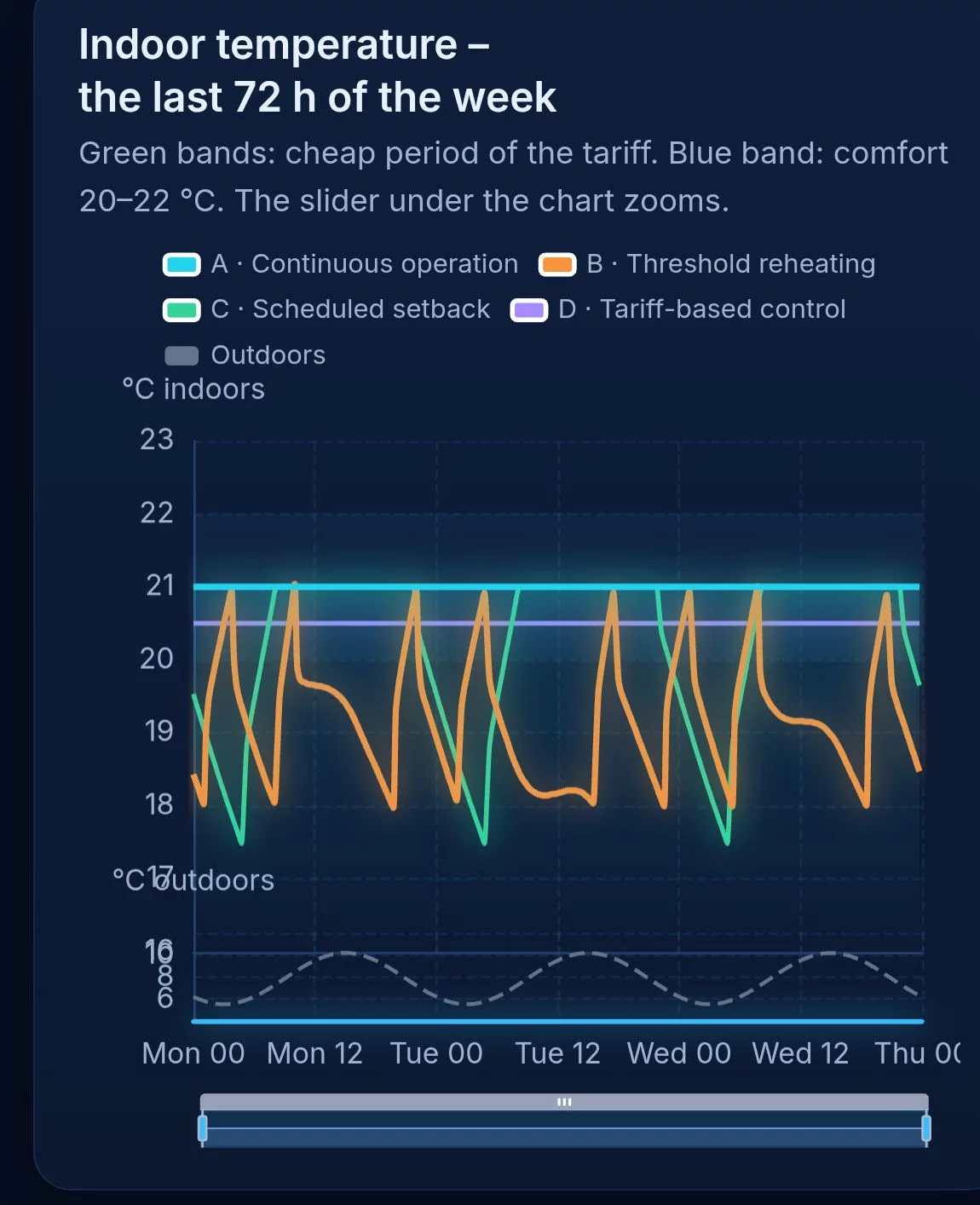
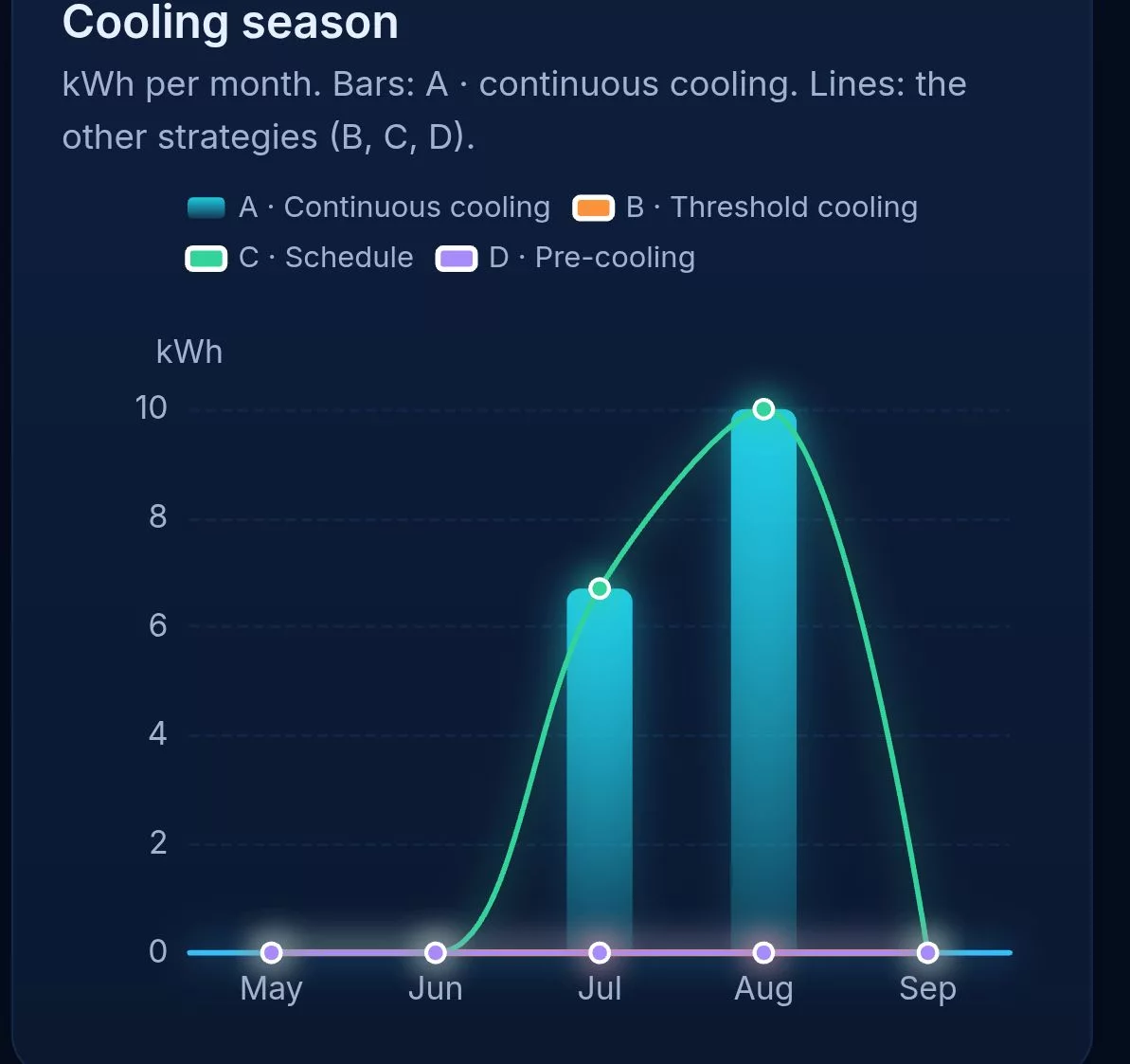
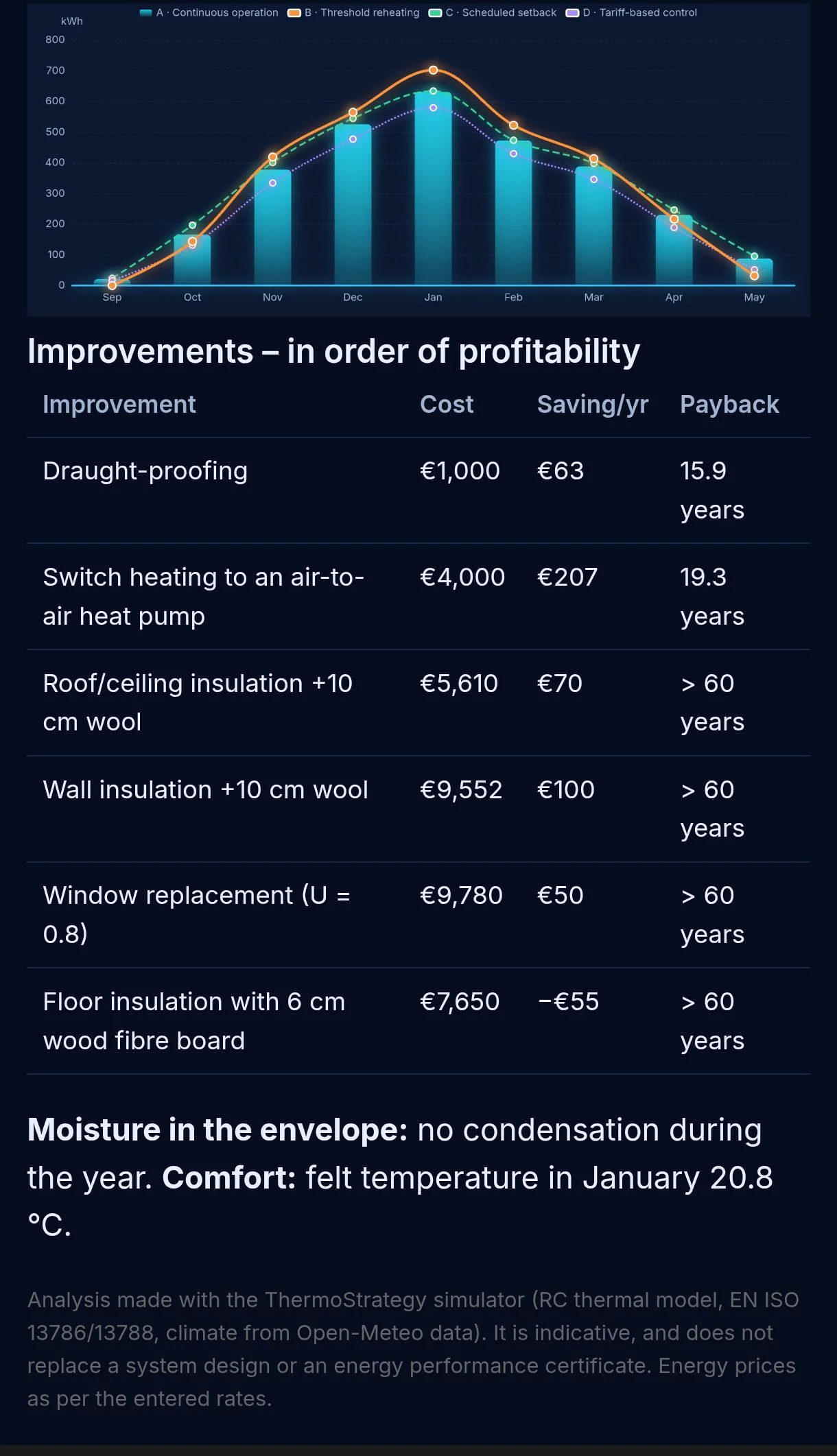
- It compares four strategies (A/B/C/D): continuous heating, a night setback, an evening boost and mixed variants.
What will you see?
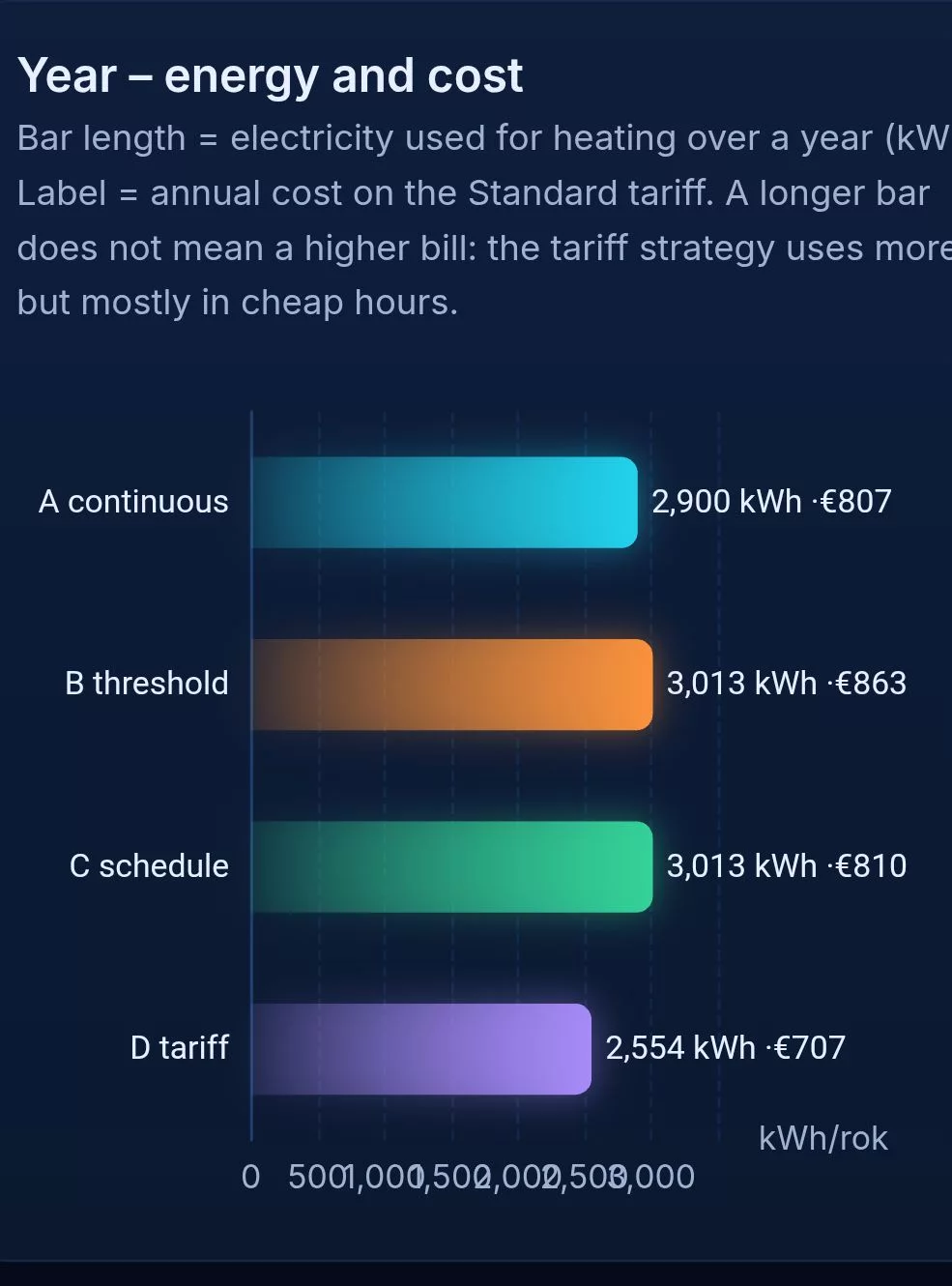
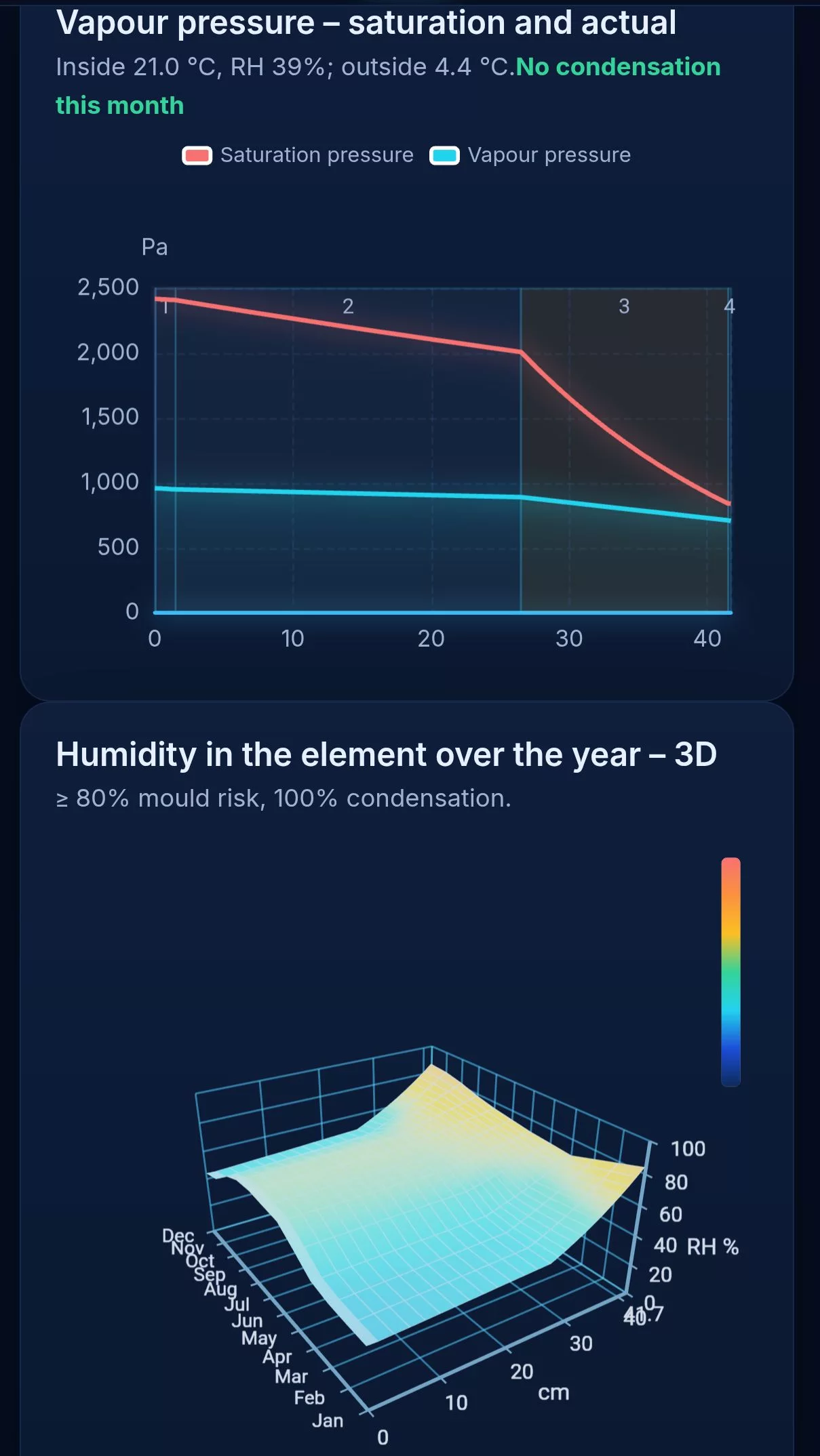
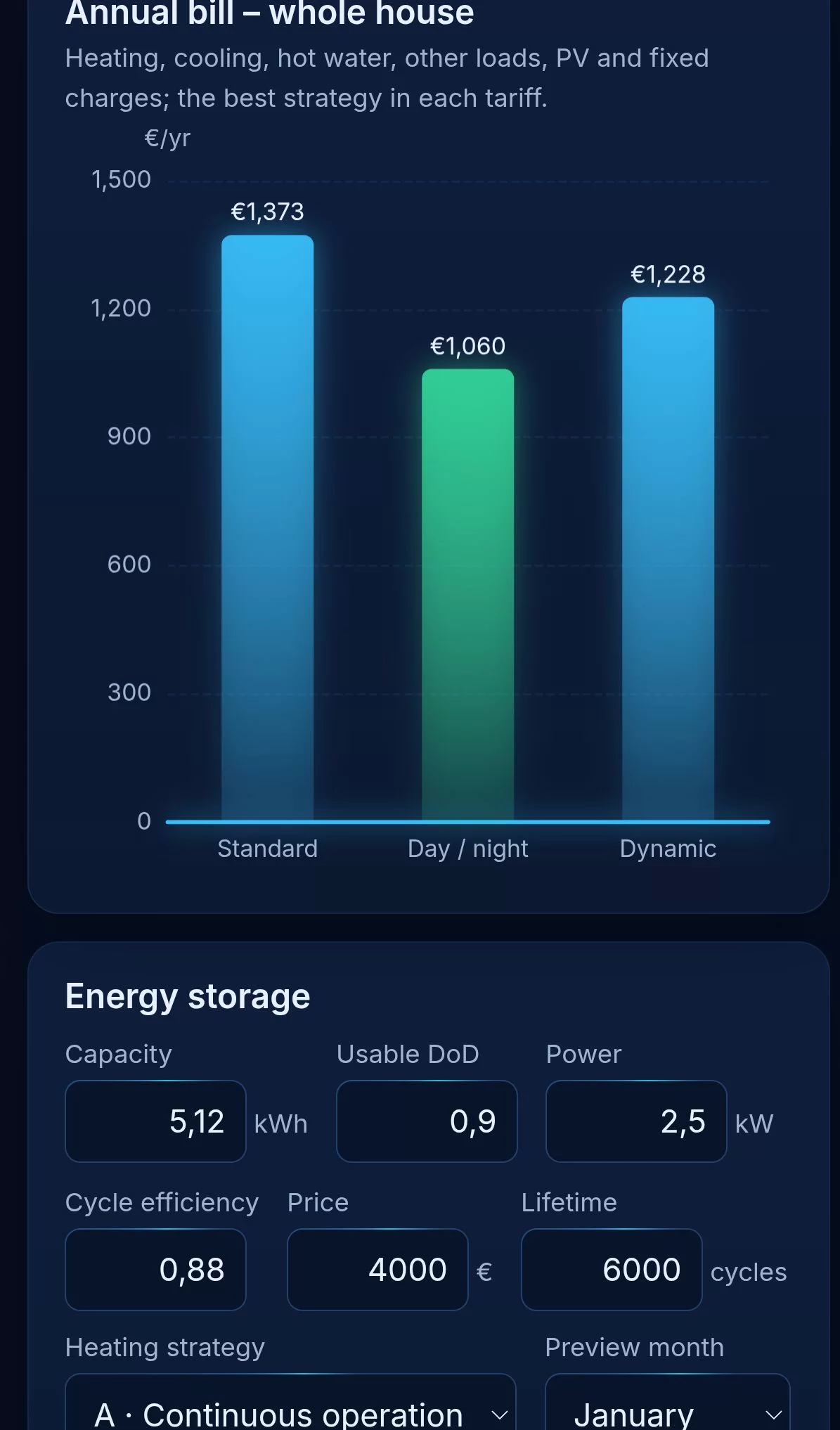
• the annual bill under each tariff and which strategy wins, • energy use (kWh), room temperatures and daily charts, • the effect of PV and battery storage on costs, • comfort, overheating risk, and condensation and mould risk in the walls (Glaser method per EN ISO 13788), • payback on investments such as insulation or a battery.
How can it help?
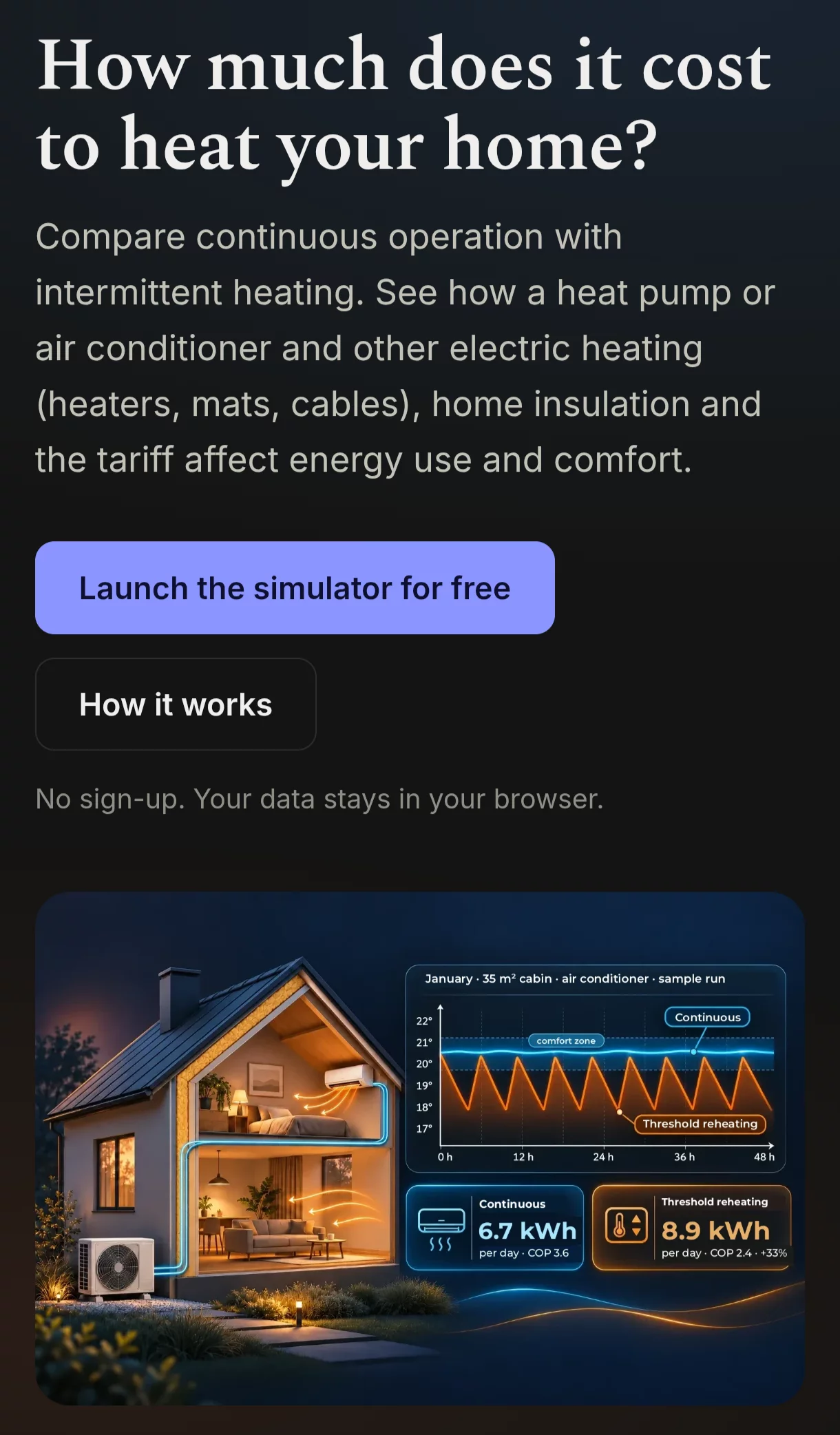
• you see the difference in money and kWh for your case, not for a "typical house", • you learn when a setback pays off and when it doesn't. With a heat pump, continuous running is often cheapest, because boosting forces full power and a lower COP. With a resistive electric heater, a setback always saves energy, but at the cost of comfort, • the Methodology tab lists assumptions and sources (studies, standards, WHO guidance), so you can check what the result rests on.