
The engine that ports a Claude Code plugin to another host, as a plugin, not as a pile of copied skills. It has one command per host, published on its own:
npx claude-plugin-to-codex --source ./my-plugin       # OpenAI Codex
npx claude-plugin-to-opencode --source ./my-plugin    # OpenCode
npx claude-plugin-to-antigravity --source ./my-plugin # Google Antigravity
Each command speaks its host only: its help, its flags, its README (Codex, OpenCode, Antigravity). This package is what they share: the conversion, the bundles, the installer, the library API, and a generic command for scripts that serve every host:
npx claude-plugin-port --source ./my-plugin --target codex|opencode|antigravity [--bundle <dir>] [--dry-run]
A Claude Code plugin is a directory with .claude-plugin/plugin.json, skills/, and often scripts/, templates/, hooks/ and .mcp.json. Codex, OpenCode and Antigravity all read the same SKILL.md format, but none knows Claude Code's path anchors, its rules file, its tool names or its hook wiring. The engine rewrites exactly those, and nothing else. Idempotent, zero dependencies, Node 18+.
What gets rewritten
| In the plugin | Why | Codex | OpenCode | Antigravity |
|---|---|---|---|---|
${CLAUDE_SKILL_DIR}, ${CLAUDE_PLUGIN_ROOT} in skills and scripts, braced or bare ($CLAUDE_SKILL_DIR) |
every host runs skill commands with cwd = the user's project and no plugin variable |
install path | install path | install path |
a hand-typed ~/.claude/plugins/marketplaces/<x>/<name> |
same anchor, fragile form; reported as a warning | install path | install path | install path |
CLAUDE.md in skills and scripts, ~/.claude/CLAUDE.md and path.join(homedir, ".claude", "CLAUDE.md") |
the host's rules file | AGENTS.md, ~/.codex/AGENTS.md |
AGENTS.md, ~/.config/opencode/AGENTS.md, or kept as CLAUDE.md (see the OpenCode README) |
AGENTS.md, ~/.gemini/AGENTS.md |
frontmatter keys other than name, description, license, metadata (user-invocable, allowed-tools, argument-hint, compatibility...) |
Codex's skill validator accepts only those, and compatibility describes Claude Code |
dropped | dropped | dropped |
skill names outside lowercase letters, digits and single hyphens (typically _helper) |
the naming rule of every host | renamed, every mention rewritten | renamed, every mention rewritten | renamed, every mention rewritten |
unquoted frontmatter scalars with : etc. |
strict YAML parsers | quoted | quoted | quoted |
AskUserQuestion |
a Claude Code tool | "a direct question to the user" | "the question tool" |
"the ask_question tool" |
| the words "Claude Code" in skill texts | the model should not be told it runs somewhere else (--no-rebrand to keep) |
"Codex" | "OpenCode" | "Antigravity" |
skill descriptions (--short-descriptions) |
Codex budgets its skill catalog to 2% of the context and shortens past that | first sentence | first sentence | first sentence |
The install path is absolute for a local install and $HOME/<path> in a bundle (bash and PowerShell both expand it inside double quotes). templates/ is project payload and stays byte for byte, apart from the names of renamed skills. hooks/ is carried verbatim: Codex runs hooks/hooks.json natively; on OpenCode a generated plugin runs the same PreToolUse hook commands; on Antigravity a generated hooks.json and its adapter (hooks/antigravity-guard.mjs) do, and the files nothing reads there (.mcp.json, hooks/hooks.json) stay out of the port; .claude-plugin/plugin.json stays, since a plugin's scripts may read their own version in it.
Skill names
Codex's skill validator and the documentation of OpenCode and Antigravity all ask for names made of lowercase letters, digits and single hyphens. A leading _, the usual mark of an internal helper in a Claude Code plugin, becomes the internal prefix, <plugin name>- by default: _helper becomes my-plugin-helper. The folder, the name: line and every mention of the skill follow (paths, plugin:skill references, /commands, templates, scripts), matched as whole names only, so _helper is never rewritten inside _helper-extra. A rename that would collide with another skill stops the conversion.
--internal-prefix hv gives hv-helper. --keep-skill-names keeps the names as they are: both loaders accept them today, only the validators refuse them.
The plugin's own settings: ports.json
A plugin can state once what each of its ports needs, in a ports.json at its root. Claude Code ignores the file, and it does not ship in the port.
{
  "internalPrefix": "hv-",
  "exclude": { "opencode": ["add-routine", "_create-routine"] }
}
internalPrefix: what a leading_becomes (see above).exclude: skills left out of the port, as one list for every target or as lists keyed by target. For a skill built on something the host does not have. Mentions of it left in other skills are reported, so their wording can say what to do when the skill is absent.keepSkillNames:truekeeps the original names.
Command-line flags win over the file: --internal-prefix, --keep-skill-names, --exclude-skill <name> (added to the file's list, repeatable) and --ports <file> (another settings file).
A text per host
When a skill works differently on one host, give it a variant next to its SKILL.md: SKILL.codex.md replaces SKILL.md in the Codex port, SKILL.opencode.md in the OpenCode port, SKILL.antigravity.md in the Antigravity port. Any <file>.<host>.md inside a skill folder works the same way. The variant goes through the same rewrites, and no variant file ships in any port. Claude Code reads SKILL.md only.
Bundles
--bundle <dir> writes a portable layout instead of installing: anchors are $HOME-relative, and unzipping the folder in one known place installs the plugin, with no command to type.
| Target | Unzip into | Contents |
|---|---|---|
| codex | the home folder | plugins/<name>/ (the plugin) and .agents/plugins/marketplace.json (a personal marketplace listing it; keep yours and add the entry if you already have one). Then install it from Codex's plugin browser, or codex plugin add <name>@personal. |
| opencode | ~/.config/opencode |
skills/<name>/ (the plugin) and plugins/<name>-guard.js (hooks, MCP servers and permission rules, root resolved from the home folder when it loads). Start a new session. |
| antigravity | ~/.gemini/config |
plugins/<name>/ (the plugin, with plugin.json, hooks.json and mcp_config.json). Quit Antigravity and open it again: it discovers a new plugin folder only at startup. |
Bundles use AGENTS.md and --ask-mode pass when a permission fragment exists.
Updating from a newer bundle
Every bundle carries a standalone installer at the root of its plugin folder, .claude-plugin-to-codex.install.mjs, so a converted plugin can update itself from inside the host with nothing but Node. Unpack the newer bundle anywhere, then run the installer it contains:
node <unpacked>/plugins/<name>/.claude-plugin-to-codex.install.mjs --from <unpacked>    # Codex
node <unpacked>/skills/<name>/.claude-plugin-to-codex.install.mjs --from <unpacked>     # OpenCode
node <unpacked>/plugins/<name>/.claude-plugin-to-codex.install.mjs --from <unpacked>    # Antigravity
It moves the installed copy to ~/.claude-plugin-to-codex/backups/ (outside the folders the host scans, so the old skills are never loaded twice; the last three are kept), puts the new copy in its place, and brings the old one back if any step fails. On Codex it keeps the plugin's entry in ~/.agents/plugins/marketplace.json without touching the other entries, then runs codex plugin add <name>@<marketplace> so Codex's cache follows (--no-refresh to skip). On OpenCode it replaces the generated plugin along with the skills. On Antigravity, which holds a running plugin's folder open (Windows then refuses to move it), it copies the installed version to the backup and updates the folder in place instead, copying the backup back if a step fails. It prints one JSON line; start a new thread or session afterwards (restart Antigravity). A plugin's own update command can do the same: download the bundle, unpack it, run the installer.
The marker each port carries (.claude-plugin-to-codex.json, with target, sourceVersion and generator), the installer's file name and the backups folder keep the engine's historical name: installed ports and update flows rely on them.
As a library
import { convertFiles, describeSource } from "claude-plugin-port/convert";
import { buildBundle } from "claude-plugin-port/bundle";

// files: [{ path: "skills/x/SKILL.md", content: "..." }, ...], plugin-root-relative
const { files, warnings, renamedSkills, excludedSkills } = buildBundle(files, { target: "opencode", generator: "my-site" });
// zip `files` yourself (JSZip, archiver...). Binary contents pass through untouched.
No disk, no environment lookups: a web server can convert an archive on download. ports.json is read from the files; the options internalPrefix, keepSkillNames, excludeSkills and ports (an object, or null to ignore the file) do what the flags do. claude-plugin-port/cli exposes main(argv, { host, program }), which the three commands call with their host set.
Limitations
- Skills that spell out Claude Code specifics beyond what is rewritten (settings files, slash-command menus) keep saying them; read the port once, and write a host variant where the difference matters.
- A skill name assembled at run time (
"_" + name) is not seen by the rename. - Hooks other than PreToolUse are carried to Codex (which runs them) but not to OpenCode or Antigravity.
- On Antigravity, a PreToolUse hook is ported for the tools that have a counterpart (
Bash,Read,Write); Claude-only tools such asMonitorare left out. - OpenCode's permission patterns are wildcards on the parsed command, less precise than a hook's regexes: the fragment mirrors, the hook decides.
- The hosts move fast. Tested with Codex CLI 0.160, OpenCode 1.18.34, and Antigravity (desktop app and
agyCLI 1.2.17, hooks, permissions dialog and plugin MCP checked on a real machine).
Development
node --test test/converter.test.mjs
The repository holds the engine at its root and the three commands under packages/; each command is a few lines that call the engine with its host set. Releases publish the three packages together, the commands pinned to the engine's minor version.
License
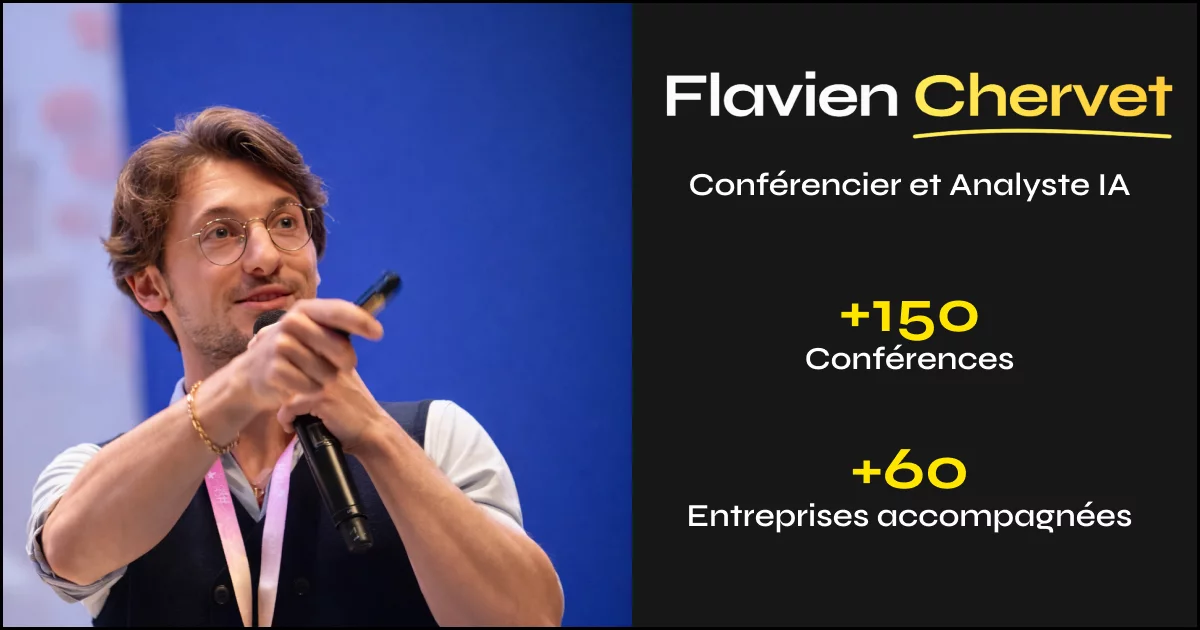
MIT © 2026 Flavien Chervet