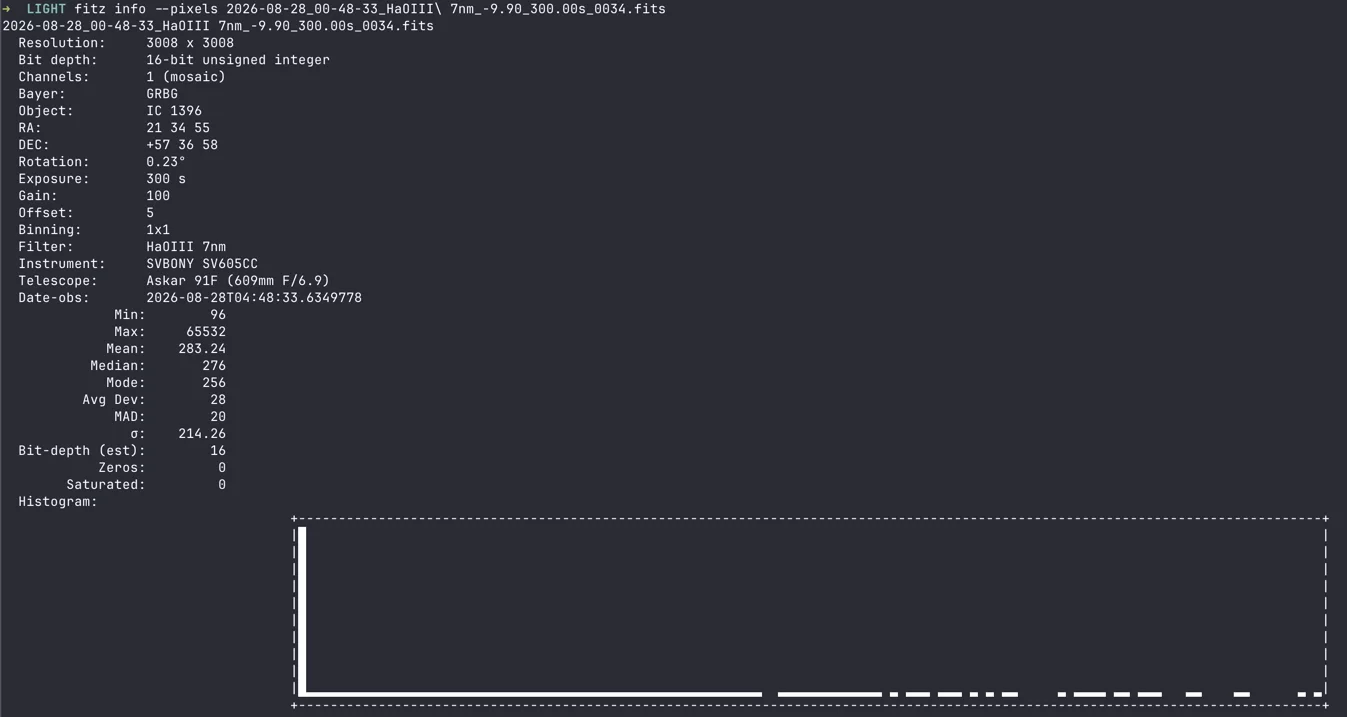
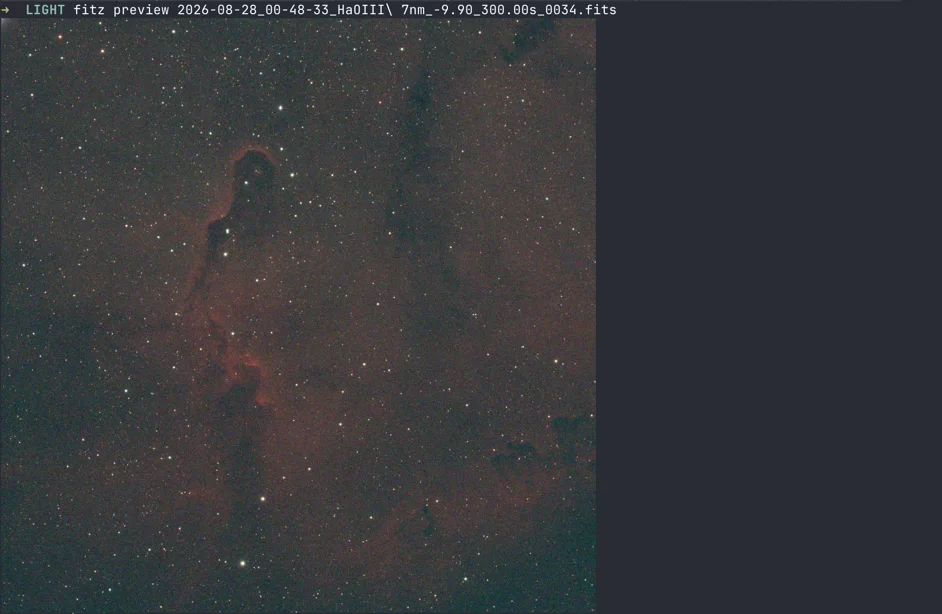
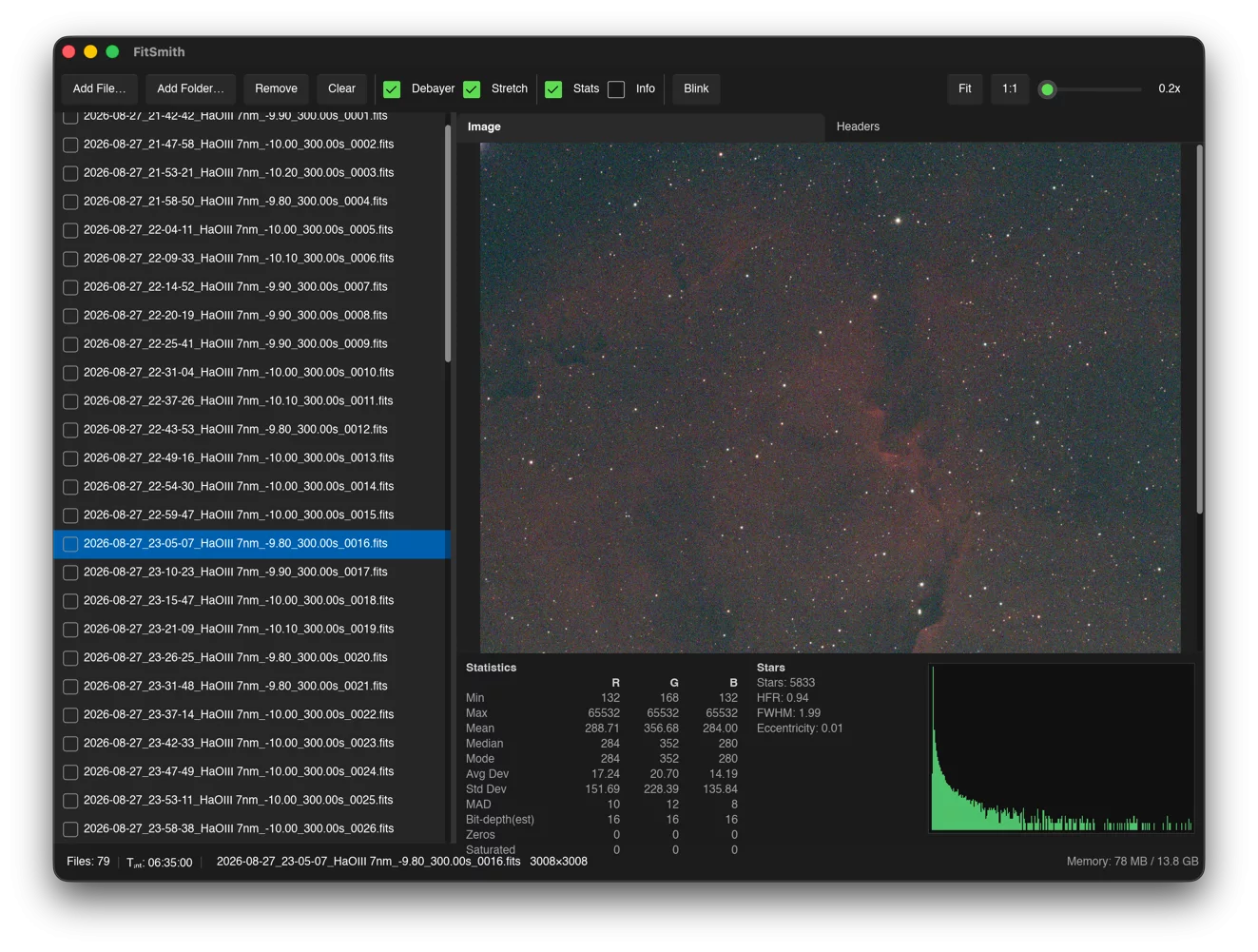

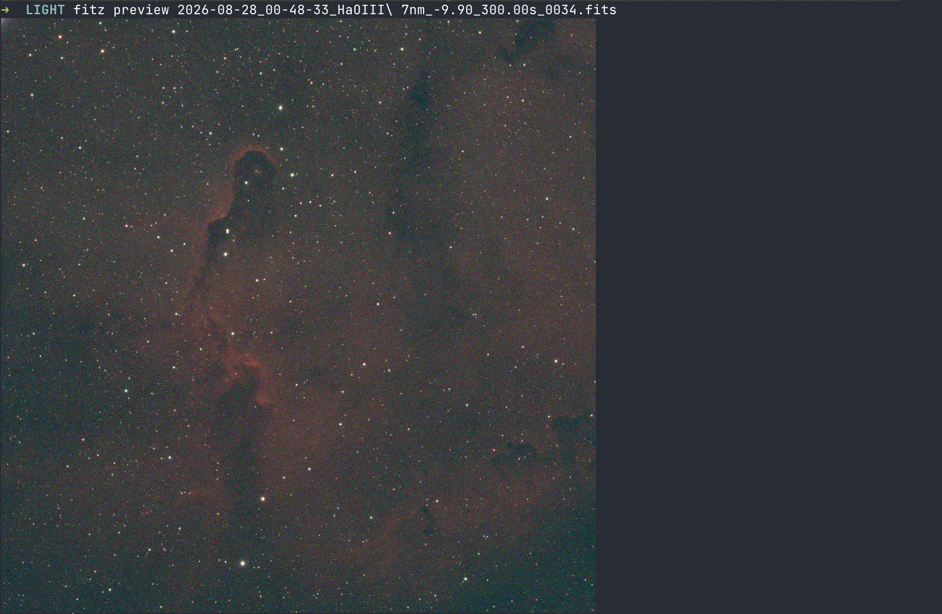
fitz is a small toolset for working with FITS (astronomy image) files. It can compress and
decompress FITS files, debayer mosaic images, auto-stretch them, split them into per-channel
files, inspect headers and pixel statistics, and preview images.
I started fitz to quickly uncompress files created by NINA, because some of the tools and Siril scripts have problems with compressed files; after a couple of days the project expanded into what it is now.
Components
The project consists for three major parts:
- libfitz — the reusable library: FITS I/O (with transparent tile-decompression), debayering, auto-stretch, per-channel splitting, header/pixel-stat inspection, header copying, and image resizing. Both frontends depend on it.
- fitz — the command-line tool. See its
readme for the full command and option reference.
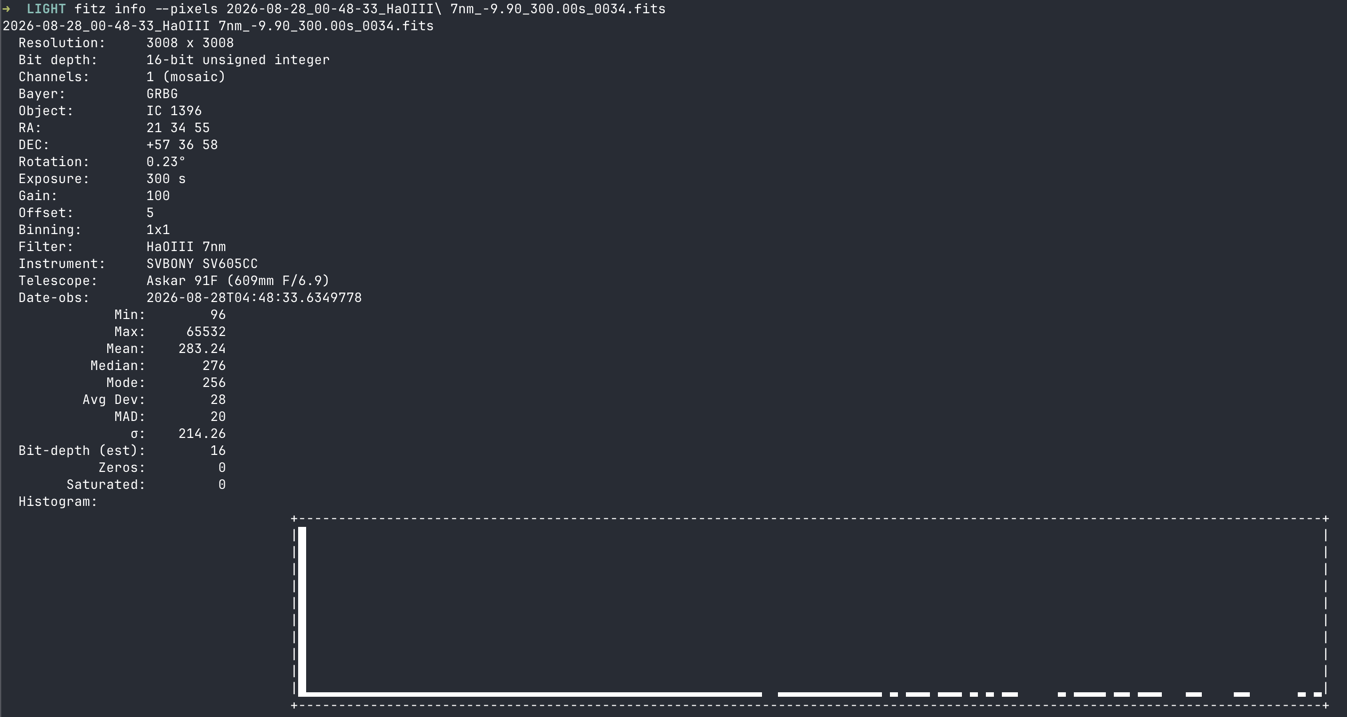
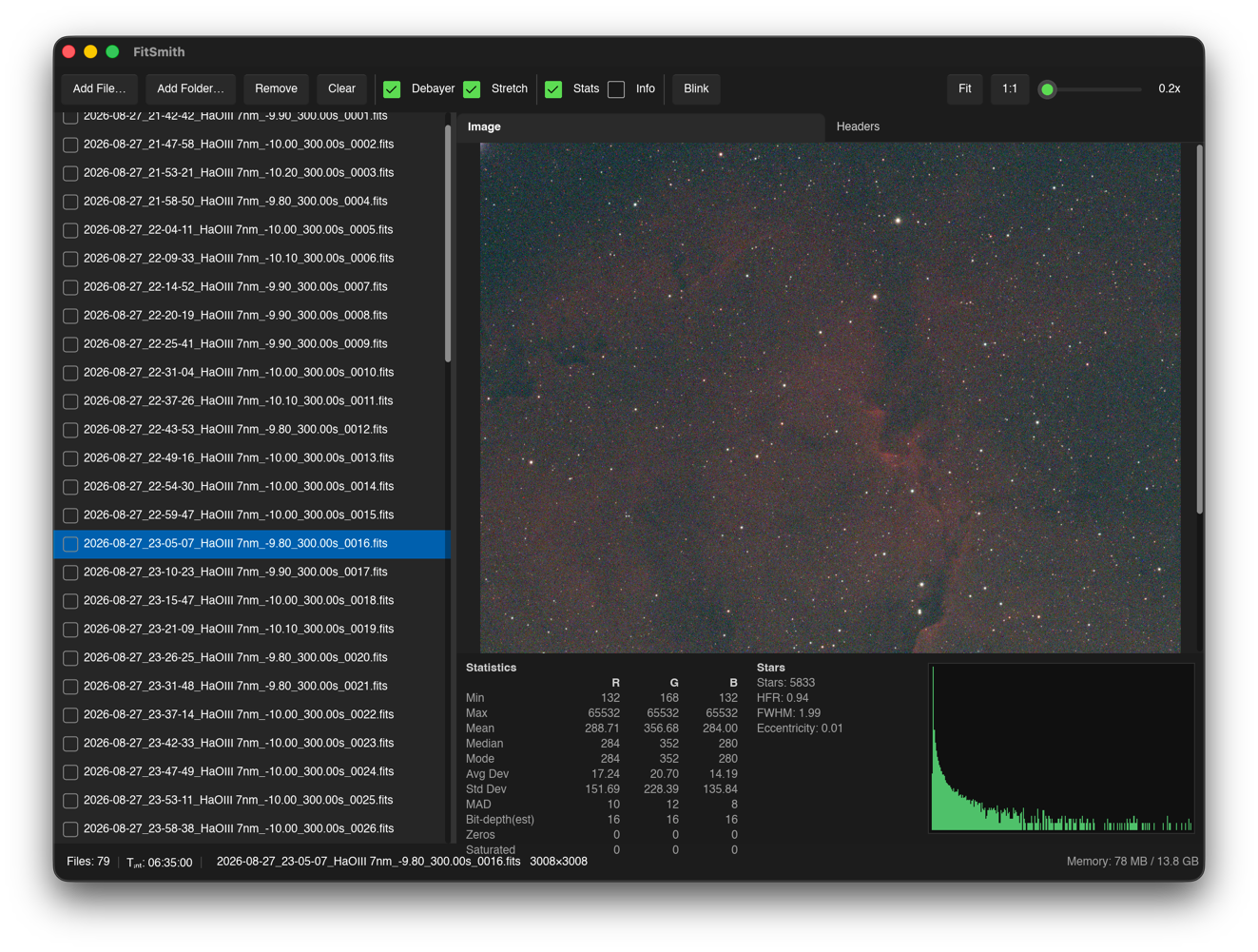
- FitSmith — a desktop GUI frontend built with Slint. See its
readme for details.
Note
This is a small personal project and as such it is not thoroughly tested and not optimized in any way. Use at your own risk.
License
MIT — see LICENSE.
Note that the FitSmith GUI uses Slint under the GPLv3 license; see fitsmith/building.md#slint-and-licensing for details.
RAW camera file support (in libfitz, and therefore in both fitz and FitSmith) uses
LibRaw under the CDDL-1.0, one of the two licenses LibRaw offers; see
building.md#libraw-and-licensing for why.
See NOTICE.txt for attributions of every third-party open-source component the project is distributed with.
AI Warning
I needed a quick and dirty tool to compress and uncompress fits files. Researching libraries, understanding FITS format and writing it myself would take time and I needed it now. The result is this tool is mostly vibe-coded with Claude Code. I review the code to make sure I understand what it does and I make changes where necessary, but still most of the authorship goes to those anonymous heroes who write the code, on which Anthropic trains their models.
I understand the feelings a lot of people harbor towards AI-written code. I share a lot of these feelings, but, honestly, for a low-effort, low-impact and low-risk utility it kinda makes sense. I would spend at least a couple of weeks writing this or I could have what I need in two days.
Let's face it. AI isn't going anywhere (most likely). It's a new tool for us to use and it is a powerful tool. As long as we use it responsibly and own the outcomes I am going to treat it the same way as I treat compiler rewriting my code to improve performance.
After using the code for some time, I've discovered couple of bugs and I realized that I have no idea how to fix it, because I don't know how the code works. I could probably force my way through it by prompting LLM to "make it work like Siril", but I decided that's not the right way.
I rewrote the core library by hand with LLM support for understanding and fixing bugs and major refactorings. After that I fixed the fitz CLI, as well by hand, using AI to validate my changes and sometimes generate unit tests.
Fitsmith is still partially vibe-coded, but I am adding new features manually and reviewing existing code.