
A mobile-first food diary for logging meals, calories and macros, built on New Zealand's official food database. It also checks whether a cut is actually working, from real weigh-ins rather than guesses.
Live overview with screenshots: jirapat.dev/#plated (the app itself is private, with a few real users)
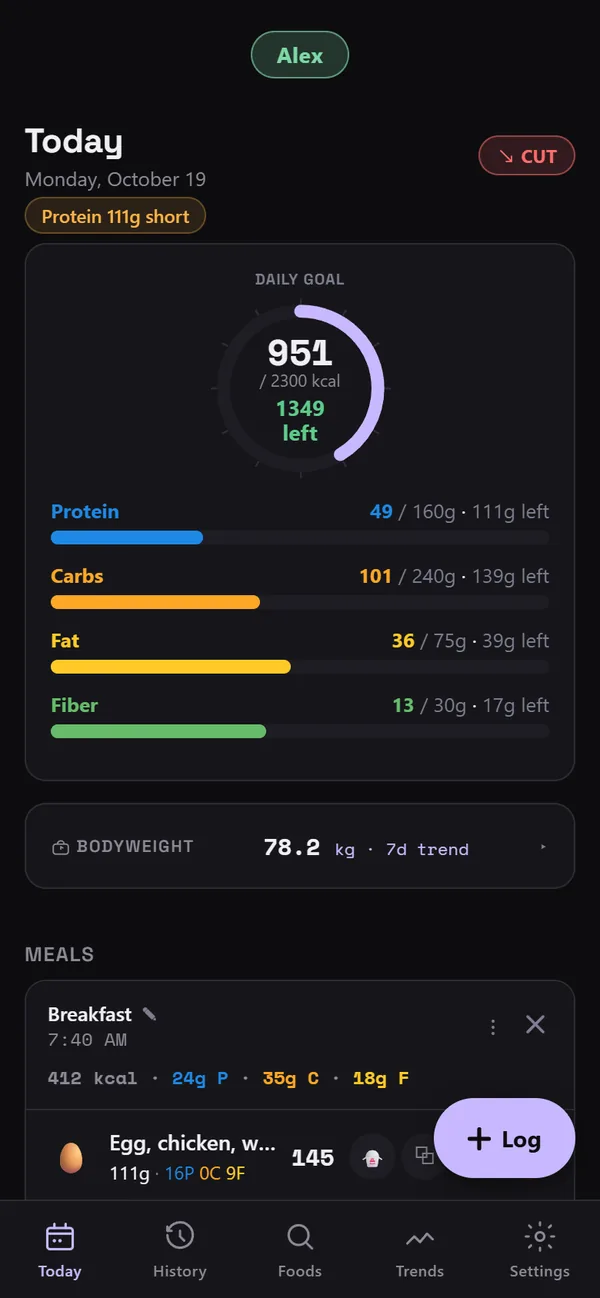
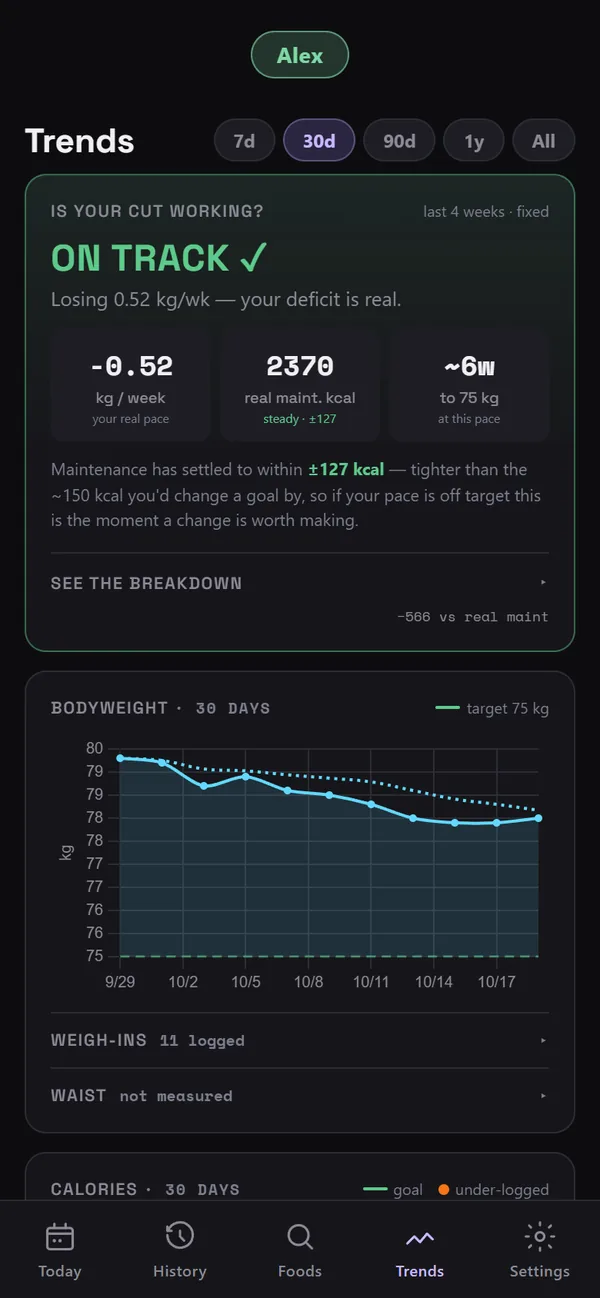
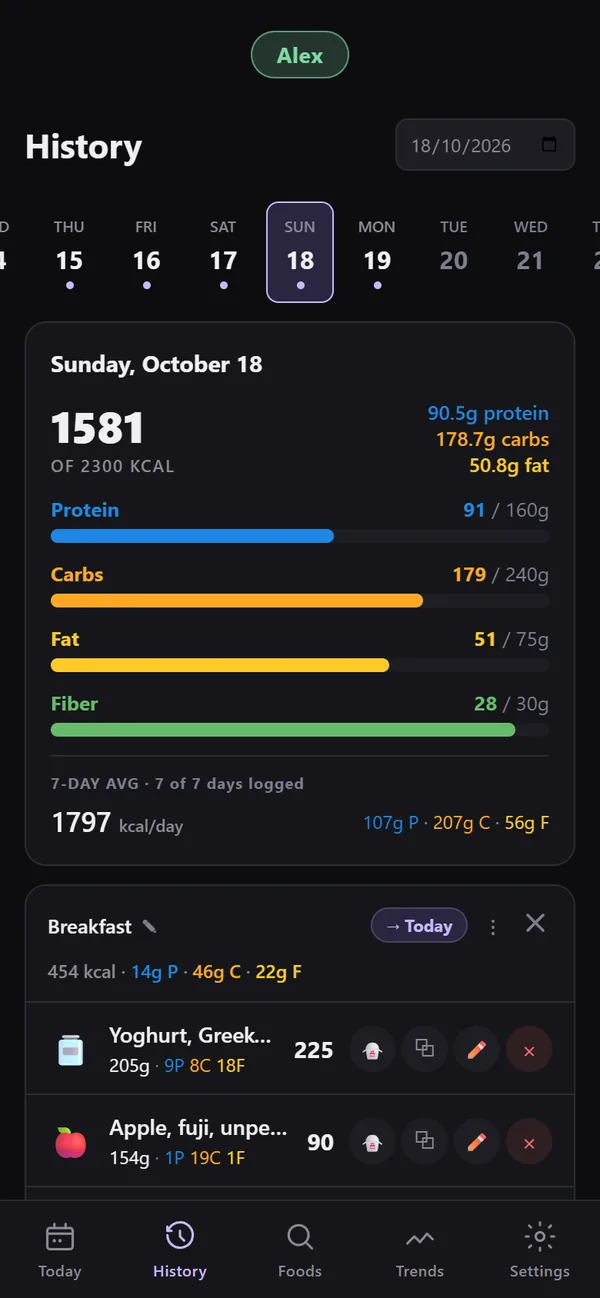
Screenshots use made-up sample data.
What it does
- Fast logging from about 4,800 foods (the NZ Food Composition Database plus Australia's AUSNUT), with presets for meals you eat often.
- Batch cooking: log a pot of chilli once, then eat it over several days. Plated tracks how much is left, so leftovers are counted correctly.
- Trends: calorie and macro averages, weigh-in trend lines and goal tracking.
- Works offline: it installs to the home screen (PWA), and meals logged with no signal are queued and sent when the connection returns.
- Accessible: strong accessibility settings, with text scaling up to 150%, bold text, high contrast and big tap targets, set per person.
- Multi-user: each person has a private profile.
- Talks to my gym app: body weight and activity sync with Ironlog through a per-user API key.
Interesting problems solved
- No double-logged meals. Phones retry requests on bad signal, so every write carries an ID, and the server ignores a repeat of the same ID ("idempotency"). Batch stock only ever moves through one function, so a retry can never take a portion twice.
- Offline without data loss. A service worker caches the app, and a write queue keeps unsent logs. Expired logins hold the queue instead of dropping it, and errors that can never succeed are dropped instead of retried forever.
- One small, fast database. SQLite through Node's built-in
node:sqlite, so there are no native modules to compile and backups are a single file.
Tech
Node.js 22 · Express · SQLite (node:sqlite) · vanilla JavaScript (ES modules, no build step) · service worker / PWA · Docker
Testing
250 automated tests using Node's built-in test runner, covering the API, batch stock, idempotency, the offline write queue, imports/exports and the Ironlog sync.
npm test
How it was built
Built with Claude Code (an AI coding assistant). I decided the features, directed the design and tested every change; Claude wrote most of the code.
Run it yourself
Needs Node.js 22.5 or newer.
npm install
cp .env.example .env    # optional: Ironlog integration settings
npm start               # http://localhost:3000
The database is created at ./data/plated.db on first run (set DATA_DIR to put it elsewhere) and seeded with the food database.
In production it runs in Docker on a self-hosted home server, behind a Cloudflare Tunnel.