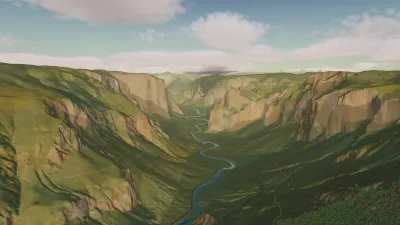

A web platform for OSINT/GEOINT analysts to archive, reference, and visualize geolocations of armed-conflict events. Interactive map, structured submission flow (coords + source + media + rich-text proof + tags), community requests, and analyst profiles.
Live at vidit.app (beta).
Work reaches the map through one of four doors. Three of them read an analyst's own X posts and produce machine detections; the fourth is the submit form. Nothing is published until a person vouches for it.
flowchart LR
  classDef spec fill:#eef1fb,stroke:#4a5fa5,color:#33417a
  classDef shared fill:#e3f2f1,stroke:#0f7b7a,color:#0b5c5b
  classDef core fill:#0f7b7a,stroke:#083f3e,stroke-width:3px,color:#ffffff
  classDef store fill:#0b5c5b,stroke:#083f3e,color:#ffffff

  subgraph legend [Legend]
    direction LR
    l1["`what an analyst does`"]:::spec
    l2["`what the machine does`"]:::shared
    l3["`the moment a person vouches`"]:::core
    l4[("`the catalog`")]:::store
    l1 ~~~ l2 ~~~ l3 ~~~ l4
  end

  subgraph doors [Four ways work comes in]
    direction TB
    hand["`**/submit**
    one form: coordinates, source, media, tags, and a rich-text proof`"]:::spec
    bot["`**tag @viditbot on X**`"]:::spec
    paste["`**paste one of your own posts**`"]:::spec
    arch["`**bulk import your X export**`"]:::spec
  end

  engine["`**one detection engine, three entries**
  reads the coordinate, the source and the media out of the post`"]:::shared
  det["`**a detection**
  public from the moment it lands, badged as machine output`"]:::shared
  review["`**your review**
  complete it and publish, or reject it`"]:::core
  ev[("`**events**
  one row per geolocation; a published row is corrected by versions, never overwritten`")]:::store
  read["`**/map, /search, /requests, /profile/{username}**
  open to anonymous readers`"]:::spec

  hand --> ev
  bot --> engine
  paste --> engine
  arch --> engine
  engine --> det --> review --> ev
  ev --> read
The detection engine is documented in docs/ingestion.md, the row and its statuses in docs/data-model.md.
Vision
- Problem: analysts who geolocate armed-conflict events post their work on X with no structured format and no place to centralize it, and the few dedicated tools are closed to part of the community.
- Solution: one open platform to reference, archive and visualize those geolocations, with a structured proof format and an interactive map.
- Primary persona: the OSINT/GEOINT analyst, amateur or professional, who geolocates open-source media (X, Telegram, satellite imagery) inside an international, English-speaking community on X and Discord.
- Guiding principles: openness (no artificial barriers), simplicity (posting a geolocation takes under two minutes), quality (an experience that matches the seriousness of the work), neutrality (geolocated facts, not political stances).
Why open source
Vidit is open source under AGPL-3.0. Anyone can self-host the platform; modifications deployed as a network service must publish their source under the same license. See the future considerations epic → Openness and transparency.
Demo
https://github.com/user-attachments/assets/f314673c-d357-4468-af6d-2299c831c5fc
Stack and documentation
A FastAPI + PostgreSQL/PostGIS backend and a Next.js frontend. docs/engineering.md covers the tech stack, the repository layout and the CI jobs.
The technical reference lives in docs/ (start at docs/index.md) and is hosted at docs.vidit.app. The roadmap lives in the issues: each epic is a parent issue for one finishable outcome, with the issues that deliver it as sub-issues. Release history lives in CHANGELOG.md.
Getting started (local dev)
make init        # install + env + db-up + migrate (one-shot bootstrap)
make seed        # mock-admin + machine detections from the committed synthetic archive
make dev         # FastAPI :8000 + Next.js :3000 in parallel
make dev-worker  # background worker (optional; without it, queued emails, archive uploads and bot webhooks wait)
make test        # backend pytest
make help lists every target individually.
Prerequisites
- Docker (for PostgreSQL + PostGIS; local dev runs
postgis/postgis:16-3.4, seedocs/backups.md) - Python 3.12+ and uv
- Node.js 20+ and npm
Secrets
make init copies .env.example → .env (backend) and .env.local.example → .env.local (frontend). Defaults are wired for localhost; every var is documented inline in backend/.env.example and frontend/.env.local.example. API docs auto-served at http://localhost:8000/docs.
Bootstrap an account
make seed (or make mock-admin) creates admin@vidit.app / admin directly. To exercise the real invite + registration flow:
- Set
ADMIN_EMAILS=<your-email>inbackend/.envso your account auto-promotes to admin on first login. - Get an invite code: sign in as the mock admin (
make mock-admin) and mint one from the/adminpanel. - Register at http://localhost:3000/register with the code.
EMAIL_PROVIDER=console(the local default) prints the confirmation link to backend stdout.
Troubleshooting
- Database connection failed: ensure
docker-compose up -dis running and nothing else holds port 5432. - Frontend can't reach the API: check
NEXT_PUBLIC_API_URLinfrontend/.env.localishttp://localhost:8000/api/v1. - "Module not found": re-run
uv sync --all-extras(backend) /npm install(frontend), ormake installfor both.
Contributing
The pull request flow, the local CI commands and the conventions live in CONTRIBUTING.md. See also SECURITY.md and CODE_OF_CONDUCT.md. Licensed under the GNU Affero General Public License v3.0.
Acknowledgements
The content shown in the landing video uses real geolocation work from @geo27752, reproduced with their consent. Thanks for letting Vidit show the platform the way analysts actually use it.