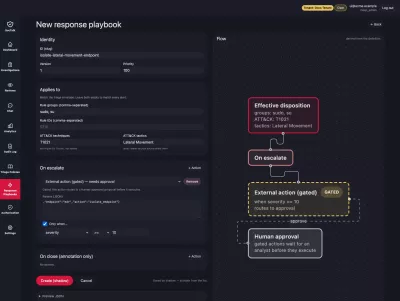
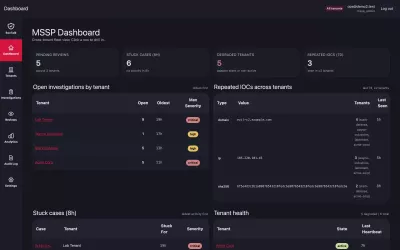
Explainer (static, no PEP): https://ali-decision-os-min.vercel.app — browser walkthrough only; it does not sign, mint, or execute effects.
An evidence-driven governance runtime for autonomous systems that act: signed decisions, an optional Hosted effect plane, tamper-evident audit, and an optional Linux/Docker isolation profile for untrusted agent code.
What "OS" means here: an execution-governance / decision-enforcement layer — the authority + audit plane for an autonomous actor's tool calls — not an operating system in the classic sense. It is a research-oriented architecture: a candidate piece of machine–human infrastructure, not a proven civilizational layer and not a substitute for general IAM.
Why it exists. As systems become more autonomous — toward AGI and after — they will still need a way to act in the world. Prompt rules and permission engines do not preserve human ownership of those effects. This runtime is built so an autonomous caller cannot cause an email, payout, or deploy except through a right that can be vetoed by legitimacy (ownership/consent), delegated and spent once, and audited. That is a governance shape for machine–human coexistence, not a claim that it "saves the world" or solves AGI safety. Ethics and morals remain injected policy; the kernel only makes that policy hard to skip. See docs/WHY.md.
Constitution (why the two layers exist): Aliipou/freedom-theory — the book, A1–A7, and the philosopher edition. This repo is the authority + audit PEP, not the moral floor. Ethics stay injected; FDK is DENY-only legitimacy.
Legitimacy ⊥ Authority — two independent constraints (see contracts-spec/POSITIONING.md):
- FDK — legitimacy (ownership / consent / verifier): should this happen at all? A DENY-only gate.
- AuthGate — authority (delegated spendable capability: tool-permission + runtime enforcement): does this actor hold the capability? Grants only within legitimacy.
LegitimacyAuthorityPipelineprovides a sequential helper; the general evaluator composer uses a commutative, deny-dominant meet. The security invariant is not evaluator order: legitimacy may only deny and authority can never override that denial. The normative rule filling each slot is injected policy — never baked into the kernel — so an operator can inject their own rules. This repo does not implement or attest GDPR, HIPAA, the EU AI Act, ISO 42001, or NIST AI RMF. A proposed architecture, not a proven paradigm.
from decision_os_min import DecisionOS

dos = DecisionOS(policy, audit_path="audit.jsonl")
outcome = dos.handle(action, tools)          # one call: gates → decision → audit → execute
A single authority (the kernel) signs a decision bound to the action's content and mints a one-time capability token; the executor (PEP) runs an effect ONLY against that signed, bound decision and unspent token; every decision is appended to one tamper-evident hash-chained log. Hosted agents add a separate trust domain; OS isolation remains an explicit, qualified profile.
Status — infrastructure claims (2026-08-23)
Do not read “AI infrastructure” as “fully non-bypassable.” Claims are sliced:
| Layer | Claim | Status |
|---|---|---|
| Decision core / PEP / composition | Signed authority + audit + red-team regressions | PASS (in-repo tests) |
| TM-H Hosted agent plane | Host-registered effects only via Intent → Admission→FDK→Auth→PEP | PASS — docs/HOSTED_AGENT_PLANE.md |
| TM-A-v1 FS/NET | No durable FS write / outbound net / ambient product creds under Docker profile | PASS — sandbox/ |
| AgentCreatedProcess + W^X/ptrace | Actual post-lock fork/exec/thread/mmap/ptrace attempts | BLOCKED under declared Linux/Docker profile |
| Combined boundary | Locked Docker agent → Intent JSONL → outside AgentHost → governed host effect |
PASS — real IPC/destructors in tests/test_e2e_agent_boundary.py |
| IPC abuse | identity spoof, malformed/oversized frames, request replay, unresponsive Host | BLOCKED in tested cases |
| Resource probes | thread creation and FD exhaustion | BLOCKED/LIMITED; memory/CPU cgroups configured |
TM-A full DirectEffect(Agent)=∅ |
Absolute ambient isolation | PARTIAL — breakout/Host residuals |
| SealedRuntime alone vs ambient Python | In-process sealing stops sealed-surface bypasses; ambient open/socket still exist without OS jail |
intentional limit |
Threat-model source of truth: docs/THREAT_MODELS.md.
Per-layer negative contract: docs/FORBIDDEN_ACTIONS.md.
Path to a standard (interop profile) and to infrastructure (residuals):
docs/STANDARD_AND_INFRA.md — aspirational; not
earned yet.
Earlier composition / red-team results (still held)
Three claims tested earlier. One held, one corrected, one falsified and fixed twice:
1. Pipeline order is NOT a security meet. Composition is the meet of a bounded
verdict lattice (ALLOW ≺ LIMIT ≺ CONTAIN ≺ DEFER ≺ DENY); order is performance.
2. Stacking two engines that each mint is incorrect — compose before mint.
See tests/test_authority_convergence.py.
3. “Untrusted evaluator can at worst deny” was FALSE twice — closed; kept as
regressions in tests/test_redteam_composition.py and tests/test_redteam_round2.py.
Conformance: Authority Enforcement Profile (contracts-spec/conformance/).
AE-4/AE-5 use a macaroon-inspired attenuation graph (decision_os_min/attenuation.py)
— caveats only narrow; child expiry clamped to parent.
Claims, comparison, and why we still measure OPA / Cedar / MCP
What we claim. This is for autonomous systems, not general IAM. The axioms are not Cedar's. Cedar evaluates principal, action, resource, context → permit/forbid. This runtime treats action as use of a right: legitimacy (ownership/consent) may only deny; authority is a delegated capability; the grant is bound to one action and spent once; an effect requires a signed decision the caller does not mint. Cedar is more general. This is narrower on purpose — and that is the reason to have it.
What we do not claim. It does not encode a complete moral theory, prove property rights, or govern AGI. It mediates configured tool effects under an explicit threat model. Independent users and outside review are still open.
Why a Cedar/OPA/MCP comparison exists at all. Not to rank worth. The
projects overlap on one front-door question (may this actor do this?) and
diverge immediately after. We run a shared six-case workload so we cannot
pretend to beat Cedar as a policy language, and so MCP's transport-only
behavior is visible: its handler still ran on the four cases governance
denies. Agreement on cases is not sameness of axioms or use case.
Full positioning: docs/COMPARISON.md.
The comparable empirical result is policy conformance, not speed. Decision OS, official OPA 1.19.1, and official Cedar CLI 4.12.0 encode equivalent grants, consent, purpose, and data-label rules in each native schema. MCP is a transport: it has no allow/deny verdict.
Measured 2026-08-23 on Windows 10 (Intel Core i5-7300U), Python 3.13.2, after 10 discarded warmup iterations per scenario and 50 timed iterations (300 observations per scope). Six toy cases; conformance, not a ranking:
| Comparable policy decision | Shared-workload result | Measured boundary |
|---|---|---|
| Decision OS built-in + legitimacy | 6/6 expected verdicts | in-process policy meet only |
| OPA 1.19.1 official image | 6/6 expected verdicts | warm HTTP authorization query |
| Cedar CLI 4.12.0 | 6/6 expected verdicts | official CLI subprocess per request |
Observed cost at each boundary — not a ranking; envelopes differ:
| Scope | median / p95 | Why this is not comparable to the rows above it |
|---|---|---|
| Decision OS policy-only | 0.016 / 0.031 ms | in-process Python; no I/O |
| OPA HTTP query | 3.735 / 5.503 ms | localhost HTTP to a running server |
| Cedar CLI authorize | 27.389 / 32.581 ms | includes process spawn; not the in-process cedar-policy library |
Decision OS kernel.decide |
1.011 / 1.256 ms | extra work: action bind + Ed25519 sign + token mint |
Decision OS full handle |
10.411 / 17.216 ms | extra work: sign + one-time PEP + callback + audit |
| Official MCP TypeScript SDK 2.0.0 | 1.063 / 1.497 ms | 6/6 calls transported; verdict N/A |
Cedar and OPA remain stronger policy languages and more general authorization. This runtime is the enforcement chain after a policy decision (signed bind, one-time PEP, audit) for autonomous actors. MCP's real handler was reached even for the four cases governance denies, which is why a permission answer without mediation is not enough.
Reproduce from pinned inputs and inspect the machine-readable result:
bench/comparison/README.md ·
results/latest.json.
How it flows
Untrusted Agent → Intent → AgentHost
                              ├── Legitimacy PDP (DENY-only)
                              └── Authority PDP (built-in / Cedar / OPA)
                                          │
                                  canonical verdict meet
                                          │
                                 Python reference Kernel
                              action-bind + sign + mint once
                                          │
                                         PEP
                                  verify + spend once
                                          │
                                    Audit + Effect
The selected Authority PDP is trusted for policy semantics, but never receives the signing key, spent store, PEP, adapters, or product credentials. Only the kernel can turn the composed verdict into executable authority. General legitimacy composition remains deny-dominant.
Replace the authority policy engine, not the execution boundary
from decision_os_min import DecisionOS, OPAHTTPAuthorityPDP

pdp = OPAHTTPAuthorityPDP(
    "http://127.0.0.1:8181/v1/data/decision/allow",
    policy_revision="bundle-sha256:...",
)
dos = DecisionOS({}, audit_path="audit.jsonl", authority_pdp=pdp)
CedarCLIAuthorityPDP supplies the equivalent official-CLI reference adapter.
Built-in policy remains the dependency-free default. Cedar/OPA may grant or
deny, but their output is stripped to a canonical verdict/reason; host-owned
logic realizes LIMIT/CONTAIN, and the kernel remains the sole signer/minter.
Govern your agent's tools — signed authorization + audit
The wedge: governed tool execution for autonomous agents under an explicit
threat model — human ownership/consent as a gate on wrapped or host-registered
effects.
You write a policy and wrap tools / use the Hosted plane; host-registered effects
cannot skip Admission→legitimacy→authority→PEP. Ambient OS effects (files,
sockets, subprocess) are not closed by the Python library alone — use the
Docker + lock_and_run profile (sandbox/) for TM-A slices.
from decision_os_min import Governor, set_actor, GovernanceRefused

gov = Governor(policy, audit_path="audit.jsonl")

@gov.tool("send_email", capability="tool:send_email", purpose="support_reply",
          data_labels=["customer_support"])
def send_email(to: str, body: str) -> str:
    ...                         # only ever runs if the kernel permits it

set_actor("agent:bot")          # your app sets the agent identity (admission)
send_email(to="x", body="y")    # decide -> audit -> execute, or GovernanceRefused
Or govern a whole agent-framework tool registry at once with gov.wrap(tools, specs=...).
Removing governance means deleting the wrapper and losing your audit trail — the
friction runs the right way. Within the Hosted plane, registered Host adapters
have no path that skips governed mediation. This is not a claim that arbitrary
ambient effects elsewhere in the application are closed.
Who this is for — and who it isn't
For you if: you run autonomous or semi-autonomous agents that hold sensitive tools — email, payments, files, internal APIs — and you need human ownership/consent to be able to veto, plus a verifiable trail of what was actually executed.
Not for you (yet) if: you need a general permission language for users and APIs (use Cedar/OPA), or your agents only do read-only / harmless things. This is overhead you don't need, and knowing that is more useful than a star.
Security properties tested
These are executable regression results under the assumptions in
docs/THREAT_MODELS.md, not formal proofs:
- Single authority — only the kernel's Ed25519-signed decisions authorize anything.
- Deterministic decision engine — same (policy, action, advice) ⇒ same verdict; no ML in the decision path.
- Action-bound authorization — a decision/token cannot be re-attached to a different action (confused-deputy defense).
- One-time capability tokens — replay is refused; no valid token ⇒ no execution; DENY/DEFER never run.
- Graduated enforcement — LIMIT redacts before the tool sees the payload; CONTAIN runs only allowlisted tools.
- Advisory ≠ authority — an advisor can only tighten a verdict, never loosen a DENY.
- Tamper-evident audit — edits/inserts/reorders are detected; tail truncation requires the supported external head anchor.
The Linux/Docker process-isolation results execute real post-lock_and_run
fork/exec/thread, executable-mapping, and ptrace attempts and assert kernel
refusal; they do not infer enforcement from configuration files alone. See
tests/test_os_isolation.py.
Run it as a service (deployable starter)
A REST service (OpenAPI + health + Prometheus metrics) ships as an optional extra — the core stays dependency-pure.
pip install "decision-os-min[service]"
DECISION_OS_POLICY=policy.json decision-os-serve      # -> http://localhost:8080

curl localhost:8080/healthz
curl -X POST localhost:8080/v1/decide -H 'content-type: application/json' \
  -d '{"actor":"agent:bot","tool":"send_email","capability":"tool:send_email",
       "action_purpose":"support_reply","data_labels":["customer_support"],"nonce":"n1"}'
# -> {"decision":{"verdict":"ALLOW",...},"signature":"...","token":{...},"audit_seq":0}
Endpoints: POST /v1/decide, GET /v1/pubkey, GET /v1/audit + /v1/audit/verify
(audit dump off unless DECISION_OS_EXPOSE_AUDIT=1), GET /healthz, GET /readyz,
GET /metrics, GET /openapi.json. Authority + audit only — caller's PEP executes.
Docker / Compose:
docker compose up --build -d
curl -s localhost:8080/readyz
# or:
docker build -t decision-os-min .
docker run -p 8080:8080 -v $PWD/deploy/policy.json:/config/policy.json \
  -e DECISION_OS_POLICY=/config/policy.json \
  -e DECISION_OS_KEY_FILE=/data/kernel_ed25519.pem decision-os-min
See INFRA.md. Starter, not production-grade — auth/TLS/rate limits at ingress.
Hosted agents + OS isolation
Untrusted agent  --Intent IPC-->  AgentHost (SealedRuntime + adapters)
     optional: Docker agent-noambient-v1 + lock_and_run
- Host plane:
decision_os_min.host,docs/HOSTED_AGENT_PLANE.md - Agent sandbox:
sandbox/README.md,docs/THREAT_MODELS.md
Local development and verification
Python 3.11+ is required.
python -m venv .venv
# Windows: .venv\Scripts\activate
# Linux/macOS: source .venv/bin/activate
pip install -e ".[dev,service]"
ruff check .
mypy decision_os_min
pytest -q
Linux plus Docker is required for the marked TM-A isolation suite:
pytest -q -m tm_a tests/test_os_isolation.py tests/test_e2e_agent_boundary.py
Service environment:
| Variable | Required | Purpose |
|---|---|---|
DECISION_OS_POLICY |
service only | Policy JSON path |
DECISION_OS_AUDIT |
no | Audit JSONL path |
DECISION_OS_KEY_FILE |
recommended | Persistent Ed25519 private-key path |
DECISION_OS_EVALUATOR_TIMEOUT_S |
no | Fail-closed evaluator timeout |
DECISION_OS_AUTHORITY_PDP |
no | builtin (default), opa, or cedar |
DECISION_OS_AUTHORITY_TIMEOUT_S |
no | Kernel-side fail-closed PDP timeout |
DECISION_OS_EXPOSE_AUDIT |
no | Set 1 to expose the unauthenticated audit dump |
OPA/Cedar-specific URL, policy-revision, binary, schema, and context-map
variables are listed in INFRA.md.
Product site and Vercel
The public site in public/ is a dependency-free explanation and interactive,
browser-side walkthrough. The walkthrough is deliberately labeled as a model:
it performs no external effect and is not the Python authority service.
python -m http.server 4173 --directory public
# static explainer build:
npx vercel build
vercel.json sets public/ as the output directory and applies CSP,
clickjacking, MIME-sniffing, referrer, and permissions headers. No environment
variables or backend are required for the explanatory site. A real application
must deploy the Python service/Host separately behind authenticated TLS ingress;
do not expose signing keys or effect adapters to the static site.
Extending it (plugins)
The kernel is fixed; capability grows at typed seams around it. Ordinary
untrusted plugins may advise/adapt/provide a backend but never grant. A selected
AuthorityPDP is a deliberate, separately labeled exception: it is trusted for
policy semantics but still cannot sign, mint, spend, or bypass the PEP. See
docs/PLUGIN_API.md.
Out of Scope (use the full Decision OS for these)
- Distributed deployment / multi-node consensus
- Enterprise integrations and cross-service orchestration
- Research modules (FDK advisory research beyond the simple plugin)
- Bundled production notary / external WORM service (the
HashLoganchor seam exists) - Auth / TLS / rate limiting (do these at the ingress), Helm/K8s, Grafana dashboards
- Network-level threat model, real load/scale numbers, and formal proofs
What was deliberately cut (and why it's fine)
| Full multi-repo system | Here |
|---|---|
control-plane as its own repo |
one handle() |
fdk-research advisory repo |
an optional plugin: decide(action, advisor=fn) |
audit-ledger + notary (dual truth) |
one hash-chained log |
contracts-spec package + JSON Schema |
formal types in contracts.py |
| 7 repos + venv + integration harness | pip install decision-os-min |
The message shapes are typed — Action, Decision, CapabilityToken,
AuditEntry are TypedDicts (contracts.py); they cost nothing at runtime but
reduce drift. That is not a machine-checked spec. The FDK is not deleted, just right-sized: an advisor is a plain
(action) -> threat_class | None function; omit it and the system works fully.
Relationship to the full Decision OS
This does not replace the multi-repo system — it is its reference core.
``