
Mojulo is a 3D factory with a media studio for coding agents: an MCP server that runs wherever your agent runs, on your machine or in the throwaway Linux box it gives itself, where the agent you already run (Claude Code, Codex, any MCP host, or a chat app that can open a Linux box: Claude, ChatGPT with Codex, Grok, Meta Muse, Google AI Studio) builds things to play, print, read, hear and watch (games, objects, walkable worlds, pictures, scores) by conversation, and what gets stored is source, not a mesh. Every artifact is a small deterministic recipe: a few hundred bytes of JSON, or an OpenSCAD program, that a kernel compiles back to the same geometry on every read (byte for byte on the same platform), and that emits to Godot, Blender, Unity, Unreal, glTF, OpenUSD, or print-ready STL / 3MF at true scale. Small enough to carry home from a box and re-mint on your own disk. A compiler, not a generator: you edit and diff the recipe like code, and renders are disposable. No API key, no account, no external telemetry. Your agent does the thinking; mojulo holds the state and does the geometry.
Quickstart
npx mojulo init
Needs Node 22.14+ and an MCP-capable coding agent (Claude Code or Codex; Claude Desktop works too). init finds the hosts on your machine, asks once per host, and opens the dashboard at http://localhost:3001. Everything lands in ~/.mojulo/. Then open a fresh agent session and ask: "what is this?"
In Claude Code you can install the plugin instead: /plugin marketplace add zombico/mojulo, then /plugin install mojulo@mojulo. It starts the same server pinned to one version (plugins/mojulo). The plugin build leaves out the handoff tools for AI image, voice and mesh generators and never downloads a browser, ffmpeg or the search model on its own. Use the plugin or init for Claude Code, not both: two registrations run two servers.
The first install is the big one: npx pulls a ~7 MB package that lands, with its dependencies, at about 227 MB on disk plus about 140 MB of npm cache (about 79 MB downloaded; measured for 3.0.0 on one macOS arm64 machine, where a cold start answered in about 4.5 s, nearly all of it npm's install). The biggest pieces are node-web-audio-api (audio), manifold-3d (exact booleans) and better-sqlite3. The dashboard is a separate package fetched the first time you open it, and the local search model is the opt-in mojulo install recall (semantic_search ranks lexically without it). Nothing in the list reaches the network on its own; the per-dependency sheet is in docs/tech-requirements.md. Verified on macOS (Apple Silicon) and on native Windows under Claude Code (init and a first render). On Linux x64 the test suite runs in CI, and the agent-box path below has been run to a mint and an export from the Claude app and web, ChatGPT work mode with Codex, Grok chat, Meta Muse and Google AI Studio.
Wire it by hand instead
# Claude Code (--scope user makes mojulo available in every project):
claude mcp add --scope user mojulo -- npx -y mojulo

# Codex: add to ~/.codex/config.toml
[mcp_servers.mojulo]
command = "npx"
args = ["-y", "mojulo"]
// Claude Desktop: add under "mcpServers" in claude_desktop_config.json, then restart.
// If it fails with "spawn npx ENOENT", replace "npx" with the absolute path from `which npx`.
"mojulo": { "command": "npx", "args": ["-y", "mojulo"] }
Open the dashboard on its own with npx -y mojulo-ui. It is its own npm package since 3.0.0, so your agent's npx mojulo start never downloads it; npx -y -p mojulo mojulo-ui still works and fetches the matching version from npm on first use. The mojulo bin is also a CLI over the tool registry: npx mojulo tools, npx mojulo help mint_solid, npx mojulo call version.
Where it runs, three things you can add
Mojulo runs wherever your agent runs, and a recipe minted in one place re-mints as the same geometry in the other. Two shapes, one install.
In your agent's box, nothing on your machine. One sentence to the agent installs mojulo in the Linux box it gives itself:
- The Claude app (macOS, Windows, web, iOS); Grok chat; Google AI Studio; Meta Muse (iOS, web, macOS app, one session across all three): Open a Linux box and install the mojulo npm package in it.
- ChatGPT (Codex included): In work mode, open a Linux box and install the mojulo npm package in it.
Each of those has been run this way, from the sentence to a mint and an export handed back. You get
the same recipes and the same exports, as files: the export result names this host's door, an
artifact page, a PR, a file card or Muse's Library. The box has no dashboard you can reach, a scene-to-PNG bake needs a
browser it may not be allowed to fetch, and on most hosts it is gone when the session ends, so ask for
the bundle (one zip: world.html, mesh, print STL for literal-scale objects, recipe.json, README)
and keep the recipe. Meta Muse is the exception: one VM behind all its clients, where ~/.mojulo
stays across conversations. A box with no MCP client never sends initialize, so tell the agent to run
npx mojulo orient first: it prints what an MCP client is handed at connect, translated to the
shell, and points at the routing index. Claude's box built a 47-part phone at true scale this way and handed back the glTF;
Grok chat's sandbox minted a city from the shell. Blender installs in those boxes too.
On your machine: macOS, Windows, Linux. npx mojulo init wires mojulo into the agents it finds,
opens the dashboard at localhost:3001, keeps everything under ~/.mojulo/, and probes your PATH for
the optional local workers (Blender, a slicer, OpenSCAD, the game engines). This is the whole loop, and
where a recipe from a box comes home to.
Who has run it where.  persistent (your machine, or a box that keeps
~/.mojulo/) ·  ephemeral (the web
agent's throwaway Linux box; keep the recipe). Blank means not verified yet, not "does not work".
| agent | macOS | Windows | Web Agent Linux Box (Headless) |
|---|---|---|---|
| Claude Code | |
|
|
| Claude app (macOS, Windows, web, iOS) | |
|
|
| ChatGPT (work mode; Codex) | Codex |
|
|
| Hermes Agent | |
||
| Grok (Build; chat) | Build |
|
|
| Meta Muse (iOS, web, macOS app; one session across them) | |
||
| Google AI Studio | |
Two things are opt-in, and the choice is the same in both places:
| add | with | what you get |
|---|---|---|
| creative (installed by default) | plain npm install |
worlds, audio, fonts for wordmarks, exact booleans, OpenSCAD-in-process, sharp for skins and sprite sheets. npm install --omit=optional sheds those helpers (about 115 MB); the studio tools still list and run, and a call that needs a missing helper says so. |
| recall | mojulo install recall |
the embedding model behind semantic_search. Without it, search still answers, ranking by the words in your ask (about 480 MB of runtime plus a 130 MB model, kept under ~/.mojulo/ so it survives upgrades). Most sessions never need it: the agent reads the tool index and the vocab cards directly. |
mojulo install with no argument prints which of the two are present.
The chatbot factory is no longer part of mojulo as of 3.0 and is moving to its own project. Earlier 2.x versions that include it are unmaintained and have known security issues (SECURITY.md). mojulo install chatbot now installs nothing and prints this notice.
Upgrading from 2.x? Read Upgrading from 2.x first: an unpinned npx mojulo moves to 3.0 on its next start, and 3.0 re-encrypts saved provider keys so 2.x can no longer read them.
Five things to say to it
Each one is a sentence to your agent, the tool it reaches for, and the recipe that gets stored. Every example below runs keyless and offline.
1. "Write me a Raspberry Pi 4 case tray in OpenSCAD"
The agent calls mint_solid { kind: 'scad' } and the program is the recipe, stored verbatim:
board_w = 85; board_d = 56; clear = 1; wall = 2; floor_t = 2; wall_h = 12;
holes = [[3.5, 3.5], [61.5, 3.5], [3.5, 52.5], [61.5, 52.5]];   // the Pi's M2.5 pattern
module rounded_box(w, d, h, r) { hull() for (x = [r, w - r], y = [r, d - r]) translate([x, y, 0]) cylinder(r = r, h = h, $fn = 48); }
module tray() {
  color("#3a3f4b") difference() {
    rounded_box(board_w + 2 * (clear + wall), board_d + 2 * (clear + wall), floor_t + wall_h, 3);
    translate([wall, wall, floor_t]) rounded_box(board_w + 2 * clear, board_d + 2 * clear, wall_h + 1, 1.5);
    translate([board_w + 2 * clear + wall - 1, wall + 2, floor_t + 3]) cube([wall + 2, board_d + 2 * clear - 4, wall_h]);   // USB / Ethernet
    translate([wall + clear + 5, -1, floor_t + 3]) cube([55, wall + 2, wall_h]);                                            // USB-C, HDMI, audio
  }
}
module standoffs() {
  color("#c9a227") for (p = holes) translate([wall + clear + p[0], wall + clear + p[1], floor_t])
    difference() { cylinder(d = 6, h = 3, $fn = 32); translate([0, 0, -1]) cylinder(d = 2.5, h = 5, $fn = 24); }
}
with parts: { tray: 'tray();', standoffs: 'standoffs();' }. OpenSCAD itself meshes it on every read, in-process as WebAssembly with the Manifold backend, so booleans are exact and every edge is sharp. color() is the tint; each named part is a render group a hinge in movers can swing. The same ref serves the orbit view, the .glb, the engine packs and model.stl at 91 × 62 × 14 mm as written; model.scad hands the source back unchanged. Change wall_h with update_sketch and the readout names the one part that moved. For what OpenSCAD cannot say, a blended join, a stroked dent, seeded noise, the source calls mojulo_field("<id>") and a field solid from the same recipe is baked in at that spot.
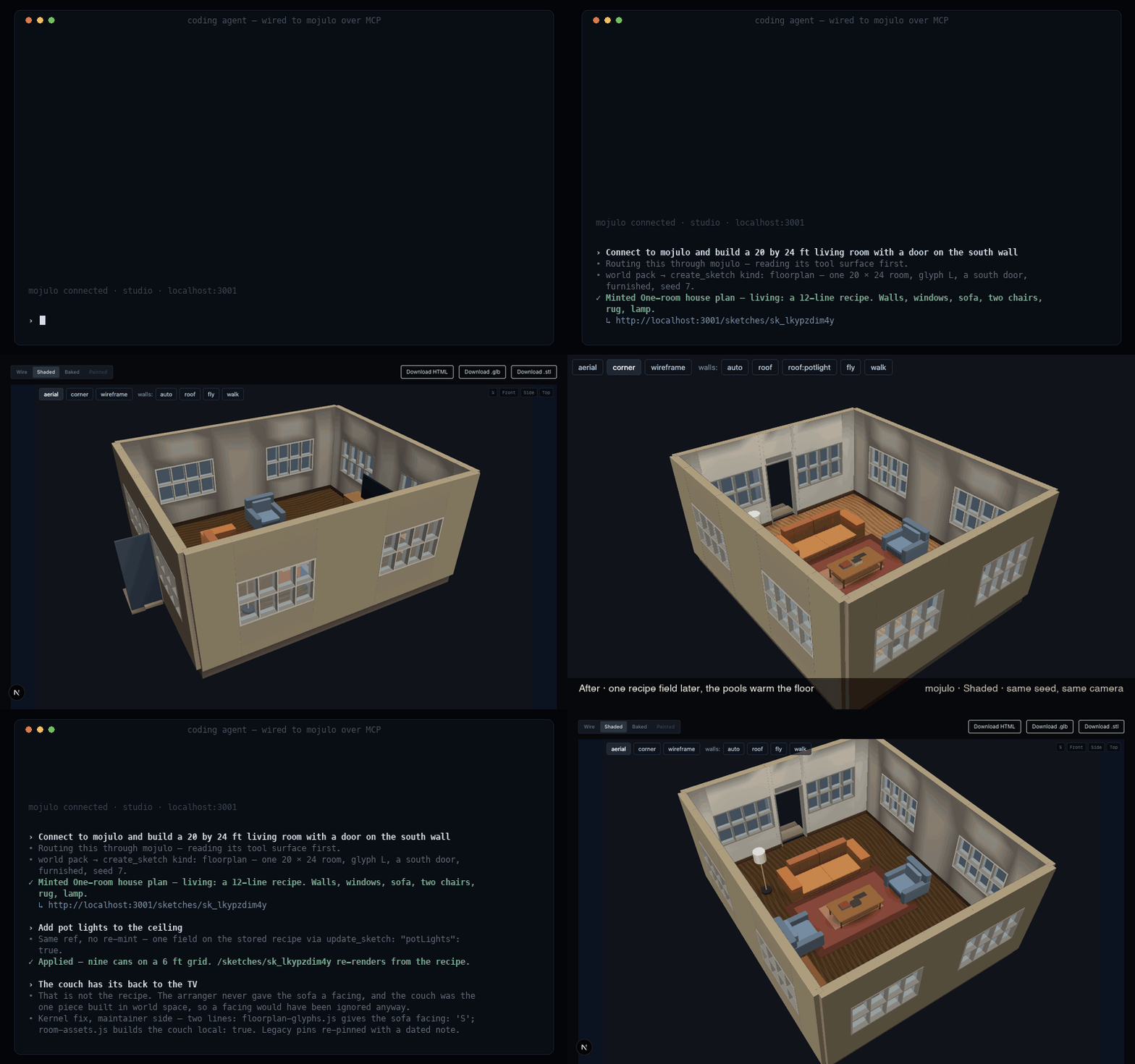
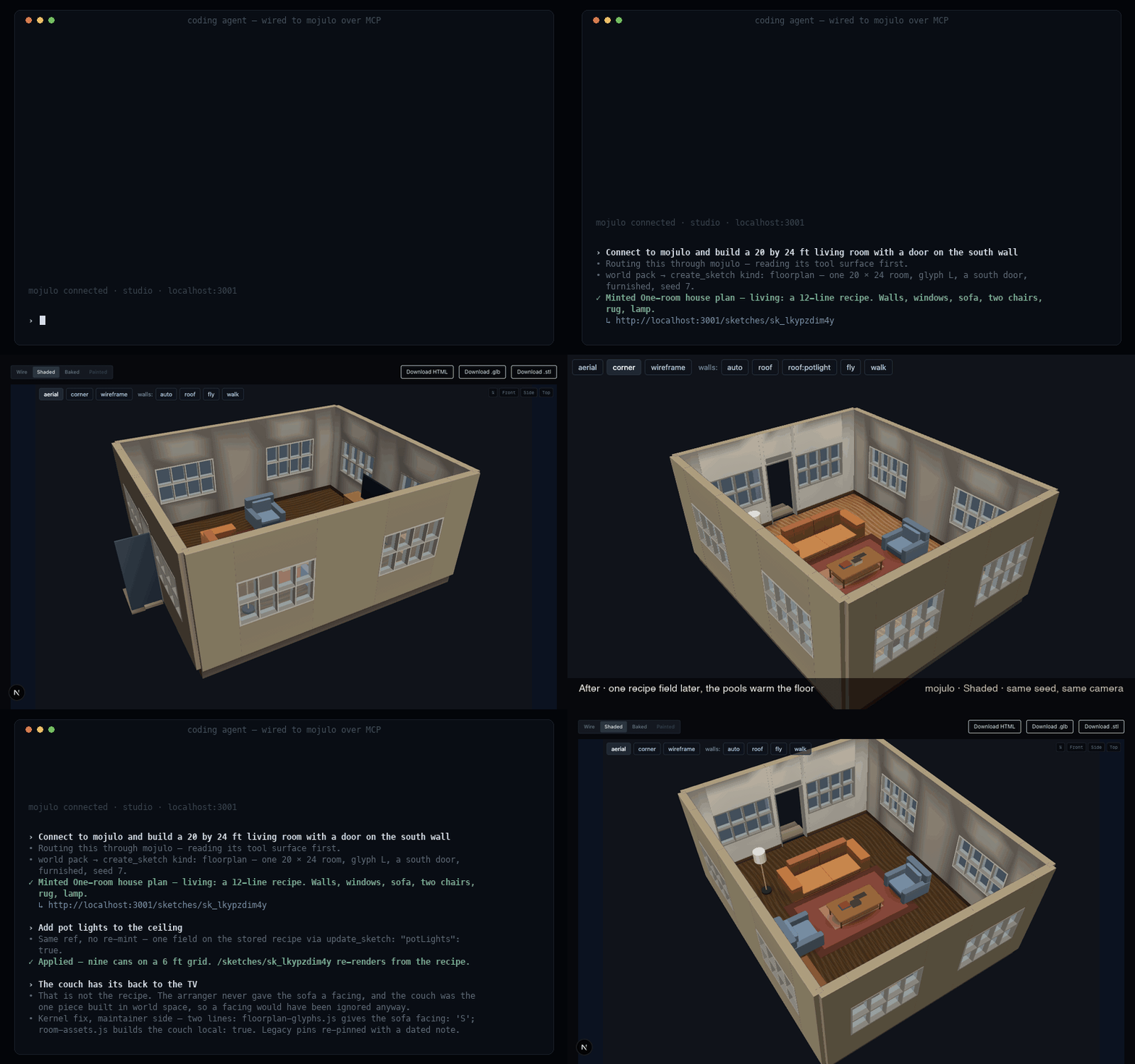
2. "Build a 20 by 24 ft living room with a door on the south wall"
That is the GIF at the top. The agent calls create_sketch { title, manifest: { kind: 'floorplan', … } } and the stored manifest is this:
{ "kind": "floorplan", "width": 24, "height": 28,
  "rooms": [ { "x": 2, "y": 2, "w": 20, "h": 24, "glyph": "L" } ],
  "doors": [ { "x": 12, "y": 26, "room": 0, "edge": "S" } ],
  "furnish": true, "view": "cutaway", "seed": 7 }
The L glyph and the seed furnish it: sofa, two chairs, rug, lamp, windows. "Add pot lights to the ceiling" adds "potLights": true and nothing else changes. "levels": [...] stacks it into a building with stairs through the slabs. The same recipe walks in the browser at /world, exports as a .glb, or goes to Blender as an art-pass pack, where a Cycles bake can write traced light back into the mesh's own vertex colours so the lit result runs anywhere at zero runtime cost.
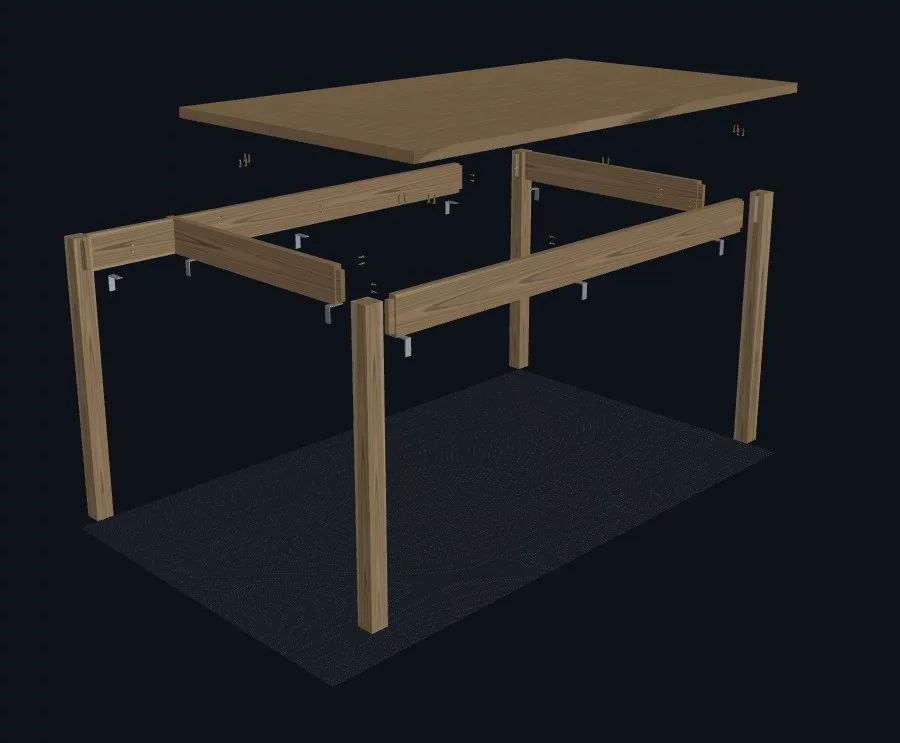
3. "Build an oak dining table and show me how it goes together"
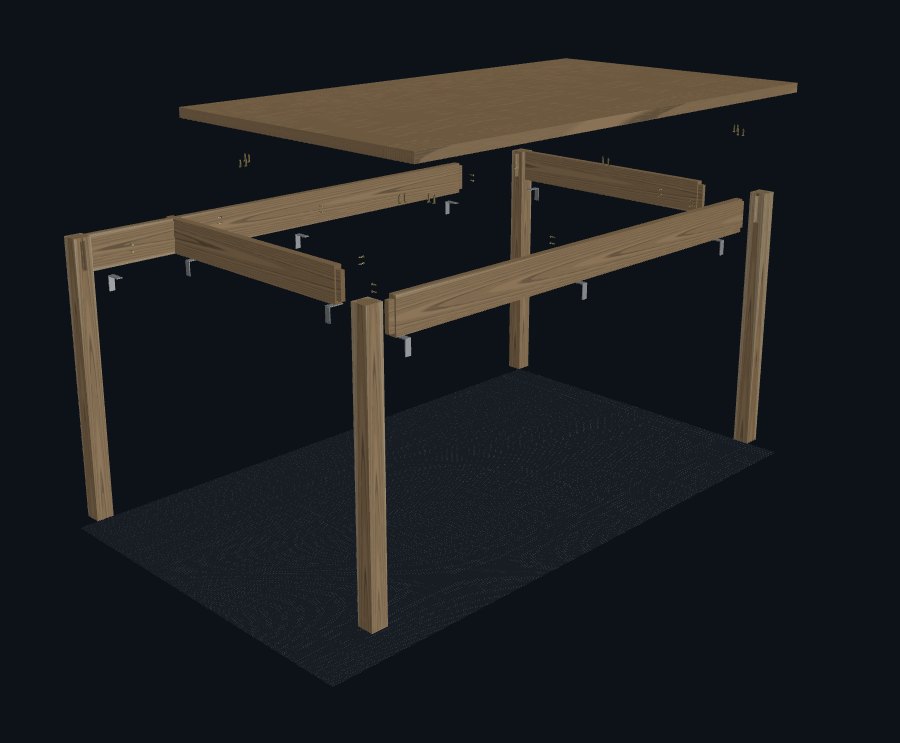
The agent calls mint_solid { kind: 'workbench' } with one frame, and build writes the members and the joints:
{ "units": "mm",
  "frames": [ { "id": "table", "unit": "mm", "explode": 90,
                "build": { "type": "table", "w": 1400, "d": 800, "h": 750, "species": "oak" } } ] }
The legs take the aprons on mortise and tenon, sized so the tenons stop short of each other inside the leg, and the top sits on angle brackets. Every joint is cut through the exact kernel, and the oak is sawn from a synthetic log, so its figure and its movement follow the cut. explode: 90 pulls each piece 90 mm back along the way it seats; set it to 0 and the table stands assembled. The report is advisory, never a refusal: each member's cut and movement, a span check, the order the pieces go together, tipping, the hardware list and a cut list. The same frames entry builds carcasses with doors and drawers, sofas with their upholstery, a kigumi frame, steel and masonry. Gather the piece into a stash and cook instruction_manual for its wordless assembly pages, or set layout: 'kit' to print it flat as a model kit.
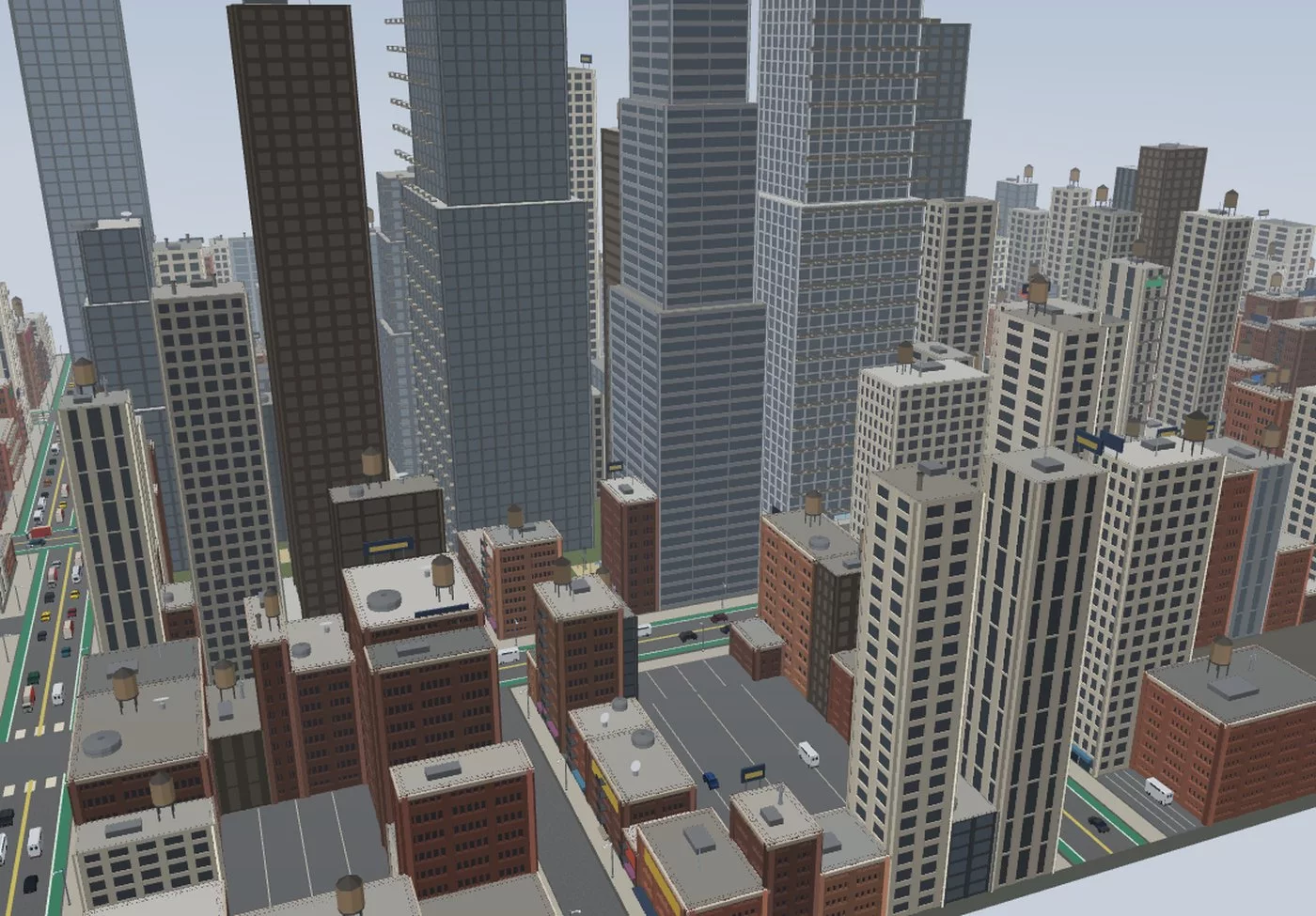
4. "Build a New York-style city at real scale"
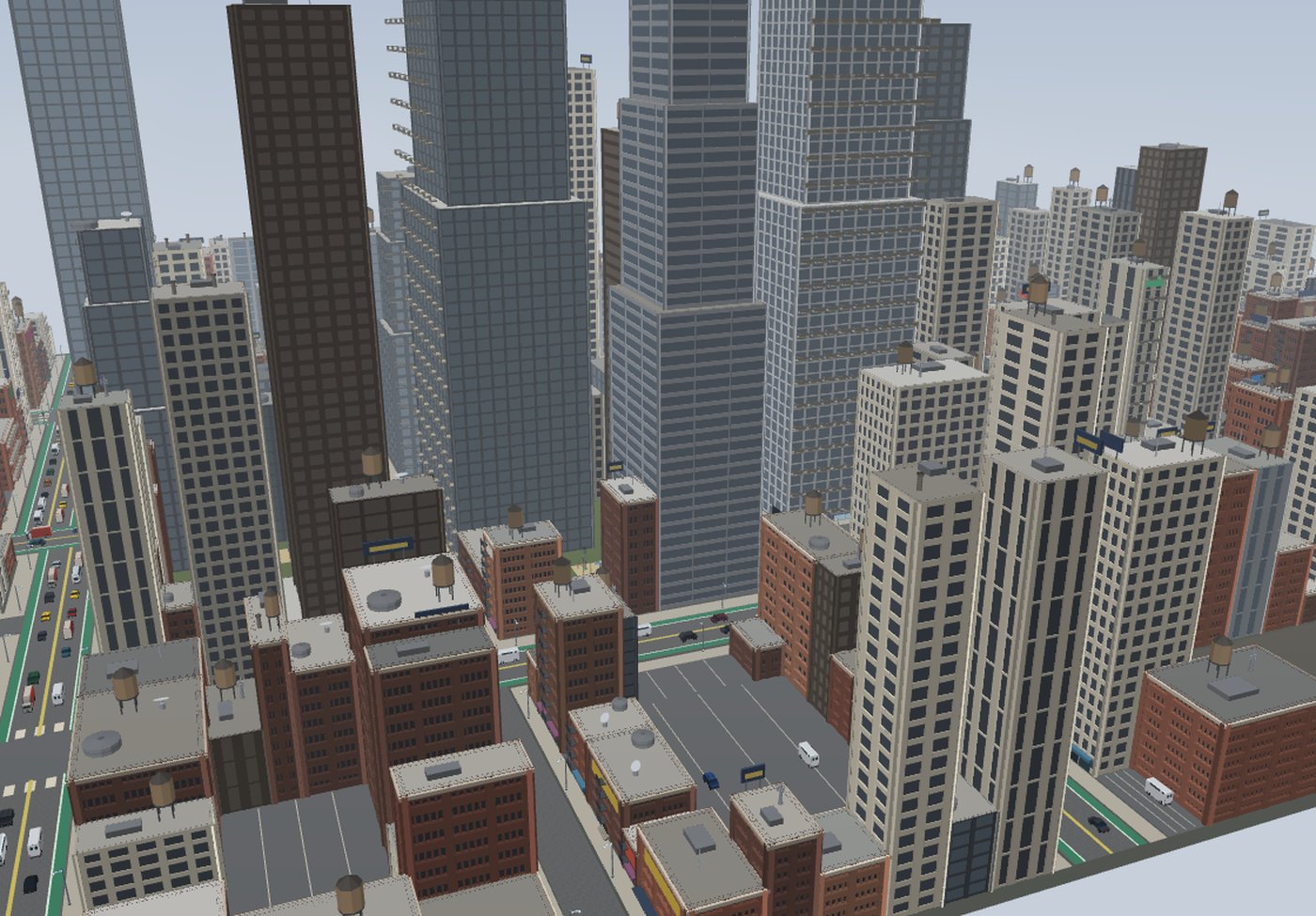
The agent calls compose_world { base: 'city', seed: 11, overrides: { profile: 'metro', flavor: 'new-york' } }. metro builds it in proportion at about 0.8 × 0.5 km, and the flavor picks the architecture: brick walk-ups, fire escapes, water tanks and Art Deco setbacks here, or paris, london, tokyo and more. The whole city is a pure function of the seed: change it for a new city, keep it and the same city regrows on any machine. context: { time: 'night' } lights it for night, and asset: { monument: 'eiffel-tower' } stands a landmark at its real size. Open /world to walk it with WASD or jump between its street, aerial and skyline views. Bases besides city: a transport hub, a K-12 campus, a torch-lit dungeon, a planetary body, a painted landscape, terrain at real scale, a walkable Cayley graph of a finite group.
5. "Make me a kart racer, then let me play it as an app"
design_game designs a game top down (the hero, its powers, gear and systems) and with run: true makes each ready step. Levels are worlds with a game contract (reach the exit, survive twenty seconds, win the race); create_game binds them, a synthesized score and the figures into one game with a typed store that carries between levels, and it does not mint until every level passes a contract dry-run and a traversal that reaches its win condition. Arena shooters with bots, kart racers with rival drivers, flight, stealth and rhythm games are built from the same parts.
It plays in the browser as it is: export_game writes a self-contained folder for any static host, and target: 'desktop' makes that folder an Electron app (npm install && npm start, offline; signing it is yours). The engines get a translation with a report of what did not travel: target: 'godot' writes a real Godot 4 project, the fullest of them; Unity and Unreal get a data pack plus an importer (worked Unreal example).
Also from a sentence: a posed human figure or an animal mid-stride, rigged for glTF or VRM; a six-storey building with a set-back penthouse; an ambient loop or a full score synthesized from seeded math with no samples; a room's layout recovered from a photo you show your agent. The full catalog is in docs/tour.md.
Where it goes
One recipe, several targets, all off the same ref: /api/sketches/<ref>/{svg,scene,world,model.glb,model.stl,model.3mf,model.usdz,model.scad}. Each URL regenerates deterministically on request: byte for byte on the same platform (OS, CPU and Node version), and the same geometry to within floating-point rounding on any other, since V8's Math rounds its last bit differently by CPU and Node version (an embedded texture PNG can also differ in its compressed bytes, never in its pixels). Every handoff carries a ledger naming what did not travel.
| Target | What you get | The gate |
|---|---|---|
| Browser | A still SVG, a dependency-free CSS-3D scene, a walkable WebGL world, a whole game as a self-contained folder. | Your eyes. |
| Desktop app | That game folder as an Electron app: npm install && npm start plays it offline, npm run package builds it for your machine (unsigned). |
The shell and its first level loaded hidden, when Electron is installed. |
.glb / OpenUSD |
glTF with lighting baked into vertex colours (or lit for PBR), rig clips, skinned meshes, VRM bone names; usda / usdz at true scale. |
Blender and usdcat, when installed. |
| Godot (the fullest translation) | A real Godot 4 project: project.godot, the versioned kernel scripts, the GLB, export presets. |
Headless import and a one-frame run, when MOJULO_GODOT names the binary. |
| Unity / Unreal (gated legs) | A data pack plus a C# editor importer or a Python importer; game packs add a C++ kernel plugin. | A scratch project imported headless, when MOJULO_UNITY / MOJULO_UNREAL name the editor. |
| Blender (art pass) | An art-pass pack with importer scripts, and a Cycles bake of global illumination back into vertex colours. | The importer run headless, when MOJULO_BLENDER names the binary. |
| STL / 3MF | Print-ready at true scale: mm, z-up, colours and instanced repeats in 3MF, process-aware advisories (FDM, SLA, SLS, MJF). | A local slicer run over the 3MF, stamping layers, time and filament. PrusaSlicer and Bambu Studio verified. |
.scad |
A program, not a mesh. A scad recipe returns its own source verbatim; a work |